Do they look at full lifecycle including disposal?
Tesla’s are overpriced but one of the few things that Musk has done where the reality is somewhat in line with the hype.
I don’t know if I’ve mentioned this on SF but I find myself wondering whether we’ll be owning private cars at all in 20 years - cars are expensive and resource hungry to manufacture and to recycle. They also spend most of their time sitting uselessly on drives or in car parks.
As autonomous vehicles become a reality might we see a fleet of self-driving vehicles that you just book for a single journey and which then take themselves off to recharge when needed.
The slight flaw is that you’d need just as many vehicles as now to service the rush hour and then have massive overcapacity at other times of the day - however if people could be persuaded to share that could easily be fixed (also the move to work from home might be at least semi-permanent post Covid).
Yes but I look at it as I am not paying to own the car; I’m just paying to use it. I haven’t had to put down any lump sums, take out a car loan etc. I just pay a fixed sum every month which is just another household expenditure item. I don’t see it as any different to mobile / internet / Spotify / Netflix etc.
For all of Mr Musk’s failings, he has proven a huge industry wrong and many are now on the back foot, take Toyota, the electrified Rav4 was engineered by Tesla but the CEO of Toyata kept rejecting EV in favour of hybrid and hydrogen, Toyota held a large shareholding in Tesla which if they had kept would be worth billions. Silly CEO and all the other legacy manufacturers are playing catch up.
Over priced? Not really compared Audi etc
It’s a valid choice for many, especially for cars which hold their value and have high residuals or for younger customers who don’t have large amounts of savings and so would struggle with the deposit. The fact that it locks you into a new car every 4 years also might not seem that bad if you have already decided that you want a new car every 4 years.
But is a new car every 4 years for everyone good for the planet?
There’s also the problem that if everyone is buying a new car every 4 years, who buys the 2nd hand ones. Without demand for those the residual plummets and the scheme falls apart.
Yes old ways will need to change somewhat. There was a belief that ownership would die out and youll be a member of a car club (Zip car etc) and just use as required. Problem is fat cat insurance companies wont let you accrue NCB unless you personally keep a policy going. No matter what insurance and those in it that earn big bucks wont change so it would take some other visionary to pick up on the shift.
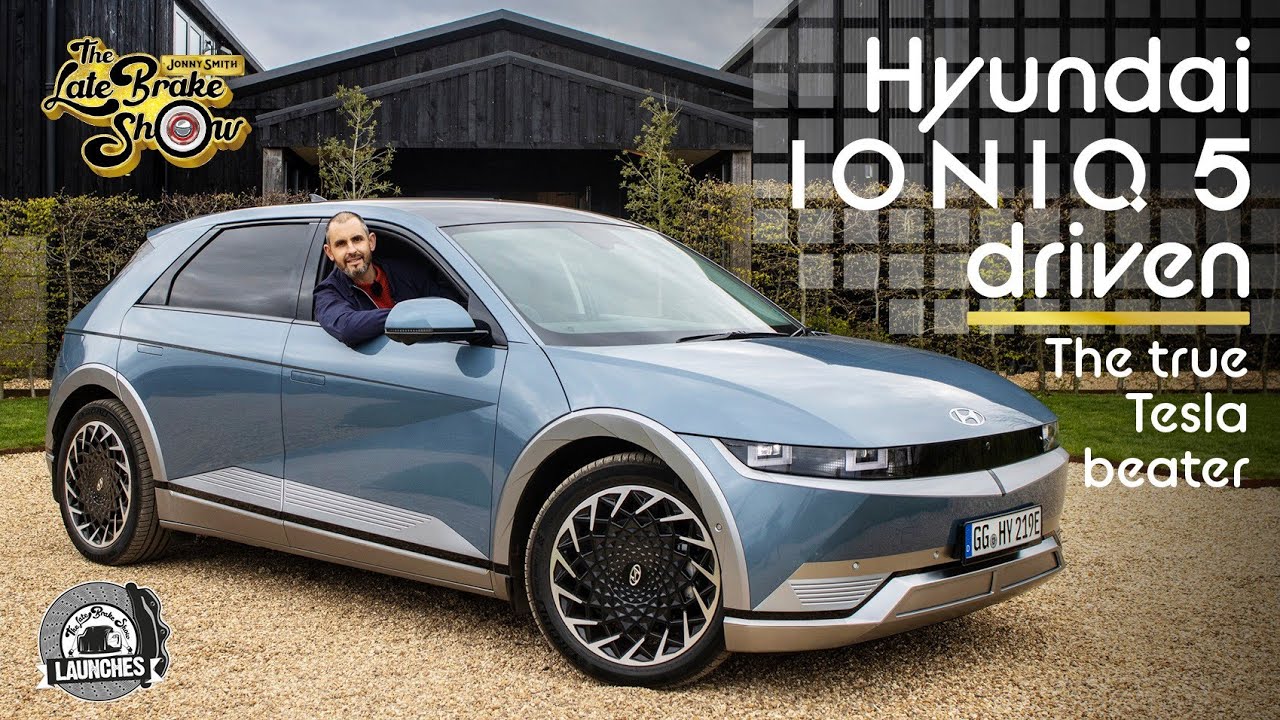
I wasnt aware pricing had been released. The spec of the Hyundai does put it at the top of the list.
There is a confirmed VW matrix battery out in 2023 which will half the cost of the battety pack and Tesla’s model A. Then the Chinese options like BYD, Nio etc.
That by itself will bring prices down.
Personally I intend to do both, lease more expensive EV and buy a second hand Zoé runabout. But you’re talking like this is new. People have been leasing cars for DECADES, practically every company car in the 80s and 90s was leased, still are, and I know bags of well to do middle class friends of the family back in Blighty who buy a new car every three or four years. Who are in their 70s.
The means of ownership might be shifting a little with generations, but people buying new cars is nothing new. It’ll carry on just as before. The second hand market won’t end with EVs.
Worth noting large car manufacturers are absolutely shifting their marketing of fleets away from company car fleets and towards the likes of Uber and the PAYG car services popping up in all major cities.
No, not EVs - there is nothing fundamentally ground breaking about EVs or the way people use them compared with cars or, for that matter, the way people buy and sell them.
The paradigm-shifting technology is autonomous navigation.
Not that many 500,000 mile cars on sale, easily achieved with an EV. No smoking exhausts etc. Once accounts departments get the mindset, due to several thousand less wearing parts means vehicles can be retained for longer things could change. Obviously there is still the fashion/ego brigade but with the higher tickets price sheer economics may cause change.
Its worth, although it is UK taking a look at the NationalGrid ESO phone app to see just how good the grid is and around 50% renewable energy with only 1% coal burning so hopefully we can lay to rest the idea that EV’s transfer the problem from the internal combustion engine to a power station.
Despite the UK context most of the sentiments can be applied to France. In many ways we are ahead of the curve here as the national conversion to Linky smart meters means that there is is an already an (almost) complete customer base with meters that can be used for bi-directional use by battery storage e.g. VTG (Vehicle To Grid) technology which will allow you to profit from having several tens of kWH of power available to smooth out grid spikes. Remember the statistic that most cars sit idle for 90/95% of the time…
To be clear, I wrote that from France and the context is France. I have lived in the Gard since 2009. I just reference the UK a fair bit because that’s the audience for a lot of this stuff, being as I write in English.
Edit: I’m an idiot - you were linking to the National Grid piece.
 Sadly not. I’m not on the bread line I agree but “loaded” - no way.
