Not everyone wants or can afford to buy, the council house waiting lists are huge so people are forced into private rentals, reduce that supply and the situation gets worse than it already is. Successive governments have failed to address the shortage of social housing for decades and it’s now at crisis levels.
1 Like
Thatcher stopped local authorities borrowing to build houses and forced them to sell their stock to their tenants at bargain basement prices.
This is her legacy.
3 Likes
I’m curious as to where I said “everyone” does. I quite explicitly referred to those who do want to buy but currently can’t due to the limited supply, high prices and commercial landlords snapping up those that do become available.
I appreciate that the UK housing market is broken in many ways and the damage done to social housing has second order effects on those who wish to buy their own home due to commercial landlords buying up what were first time buyer homes.
To be clear, I don’t have anything against landlords per se but similarly I don’t see why they should deserve special protection from government policy changes or other commercial realities.
2 Likes
She did reshape the housing market at the time. But it also made many people who would traditionally have rented feel like they could own property, rather than it being something for the ‘wealthy’ alone. People of my generation changed their attitudes and discovered ownership was both possible and appeared better than renting as their parents had. Of course that changed othe things too, as we see now.
Of course preventing LAs from maintaining their housing stock was extremely bad - I don’t know what her reasoning was, but as you point out, the end result has been quite serious and negative.
2 Likes
The vast majority of landlords are not ‘commercial’ John, most have between 1 and 4 properties with nearly half just one.
Surely it’s bonkers that you can have a situation where on a street of say 40 terraced houses the owner of the one that is tenanted has to upgrade it’s energy efficiency by law but the owners of the other 39 don’t, how does that help the climate crisis effectively?
1 Like
And this is part of the problem, landlords that think they’re not in a business. As soon as you’re renting out for money, you’re a commercial landlord. There’s no arbitrary line.
A bit of a strawman argument really and setting a minimum standard for a let property is simply one tool in the toolbox towards energy efficiency. There are other tools that are there to encourage private owners.
2 Likes
Which is why landlords who are not commercial individuals are likely to sell up and get out. If renting a house out is going to be forced to operate like a business then that will shut the door on ordinary people doing it.
It’s not like a business, it is a business and should be operated like a business. The sooner that is recognised then better all round.
2 Likes
And your evidence is?
My portfolio of rental properties is around the North Notts/south Yorkshire area which I believe is a geographical area you are familiar with.
Rentals in this area range from as little as 5 to 6 hundred and a modern 3/4 bedroom estate house can bw found for less than a grand.
I don’t dispute that this is not the case in London and the home counties but to generalise across the country is wrong.
I have built my property portfolio over many years and it is now my pension pot providing an income from the investment. I am not a business just someone investing for a return.
Those who pay into a pension fund to generate a return get that return from the pension company investing in property and other markets thus benefitting from that business.
I dont see tge difference.
No, you’re running a business to provide an income. If I were a tenant of yours then I’d be quite worried that you don’t understand that.
5 Likes
Mainly the logic that many landlords these days were sucked into the “buy to let” craze which means they have to service their mortgage on the property from the rent that they receive, plus add some on top for maintenance and their own profit. It is presumably this group of landlords who are most squeezed by increasing mortgage interest rates.
Obviously not every landlord will be in that position - some might not have needed a mortgage to buy the properties that they rent out and are able to charge a “fairer” rent.
Quite.
1 Like
Quite a huge difference, especially when mr Taxman comes knocking. A business doesnt have to be a PLC or LLC to be classed as a business. HMRC are interested when unearned income is in the picture.
1 Like
That’s only as bad as the council-owned properties on each street being upgraded, new heating systems, insulation etc. All paid for by the ratepayers owning or mortgaging their own properties in the same street, through council tax increases on them. That meant those not enjoying below-market council rents couldn’t afford to upgrade their own properties or keep them in good repair, whilst paying for the council properties to be upgraded.
That was ridiculous.
I dont think the council properties will be upgraded as quick as the privately owned ones are required to be. The bankrupt council in Brum took 4 years to fit double glazing into a 5 storey block of 20 flats, and 7 years to clad the outside.
Exactly!
We are not all tarred with the same brush.
Unfortunately the phrase ‘buy to let’ is generally understood to mean borrowing money to buy a house and then let it for an rental income to cover the mortgage and some.
For the benefit of comment by @JohnH if you were a tenant of mine you would pay a fair rent and be well looked after.
So what is a ‘non commercial landlord’?
Any examples?
Local authorities
I’m sure you can operate Google as well as I can.
1 Like
Latest xkcd.
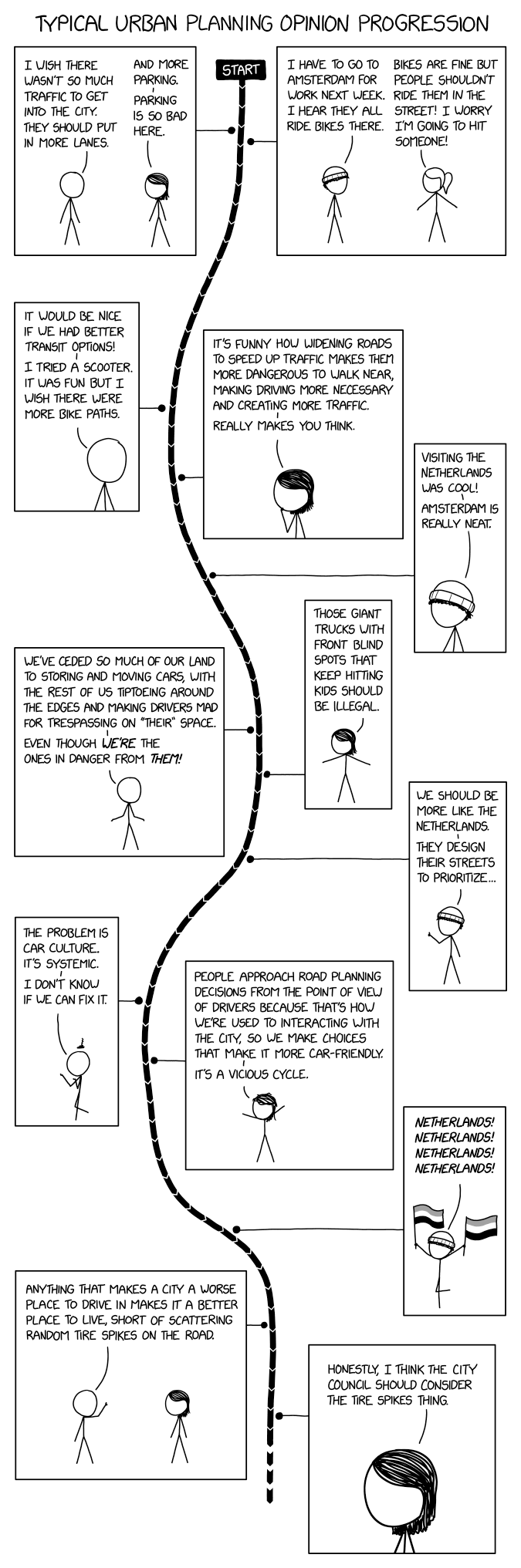
2 Likes
Further madness from the Tory led climate suicide pact, with support from the Labour Party.