My French came on leaps and bounds when, as a member of a photo club I took on the task of translating short French videos by an excellent tutor into English text for the Brits in the club. The videos had French subtitles and I could slow down the speed to make sure I got the detail. Worked really well. Sadly, my excellent French photography vocabulary hasn’t proved that useful in daily life. 
2 Likes
As does having a French girlfriend. Mine even cooks great food too! 
1 Like
When we first came to France 27 years ago with sshoolnoy french , we were totally at sea. The language we were hearing in no way resembled our schoolboy French. We listened to French radio and only watched French tv for months. Eventually paid off but was hard going for a while Now i actually dream in french sometimes
3 Likes
After I’d been reading Arabic for a year at university I did a language course in Cairo, and fairly soon I dreamt in Arabic, chatting away and understanding people speaking to me, imagine my dismay when I woke up and my spoken Arabic was as limited as ever 
4 Likes
I have had the odd dream, speaking French, but at the moment I’m only fluent in my dreams.
1 Like
If you install the YouTube player called NewPipe you can indeed “rewind” French clips instantly by double tapping on the left hand side of the screen.
In addition, if you type “slow French” into a YouTube search you can find plenty of clips where French is spoken slowly, often with English and/or French subtitles.
EDIT Just testing what I said was accurate, I learned the difference between “en suite” and “la suite”. I would never have grasped that in normal conversation.
seems everything is “accurate/normal” with my pals…
On hearing 2 similar ways of saying something… I’ll ask a simple question… which is better/best to say???
blah de blah or blah do bloh
les deux! is their blithe reply … aaargh
1 Like
An interesting unit of distance… 
5 Likes
Support here for the exposure method of learning.
1 Like
Most most interesting. I have, even if I say so myself, a pretty good ear for accents. I can detect hints of the mother tongue accent in people speaking a foreign language, e.g. that person over there speaking French, they’re Italian. Plus, I’m a pretty good mimic, and like to attribute voices (and accents) to different animals (think Johnny Morris) - you should hear my Elvis cow!
Anyways, self congratulatory wibble done and aside, I’ve often wondered if my type of auditory processing assisted my language learning. Suffice it to say, I sound better at French than I actually am!
1 Like
Oh my days, just realised that I missed the comma out. Mind you, ten mins in the car could = 3 rabbits per km
2 Likes
That study is interesting, because it refers to how “the best linguists” - “those with higher auditory precision” - learn. I don’t think the journalist really understood the paper (https://psycnet.apa.org/fulltext/2028-38117-002.html), though the problem might have been poor editing.
The study was an analysis of how the best linguists’ brains work, and not intended as an analysis of what is generally a good/the best way of learning a language.
It also studied only how good their pronunciation was, which is a small part of language learning.
I don’t know what “the exposure method of learning” is - when we learn, we inevitably expose ourselves to material in the target language - but Prof Kazuya Saito-van Poeteren seems to support the normal recommendation for learning languages: “I do not think British people are biologically bad at languages. The problem is more likely to be that many people receive too little meaningful exposure, combined with teaching methods that do not necessarily train the auditory skills needed to make the most of that limited exposure.”
That’s the (for example) Krashen view: it needs to be meaningful (in the sense I outlined above) for the great majority of people, rather than “the most talented linguists … [who] hear foreign terms as random noise, not words”.
It may have done for you: it didn’t for me (I have the same sort of ear, but I’m not a good mimic). My accent is poor, though my understanding is very good.
Maybe that’s it: if you’re naturally a good mimic, you have the skills to be an exceptional linguist?
PS I suspect the English, with our class-based sensitivity to accent, may have a head start.
I’m sure it does, simply because you’ll be able to hear differences in near homophones with very different meanings and so you won’t be as confused. People who eg can’t hear the difference between the letters sīn and sād or kāf and qâf in Arabic are just like those who can’t differentiate between beach and bitch or shit and sheet, at a bit of a disadvantage. (I chose those examples because the first concerns consonants and the second vowels). Luckily the more you learn the less it’s a problem, because of context.
2 Likes
The term “comprehensible input” is used a lot, but a lot of the time over the years I would only half-listen to / comprehend France Inter. and I still do some of the time…
Speaking out loud or in your head presumably reinforces listening and ironically I found hacking my way into B2 grammar using KwizIQ helped me quite a lot and i try to hold imaginary conversations in my head when I go for my daily bike rides.
The Internet makes it so much easier. Automatic French subtitles are so comical sometimes it helps wean me off them… but there’s also now rewind and often the ability to slow it down. And I think the France Inter archive may have more accurate transcripts.
I spent so much time watching coverage of the forest fires during the summer I now can’t unhear French people mispronouncing “incendie”..
Over recent months working with French exchangees I have sympathy with anyone trying to learn ENGLISH !
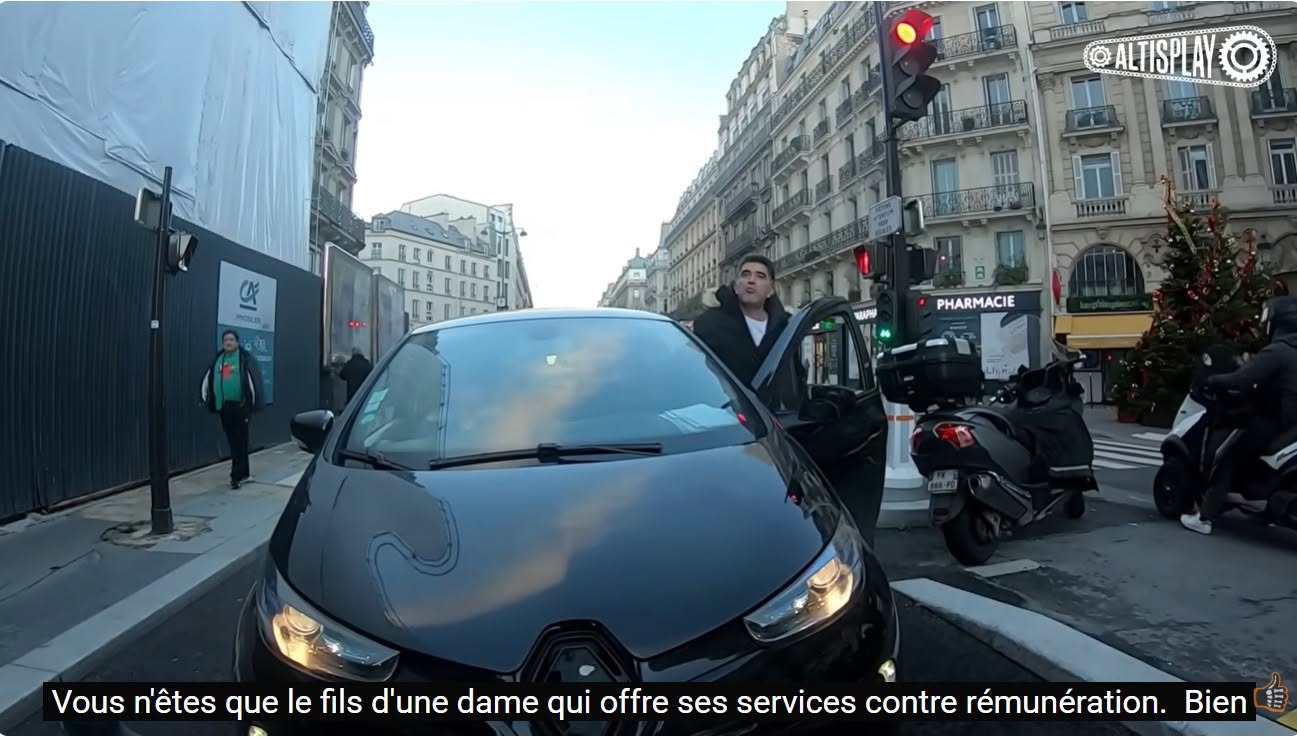
I am now subscribed to a lot of French Youtubers who shre my interests, but if I have one listening tip it’s this channel - such a shame there is no BBC equivalent for English learners…
1 Like
Just my way of referring to the several people who have advocated listening to French radio & TV as a route to better understanding.
I’m a good mimic but that can lead to a conversational impasse when the native French speaker in front of me assumes that I’m at least a Belgian in terms or origin, or even just from elsewhere in France (more rare!) i.e. the pace gets too rapid.
1 Like
I think all those different ‘natural’ factors contribute to effective language learning, but it also depends on how you are used to learning. I found learning Dutch in my mid twenties fairly easy because I already spoke English and German and was used to using and learning other languages. I sat down with a Dutch for idiots book (I think it was Hugo, Dutch in 3 months) and did all the exercises every evening, often in a bar we went to after work (so if I wasn’t sure about something I could ask a local) and read the newspaper every day. And I pestered Dutch speakers at work. Anyway I did this and my non-Dutch-speaking colleagues didn’t and I ended up speaking/ understanding/ reading/ writing Dutch and they didn’t.
1 Like
I cannot retain sounds. I have to see them written as well if I am to remember what I have heard.
3 Likes
Not at all! Maybe north from you towards Paris? Up here in Picardie, the dialect is called ch’ti and it is not at all easy to follow. A middle aged guy was painting window frames for my father-in-law. I could hardly understand him. And he himself mentioned le ch’ti.
But two days later, I had a one hour Zoom call with another guy in our region about a UNESCO Biosphere project and understood just fine, so it’s not my level of French.
For those interested:
Did you see the film?
