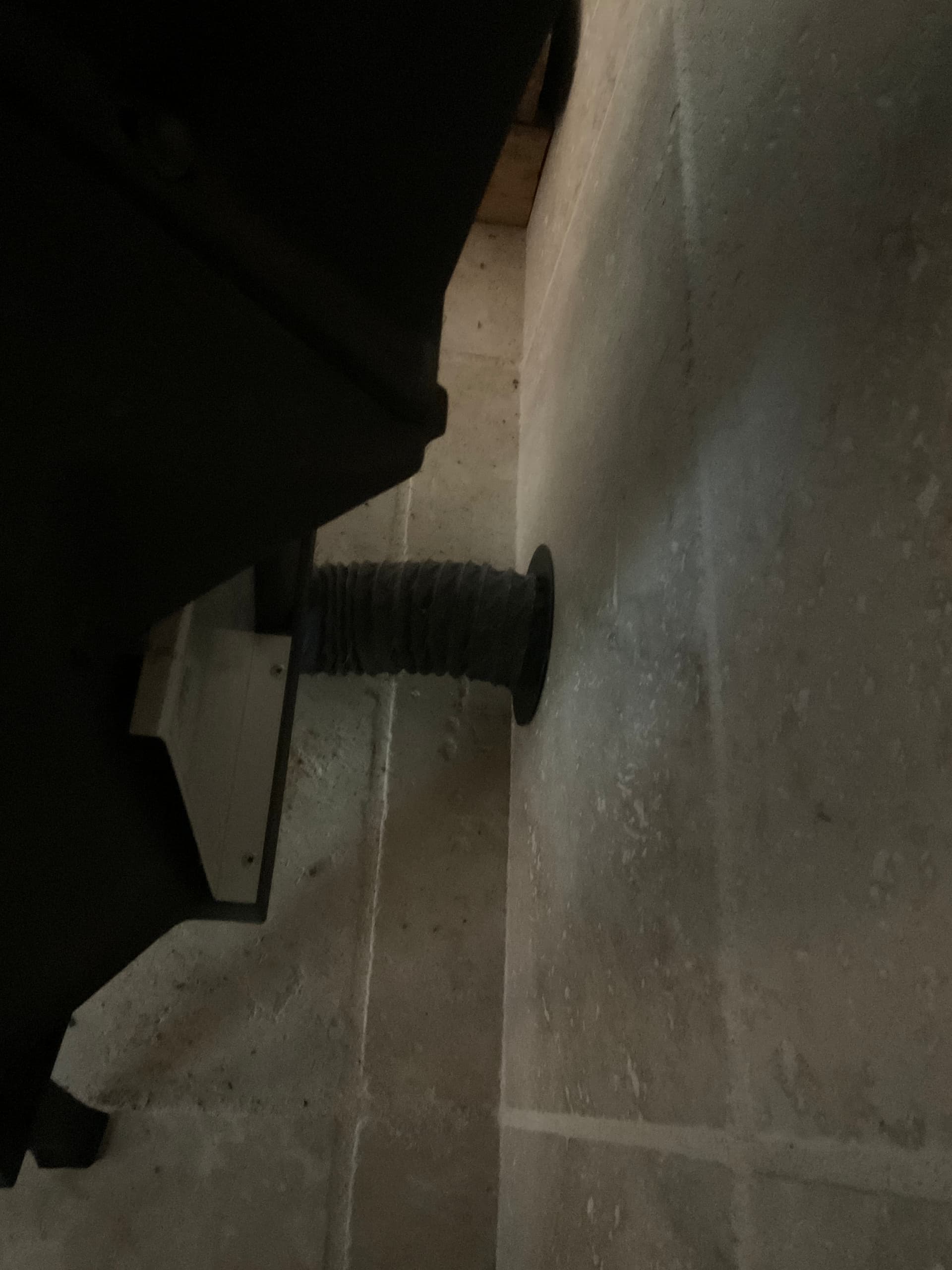
We’ve recently moved and the Jotul fitted here has a vent attached directly to the woodburner. Never seen anything like it before but perhaps it’s normal now.
1 Like
It’s a lot better like that Chris and a distinction between the better cleaner burning stoves and the earlier types.
Which Jotul is that?
It’s an air vent, so won’t be affected by radiant warming in the same way that you are when you work on your car, although absolutely correct that sunlight may produce locally warmed air from heated surfaces.
1 Like
That’s what I was getting at. North winds are known to be cooler.
It’s a Jotul F 500 SE. I haven’t lit it yet so I don’t know how it will compare to our last Jotul that didn’t have a vent.
1 Like
When they fitted our new wood burner, Uk, they changed the air vents in our windows to fixed ones we couldn’t close, that’s the only vents that had to be fitted to comply with regs.
I see its more than likely that a compulsory carbon monoxide detector will have to be fitted to dwellings especially with fires, stoves and gas heaters. A good idea anyway without the government intervening, it could save your life!
Our woodburner is against an internal wall as the chimney (in common with most around here) is in the centre of the house. ) Being an old stone-and-torchis house, there is no cellar and the floor is directly laid on the ground. I do not see how a vent could be fitted or, indeed, in an old house with lots of draughts, why it is deemed necessary.
2 Likes
Does the room it’s in have no exterior walls? Ideally the vent should be close to the stove to mitigate draughts, but can go anywhere there is a source of fresh air.
I don’t know the exact rules in France, but in UK a stove under 5kW output is allowed to be fitted without a dedicated vent, on the principle that it will get enough air from leaks and the rest of the house.
I take your point about old houses being sufficiently leaky, but I suspect the difficulty, especially with bigger stoves, would be codifying what legally constitutes “an old house with lots of draughts”. Especially when people often buy old houses and then seal them up with double glazing and new doors etc.
i used to see that a lot when I worked for the fireplace company - we would sell (but not install) a gas log fire to a client, and then get a call from them complaining of headaches. Almost always it was because the house was sealed up tighter than a drum and they did not have a dedicated air vent.
Our own installers of course knew to check for such a thing, and do a smoke test to check the flue was drawing properly when all doors and windows were closed.
2 Likes
My son has a Jotul stove and there is a venting pipe underneath the stove that goes down through the concrete floor and out through the vide sanitaire under the house as well as the conventional flue up the wall and out through the roof.
1 Like
Mine too, when I renovated the floor I dug down into the soil and laid a pipe there for air intake for the fire. Unfortunately by the std’s of the document at the very top of the thread a bit on the small size now. It’s the underfloor heating part so won’t be digging that up any time soon. Just as Chris said the chances of an air leakage test being done is probably very rare so a blanket regulation comes out regardless of whether it’s a new house or 500 years old. We have sealed up our roof space quite a lot, solid down to ground floor means no ventilation there there is a considerable draft behind some of the placo on some walls so could add another vent there. If as in the UK 5kw stove no ventilation needed and my stove being 8kw then only a small amount of additional ventilation would be required but these days a rule is a rule, part of the reason I take only a minor interest in a new rule.
1 Like
Air supplies for fires and stoves is a good rule though as I am sure you’ll agree. 
Looking at photos on house listings on Bien’Ici I see quite a few poeles with soot marks on the front (and sometimes on the mantelpiece above) and wonder what cheerful substances those folks are breathing in…
As a default safety yes, I do prefer the science but people don’t like the science these days. My go to is a CO2 monitor for indoor air quality. CO2 levels are normally around 420 parts/M3 and I introduce boosted air handling system when it gets to 800, 1200 and you feel a bit clagy and yawning.
I haven’t got an oxygen monitor so that’s the best I can do but on buildings I have worked on We have saved many thousands of pounds with better environmental controls as it needs less to heat in the first place and less to exhaust that nice heated air into the environment. Variable speed motors on all air handling equipment pays for itself in no time.
Houses, I have tested for CO, VOC’s, PM’s 2.5 and 1. I will have to have a play with CO2
I think an adjustable damper would work well so fire off damper closed (air vent damper)
We have at least 7 air vents and standing underneath them what little hair I have gets blown about by a cold wind . I’m tempted to close off some of them as it may be healthy but surely so many is unnecessary?
We have double glazed window, but it is roller shutters, that have all have vents, and they should be checked, that they are not blocked, also internal doors should have a gap at the bottom , 10-12 mm, to allow for air flow .
Is it a timber suspended floor Geoffrey?
No, concrete floors. It’s a two bedroomed bungalow built in 1970. I ought to go lnto the attic and try to understand what’s going on. Initially I thought the vents were connected to the wood burner flue to spread the heat but now I don’t think so.
Ah the wood burner distribution of heat would make sense. Concrete would be fine if you closed of at least most of the air vents based on the fact I am not there to take a look.
Thanks so I shall just close a couple as we only use the wood burner 3 or 4 weeks in the year. But why does it feel like there’s a fan blowing cold air into each room?
Probably convection currents. Certainly when heating is off you should be fine closing them.
I am running an experiment in my London home with timber suspended floors. I have data logging monitors under the floors to view humidity and temperature together with dew points.