Agreed. We had it on last winter and it didn’t seem to make much difference. Took us a while to get over the shock of the electricity bill - over 500€ for two months!  . So far this year, we haven’t turned it on.
1 Like
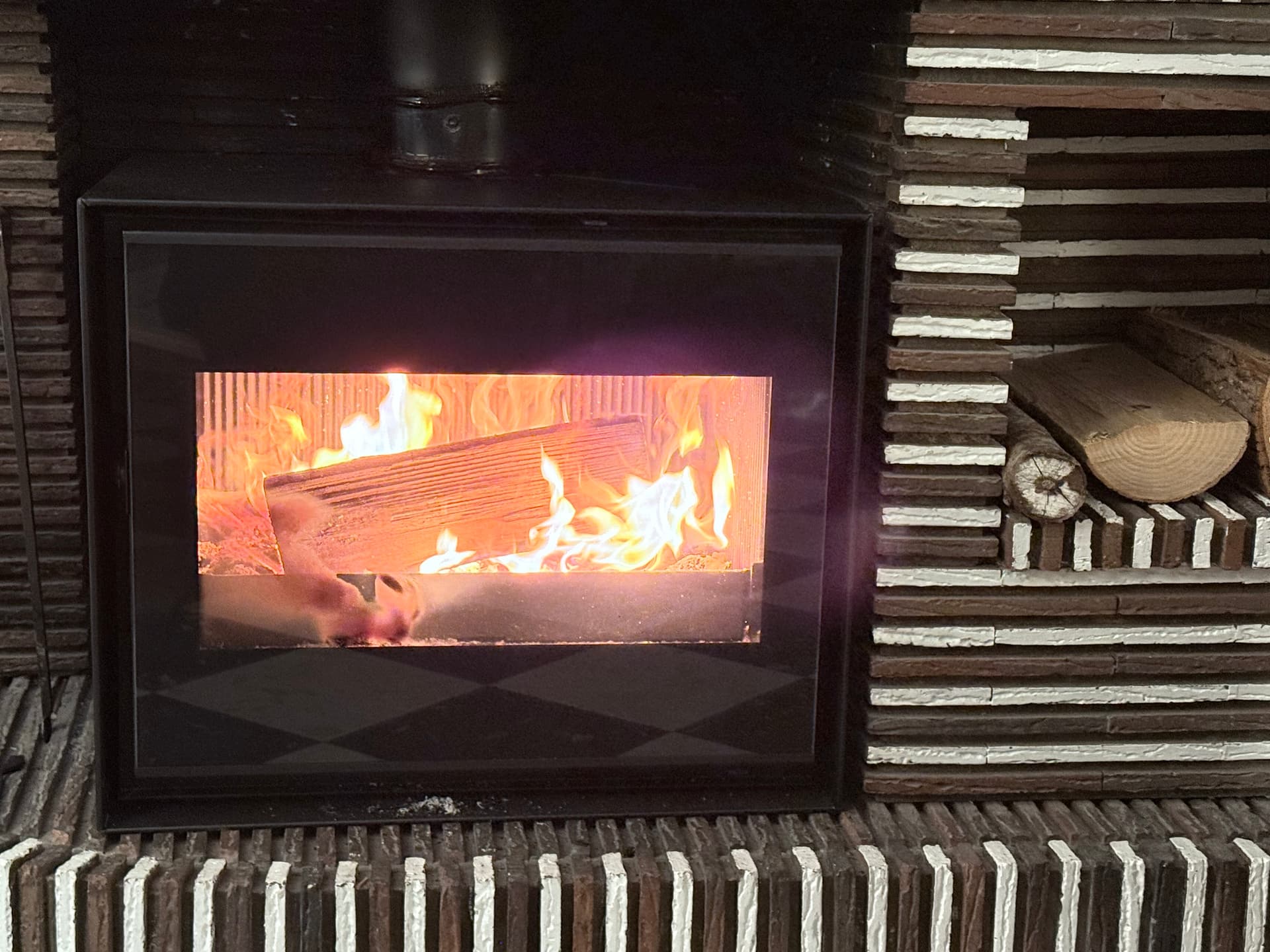
In effect, it’s the equivalent of a big square stove. We didn’t have enough height for a stove, but an insert was okay.
Ours is a Dovre - this one
I’ve got a photo of ours that I’ve previously posted somewhere
1 Like
It’s not a form of heating to just turn on and off. Because of the enormous thermal mass to heat. A bit like our stone cottage, we keep a steady background heat going unless the temperature outside changes drastically for several days in a row, and the house is gradually pulled in that direction.
1 Like
We had and have a very large open fire. Looked wonderful in full slate but used tonnes of wood, and yes produced harmful stuff to breath in. Most of the heat went up the chimney.
A year after moving here we had installed a stove into the open fireplace (including an insulated flu etc.). It produces max 9kw heat and it’s extremely efficient and effective.
Would recommend very much….
2 Likes
We’ve started doing that with the pompe à chaleur, not having had one before and following the advice of the engineer (who also said it becomes very expensive to run if your daytime temperature setting varies more than ~3deg from the nighttime one). Seems to be working so far (and we have the fire if it gets really cold).
1 Like
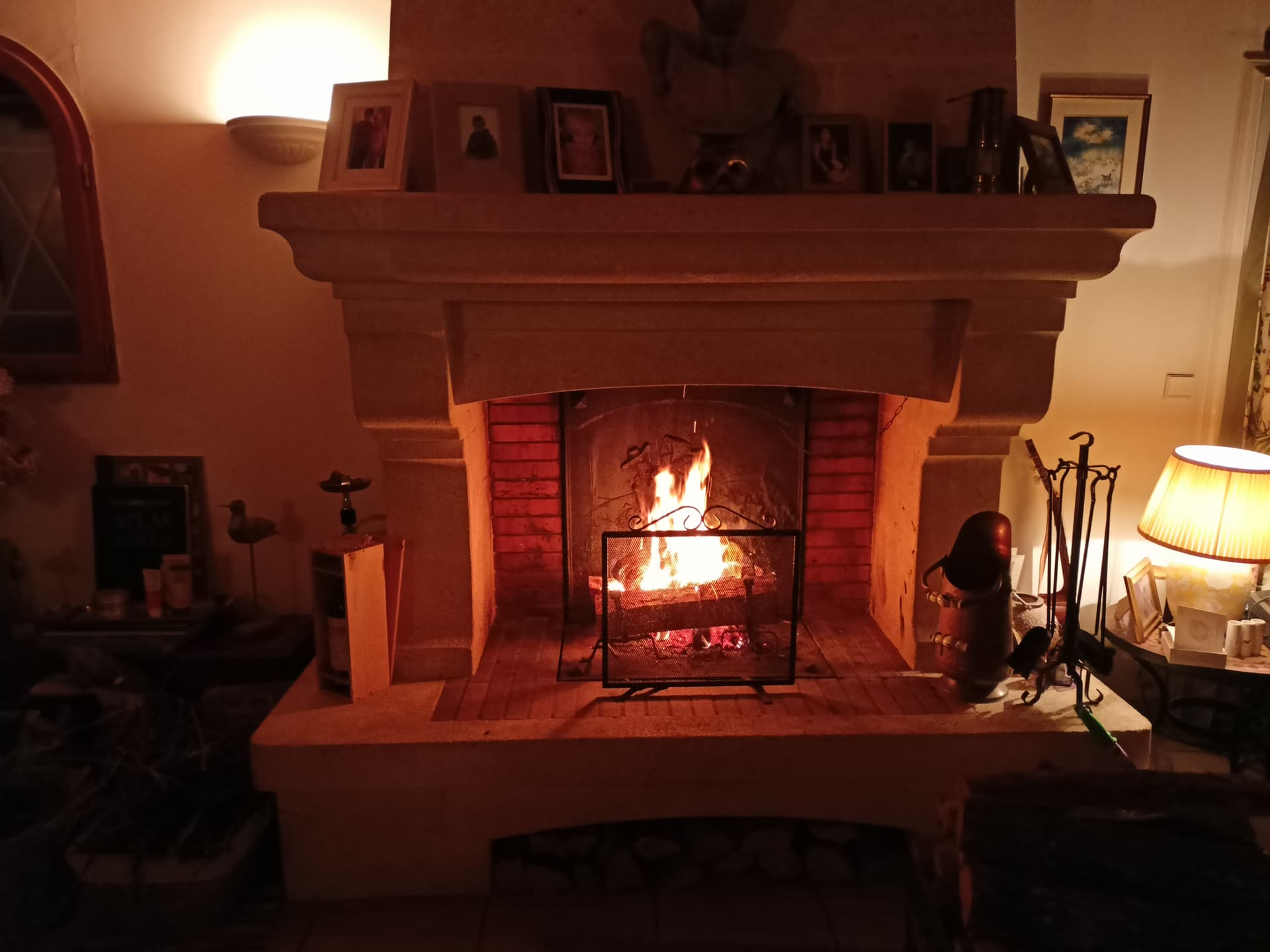
We had an open fireplace in our previous place… it was bloody inefficient - the vast majority of the heat goes straight up the chimney. Would’ve much preferred an insert. Also the rest of the house wasn’t brilliantly insulated either (we were renting so couldn’t fix that).
Pretty too look at whilst you’re shivering though.
2 Likes
That’s interesting Porridge & definitely something we might need to look into getting.
Very true.
It can be a game changer.
My mother-in-law has a living room not much smaller than the one in the photo above. She had an insert installed many years ago now. Her place is nice and toasty. Plus it burns slowly, and she can use those compressed logs… We used to get through so much wood in comparison only to be colder 
1 Like
The reason we changed from the wood burning chemine was, apart from the buying, stacking, cutting and transporting of wood, it is not readily adjustable, leading to being overheated sometimes even in the middle of winter.
At the moment I am sitting near an air to air heater, switched on only half an hour ago, but which has already heated this room and I’ve switched off because it was getting too warm.
After saying that, I still have the chemine which has been used a couple of times in past winters when there has been a power cut. Incidentally, I did not go for pellet because it would have meant ripping out the wood fire and, as the pellet needs electricity, no use in a power cut.
1 Like
Others have already jumped in on this, but to repeat…
If you have an actual open fire (i.e. just a hearth with an open chimney above) then you are going to be filling your lungs with particulants, as well as spreading more outside the house for others to breathe in. Open fires are a well known health hazard.
You will also be burning wood inefficiently, so you will be wasting money & resources.
As I’ve already stated, an open fire will draw air from within the house, thus drawing cold outside air in through any poorly fitted windows/doors/catflps etc. That’s a long-winded way of saying it will create draughts; it’s very nature any kind of combustion requires an air supply.
If you want to keep some kind of wood burning fire then a free standing woodburner is best suited for a previously open fireplace - inserts are supposed to be built into a fireplace designed for their use. A pellet burner is another option. All of these examples will require you to properly line the flue. Ideally you would use room-sealed models that draw their combustion air from outside so you can avoid draughts.
As you already have some kind of heat pump & electric underfloor my advice would be to insulate & draught proof better & seal off the chimney. At the moment all your other heat sources are doing battle with the fact that all of your heat goes up a chimney.
Clearly I have no knowledge of the physical layout or condition of your house, so all this advice is based on assumption.
3 Likes
We have a super efficient Broseley EVO 26 combined woodburning stove with water jacket that provides all our heat and hot water.
When the system was installed we had radiators fitted in every room yet from day one we have never used the bedroom radiators, such is the efficiency of the system and the level of insulation in the house.
In the summer our hot water is provided from the same water heater which ingeniously switches to electric power when the fire is not working.
During the heating season from around October to May we get through aboyt 500 euros of locally sourced and seasoned oak.
The system has served us well for the 13 years we have used it abd wil continue to do so for the next owners.
Now, I am looking forward to our next home that has an EPC rating of B wirh triple glazing, gas condensing boiler and heat at the flick of a switch.
Will I miss stacking the delivery of firewood, cutting it, carrying it into the house, lighting the fire every day, feeding it with logs every hour or so, knowing that if we go out no one will be keeping the fire in, and the film of dust that quickly forms on every surface around the fire?
Definitely not, been there done that and got the tee shirt, and the thermals when getting up in the morning before the fire is lit.
Our New Adventure awaits.
2 Likes
Another thing avoided by having a programmable pompe à chaleur or pellet burner.
We researched the possibilities of changing our heat source to an air to air pump by adapting our current system but with estimated costs from 3 different companies ranging from 17 to 24K it was a none starter.
Had such systems been wide spread when we first installed tge system during a back to brick renovation today would have been a different story.
1 Like
Thanks for all your advice 
Talking of heating, I’ve just seen this…
We have a free standing log burner and a free standing pellet stove (on different floors of a three storey house). Below are a few points that you might find helpful.
Find out what is the stove’s optimum heat output for the size of the room. Too low and too high are both problematic, albeit in different ways.
Re log burners:
A free standing stove is more efficient than an insert - because the former’s cast-iron or soapstone sides radiate heat into the room, even for a while after the fire has gone out. Also, if the stove is free standing one can place a fan on to top that is driven by the stove’s heat and efficiently distributes heat around the room
If choosing either free standing or insert, it’s useful to know that the price per stère (cubic metre) of 50cm logs is usually considerably less than 30cms, and of course this can be a significant difference when buying several stères a year.
Pellet stoves are more expensive to buy, but give instant heat, don’t need the same level of tending and can just be switched on and off (but of course are dependent on electricity). Many are also programmable. If money and/storage space is rather limited, you can easily buy a just a few bags at a time from many DIY stores.
Lastly, whether using logs or pellets (5kg - should be 15kg bags) you need to be able to get them from the fuel store to the stove. My wife’ heaviest training weight is a 4kg kettle bell, so she can’t lift a bag of pellets, let alone carry it up two storeys from the cave.
1 Like
Is that a typo? I’ve only ever seen/used 15kg bags.
Typo - thanks!