Please see my posts on your reference to climate change denier.
1 Like
@JohnH You got me there: it did go over my head  . I truly thought that you were being emphatic .
1 Like
I wasn’t: I was suggesting (it seems no more than common sense to me) that a unique change in a relevant factor might be significant.
Then again, I’m neither a sceptic or a believer.
I understand, Porridge. It’s a discussion, all contributions made in good faith are always welcome.
1 Like
Not that that’s something you feel we should get het up about as in say another 30 - 50 years tops we’ll be dead. Après moi le déluge, eh.
I feel we should be stopping the vandalism and would like to leave a habitable planet to my descendants, and even yours.
5 Likes
it is a worthy desire to wish minimising our impact on the earth and leave it well for the coming generations. I have always recognised that there are many ecological concerns; that we could do more collectively to make the world a better place. My argument is that:
- The almost entire focus on CO2, as being some evil gas, is a falsehood, or maybe a distraction;
- CO2 vilification is being used to justify the ushering in of increased financial burden and loss of freedom of the mostly struggling populations of the western world, while the elites maintain their comfortable and indulgent life styles;
- Fear and guilt is being willfully imposed on people for simply living; school children and students are a highly vulnerable group.
2 Likes
Indeed. I looked up the paper by W Jackson Davis from 2017 and it does seem to show a non or sometimes negative correlation between CO2 levels and temperature using 18O level data available. However a later paper from 2023 by the same author does come to slightly different conclusions and does seem to show a correlation in the last 55 My. It also has as two of its key points.
Present CO2 concentration is associated in the fossil record with a 6.39% genus loss, implying current human destruction of biodiversity
Future anthropogenic mass extinction can be stopped only by cutting human emissions of CO2 to zero, optimally by 2% per year starting now
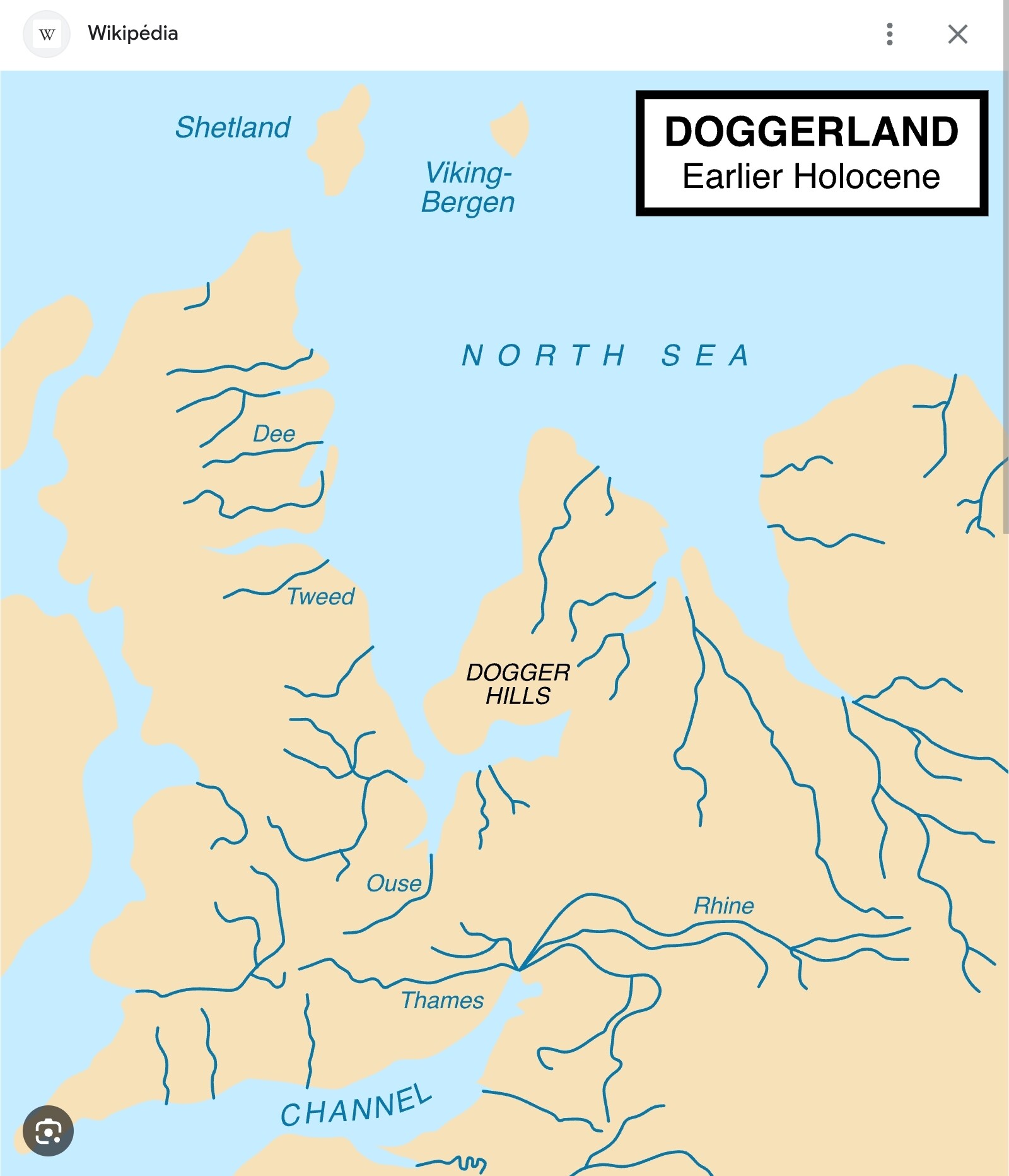
I must admit that I have always wondered about the sea level change element in such a debate as this. I’ve always been led to believe that there was once a ‘land bridge’ between Europe and Great Britain so that it would have been possible to walk from say Germany to Scotland without getting one’s feet wet. So I wonder whether the sea level rose or the land subsided. Indeed I was taught as a child that since the retreat of the last major ice age, Scotland has been rising up out of the sea due to the absence of the weight of the ice, and that the south of England is slowly sinking into the sea due to a sort of see-saw effect. Therefore I wonder whether what one sees depends upon where one is standing.
As for what the future holds for the homo-sapiens, there is no doubt in my mind that the planet simply cannot sustain an ever increasing population, and that when over population rises to critical mass there will then be a mass extinction event to correct things. There will be survivors, and it will probably be the meek that inherit the earth.
2 Likes
That is a lovely idea but unfortunately history has shown us that it is the least meek with the biggest and newest weapons and children with teeth that generally do all the inheriting 
I note that Russia and China read the same history 
Yes the Weald-Artois anticline joined England to France, but what I find even more amazing is that the Dogger sea area and more probably was once low hills and inhabited marshland, and Great Britain wasn’t even really a peninsula more like a promontory. And then the ice melted and that was that. Trawlers are quite often picking up things from the Dogger Bank, the North Sea is very shallow there. It was one of my many nerdy obsessions as a small child.
Edited to add this pic
4 Likes
Not forgetting natural erosion too
Thank you for your contribution.
The chart in Davis’s 2017 paper depicts a discernible variability but slightly falling trend in atmospheric CO2 concentrations over the 522 My time series. It is clear over such a significant period that there is no causal relationship between temperature and CO2. If we were to plot century temperatures averages, which is comparable to proxy temperature sample methods used over historical and geological time scales, over the entirety of the last, say, 1M y, it is reasonable to expect that temperature variability that has occurred over the last century would scarcely figure. Global temperature readings over the last few centuries are, however, problematic for a number of reasons. among which is that global temperature records prior to around the 1950s were restricted to geographies that were part of empires and better developed countries.
The conclusion in Davis’s 2023 paper on a possible degree of correlation is a curious one. One can point to the current correlation between GMST and atmospheric CO2 concentration over the last c. 200 years, but it is probable that the slight temperature rise trend is attributed to the recovery of global temperatures after the c. 2 century long sustained cooling period that ended around the early 19th century, and not detectably as a result of anthropogenic fossil fuel combustion. Referring again to a point that I raised previously, correlation of events does not imply causality. Most of us have experienced situations where one event appeared to be a result of or directly connected to another event, only to be later discovered that events were totally dissociated.
The first key point of the 2023 paper to which you refer suggests a possible link between CO2 and loss of biodiversity. There is however no suggestion, much less evidence from the chart in the 2017 paper, that any possible link is causal. It is probable that a causal relationship does exist between biodiversity loss and human activity, such as deforestation, farming methods (as opposed to hunter-gather existence) and land use, water usage & pollution, creation of dams and other water flow structures, use of chemicals and pesticides, rapid population growth, construction. These are all real issues, but these did not begin in recent years, when CO2 was at the present concentration, or at the level around the year 1800, or even 5.000 years ago, when CO2 was at an ostensibly steady rate of 280ppm, well shy of c. 400 to 2.800ppm range over the previous 522 My. There appears to be an inherent claim that human activity throughout its existence has borne a causal relationship with CO2 concentrations, which is clearly unfounded.
Key point 2 appears to be premised on point 1. I fail to detect here any indication of a necessary causal relationship that could validate a claim that a rise in CO2 concentration, albeit it historically insignificant, is endangering the extinction of the human race or other forms of life on earth.
I question whether the author in his 2023 paper is now dismissing the robust investigation and analysis assiduously detailed in his 2017 paper. In this he states that there should be no more doubt regarding the ineffectiveness of atmospheric CO2 to control or drive change in climate. From what you have mentioned, his emphasis in the later paper appears to focus on the period of human existence. If so, this would be perplexing, as it would represent a study over a time series that is barely detectable on the climatological time scale. And to exaggerate further the insignificance of this considered time series, the period of anthropological fossil fuel exploitation is hardly detectable on the time scale of human existence.
Until I find and study the 2023 paper, and read a valid change in understanding, I can only conclude that the dissociation between atmospheric CO2 concentration and average global temperature prevails.
1 Like
What about acidification of the oceans and seas? There’s a direct correlation there to CO2 levels.
In any case the problem isn’t variation over aeons (which obviously causes extinctions BUT also happens sufficiently slowly for life to adapt) - we are now seeing a rate of change which is simply too rapid for living beings to evolve and adapt to.
3 Likes
What about methane gas? I think I read that this has a stronger greenhouse effect than CO2.


2 Likes
Have you heard of Trump ?
God bless you Brian, do you think anybody will actually read all that?
Substantiated bullet points is what we old folk need, before we drop off 
2 Likes
I reluctantly introduced the scientific detail as I was reading comments on this discussion that dismissed my general and more readable points as being e.g. tired, old and unfounded. The climate issue is a highly complex one, so if one is to make meaningful comment I would expect that they would like or need at least to read content & observe the one chart that I had posted.
Bullet points are great, but only at the end as summary; they won’t capture reasoning, and I felt that a high level of reasoning was needed to dispel facile dismissal of my earlier points.
2 Likes
What you are describing is fiscal drag, a sly way of raising tax revenues without tampering with rates.
If the threshold, which remains frozen at the 2021 level of £12572 had kept pace with inflation it would now be £15482
At 20% that’s £582 more tax than you’d have paid without the freeze.
So far it has cost each of us around £1500 and by 2031, £4900 ish.
In addition, millions of workers who were below the threshold are pulled into paying 20% tax on the little extra they get each year to keep up with inflation.
Taxing the poor to appease the rich.
6 Likes
Which in real terms would probably cost more to collect in terms of staff and hours chasing etc. France seems to take a more pragmatic route?
1 Like