How does the grave accent on the ‘O’ change the pronunciation?
I assume the word above is pronounced Ponshow?
Good question, you’re right about the pronunciation, but people here put a lot of emphasis on the last syllable of many words. I don’t know for sure, but Occitan seems to emphasise it even more, so perhaps the original version was closer to how we would pronounce ‘poncho’
1 Like
Yes we have all our signs here in Occitan as well as French, I will try to find an Occitan speaker for clarification. 

1 Like
Yesterday did a walk from our house that’s one of my favourites, but isn’t popular with quite a few members of our walking group because the route includes a descent that some find a bit challenging or too hard on the knees. So it was the first time this year we’ve done this walk.
One aspect of the walk that I find appealing is that it consists of a least seven very different sections, the first being a steep climb up a grassy track that until the start of the C20th was the only land route to the next village. I’ve been walking up this hill once a twice a year for eleven years, but yesterday was the first time I’d managed it without stopping for a breather, so I must be doing something right. However, the breather is also a useful photo opportunity and the latter can be a pretext for the former, which is why yesterday I didn’t take a photo of this stretch. Was so pleased with my achievement that I forgot to take a photo.
Instead, as in Laurence Sterne’s Tristram Shandy, there’s a blank space and the reader must imagine what had happened…
The second stretch of the walk is along a narrow path through a mediaeval wood, where one is actually walking along the top of a 3m high stone terrace wall. This isn’t marked on any of the official routes and so is seldom used and easily becomes overgrown. Some years I remember to take a brush cutter to clear it, but not this year, so progress was slow with brambles and fallen trees. But we made it to the road - looking back along the path …
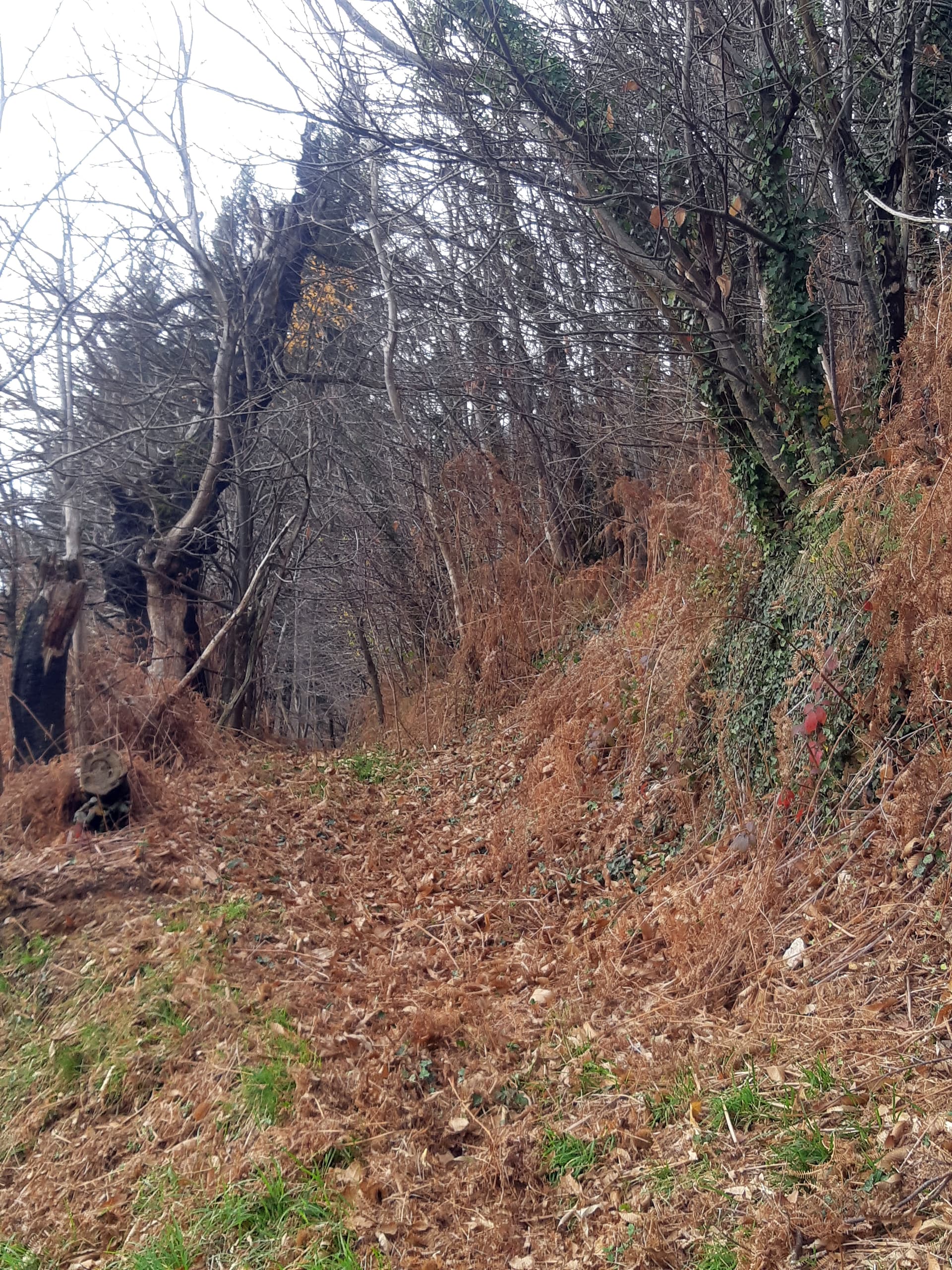
Then turning round through 180° one had a view over the Lot Valley, where I’d walked the other day (when the weather was less murky)
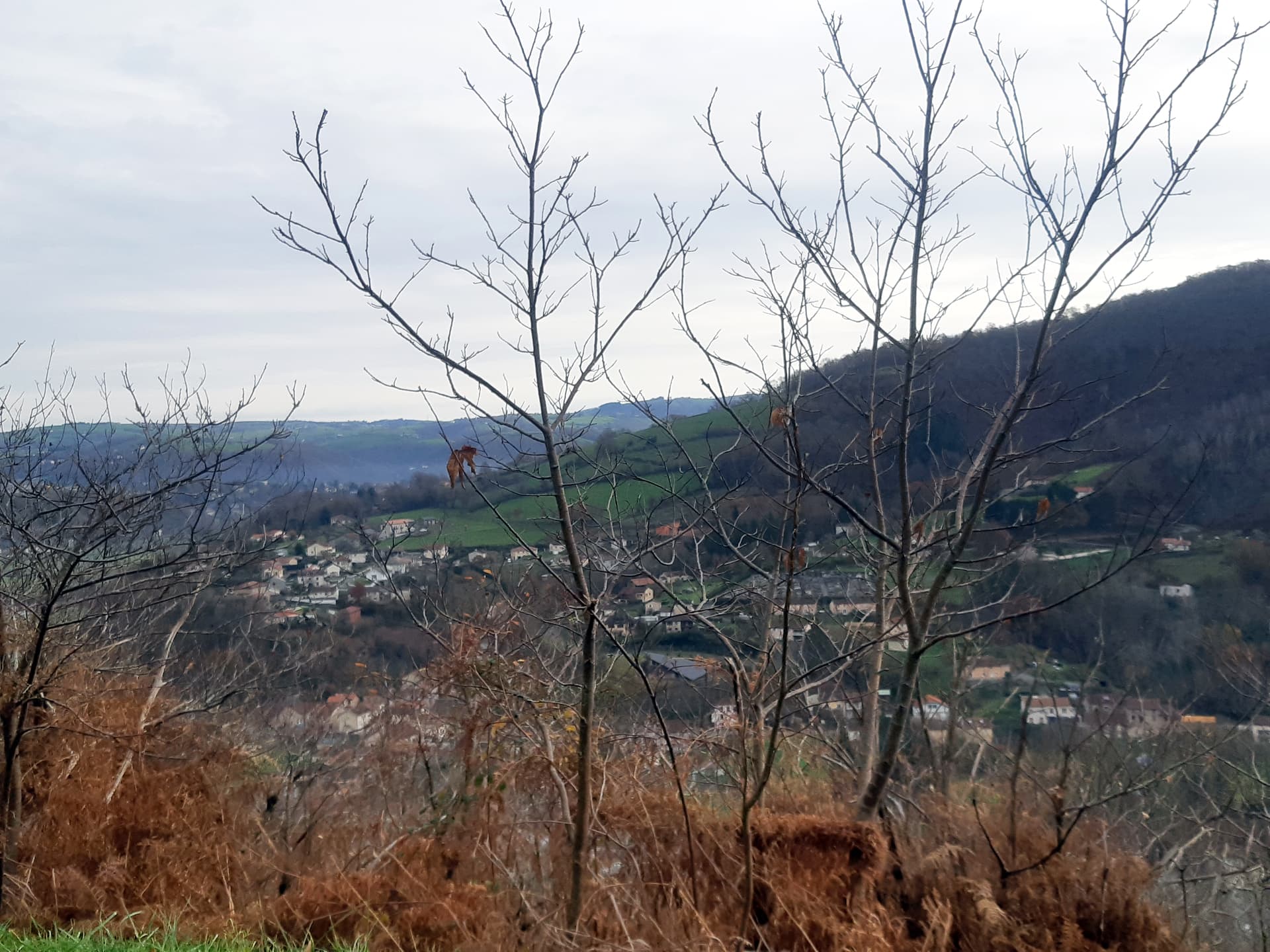
Stopping for photos meant I got left behind as everyone else strode up the second half of the hill…
.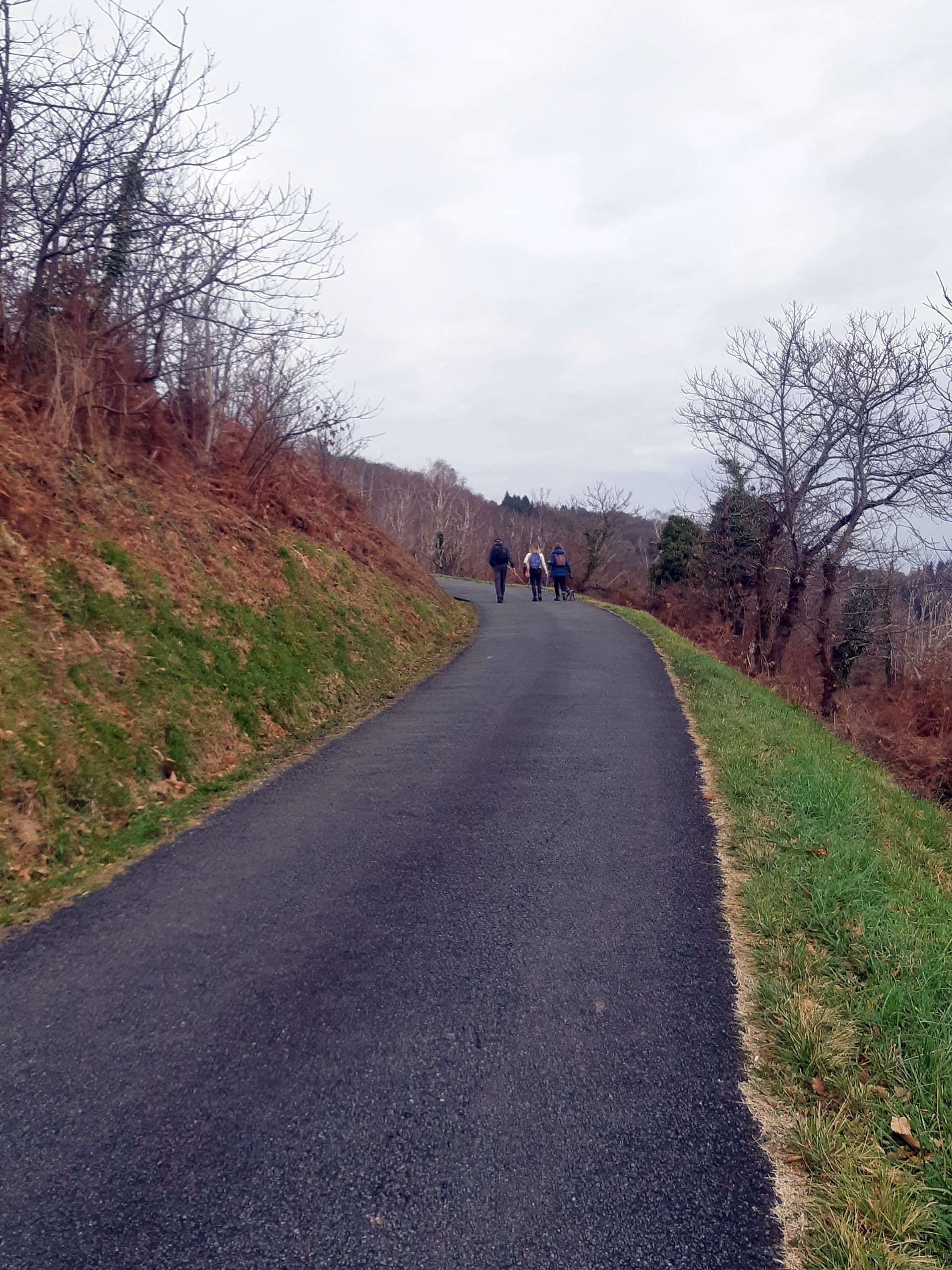
Much higher now, but still a way to go…
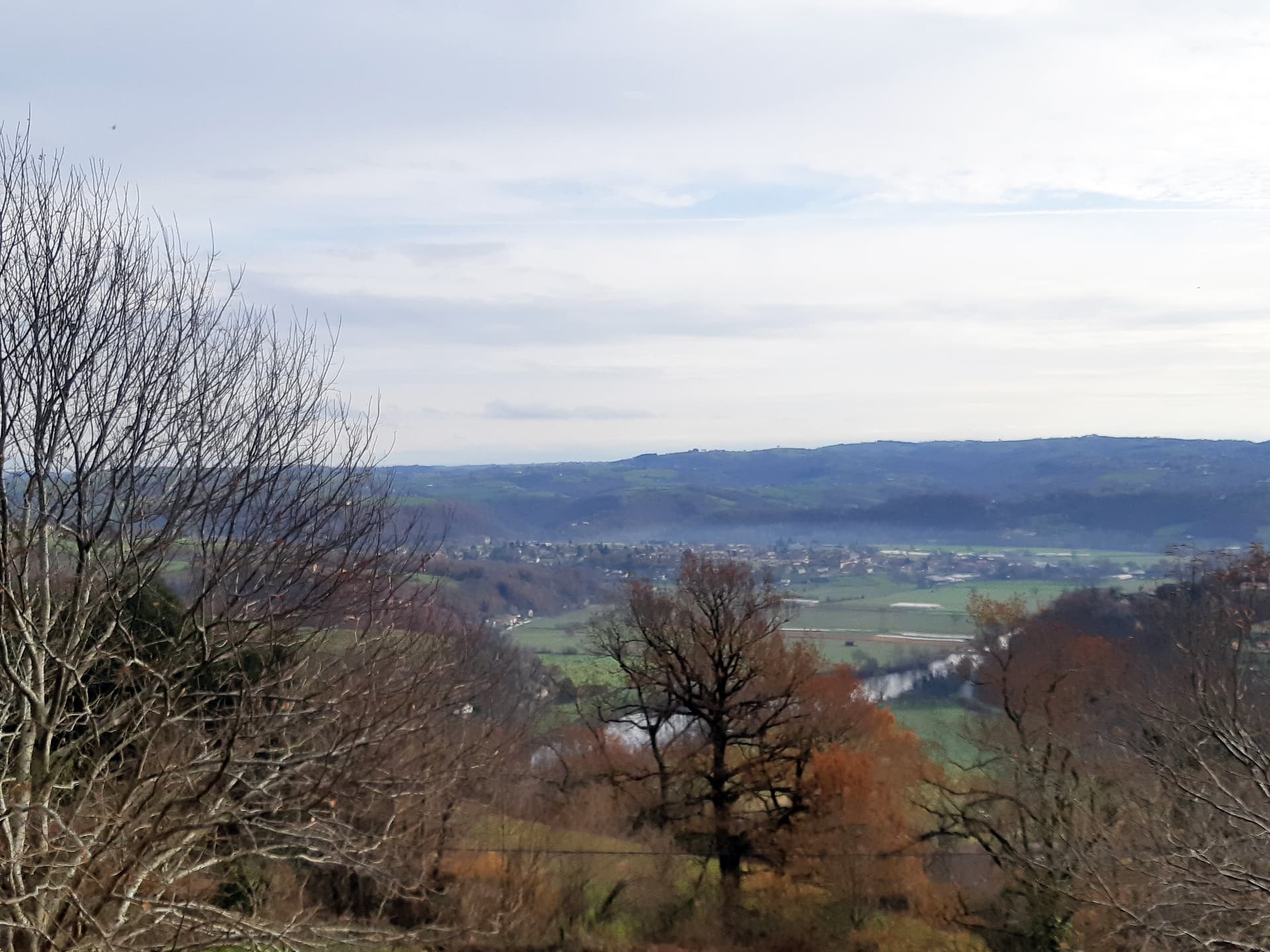
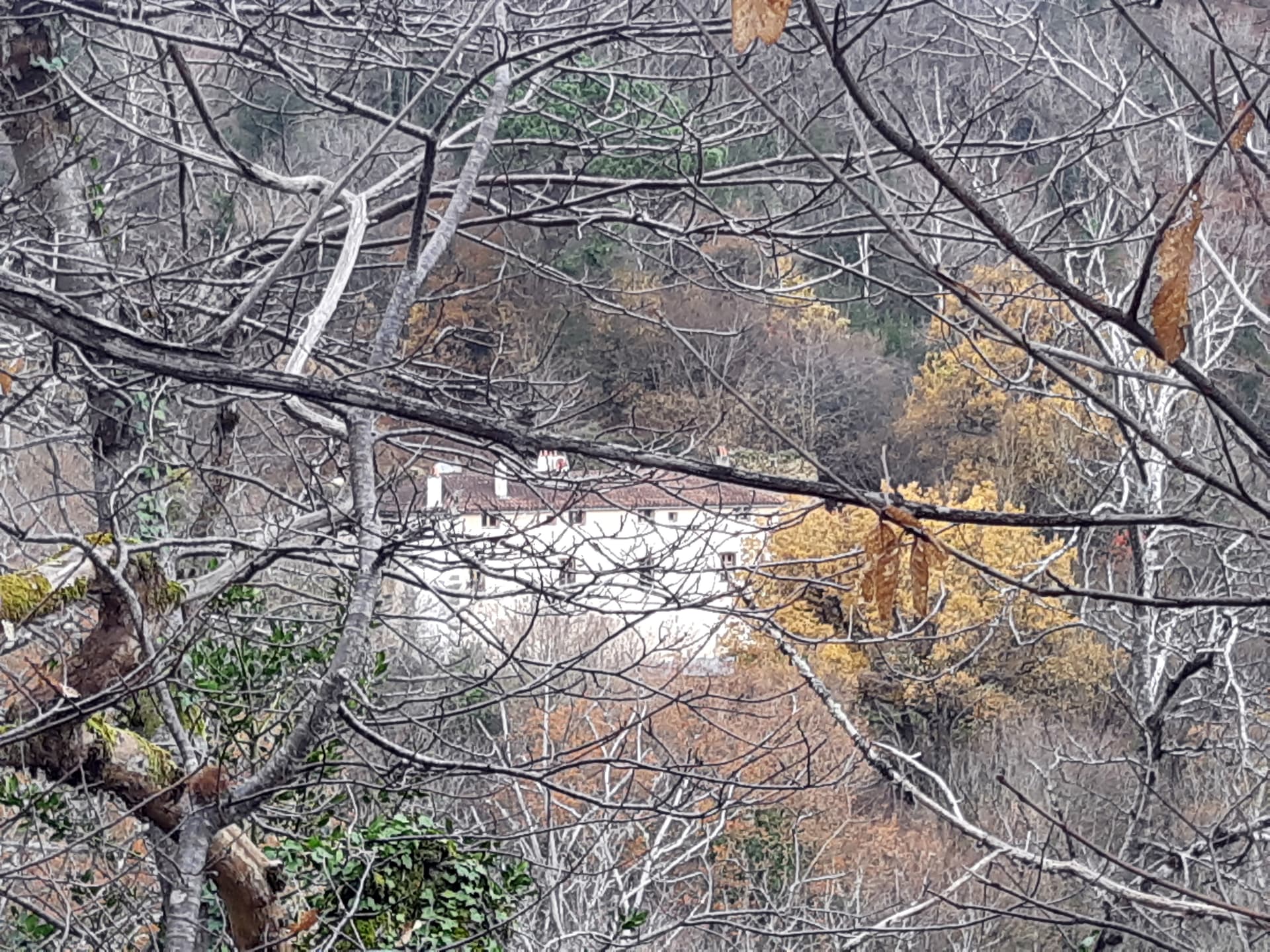
In summer this house in the woods is hidden by foliage and I was hoping to get a better view of it because it has a mediaeval defensive tower attached to the far side, but unfortunately, it’s not really visible in the photo and because the house is newly painted, its considerable age is less apparent.
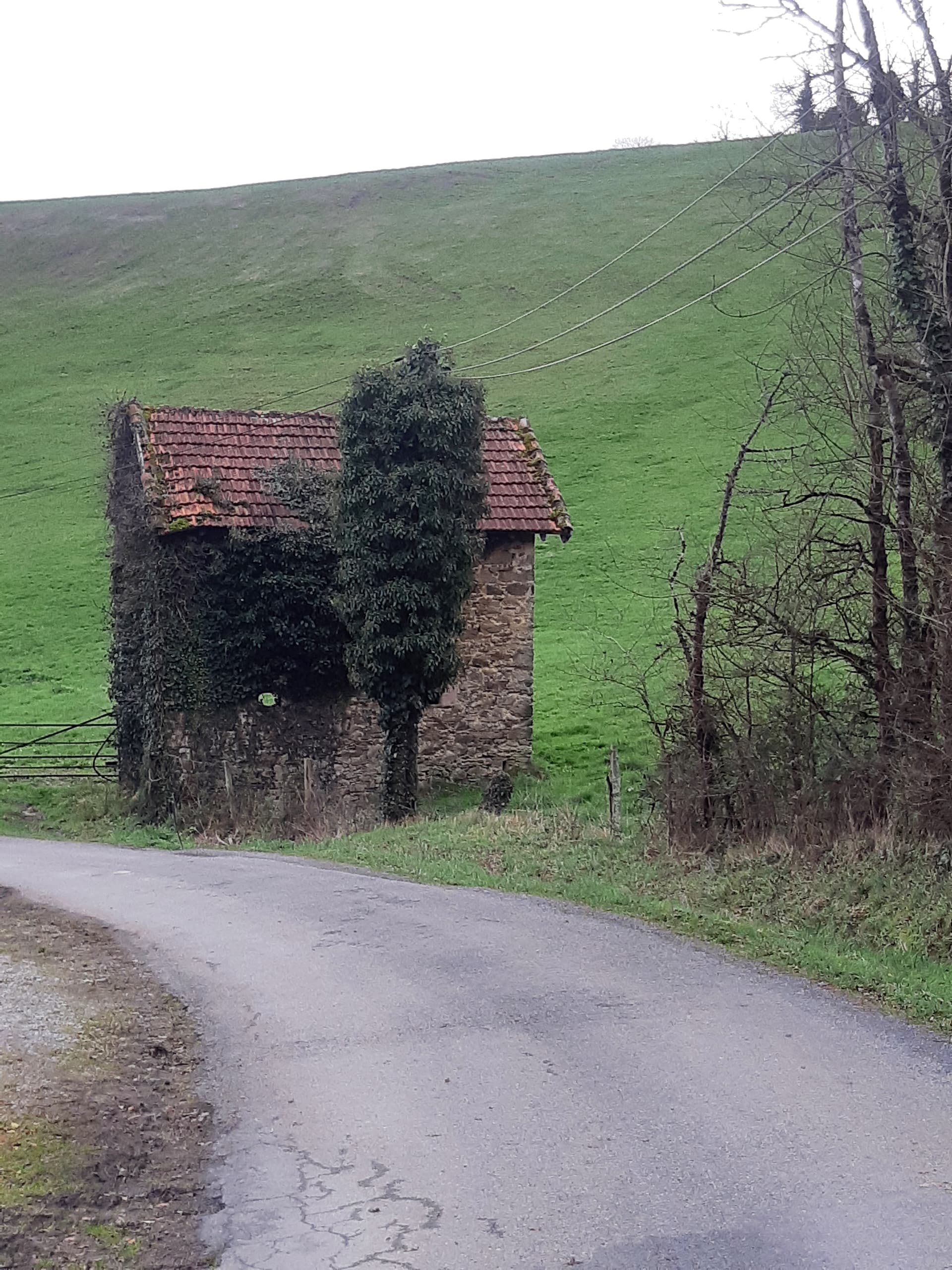
I’m always happy to see this charming little barn (and not just because it means we’ve almost reached the top)
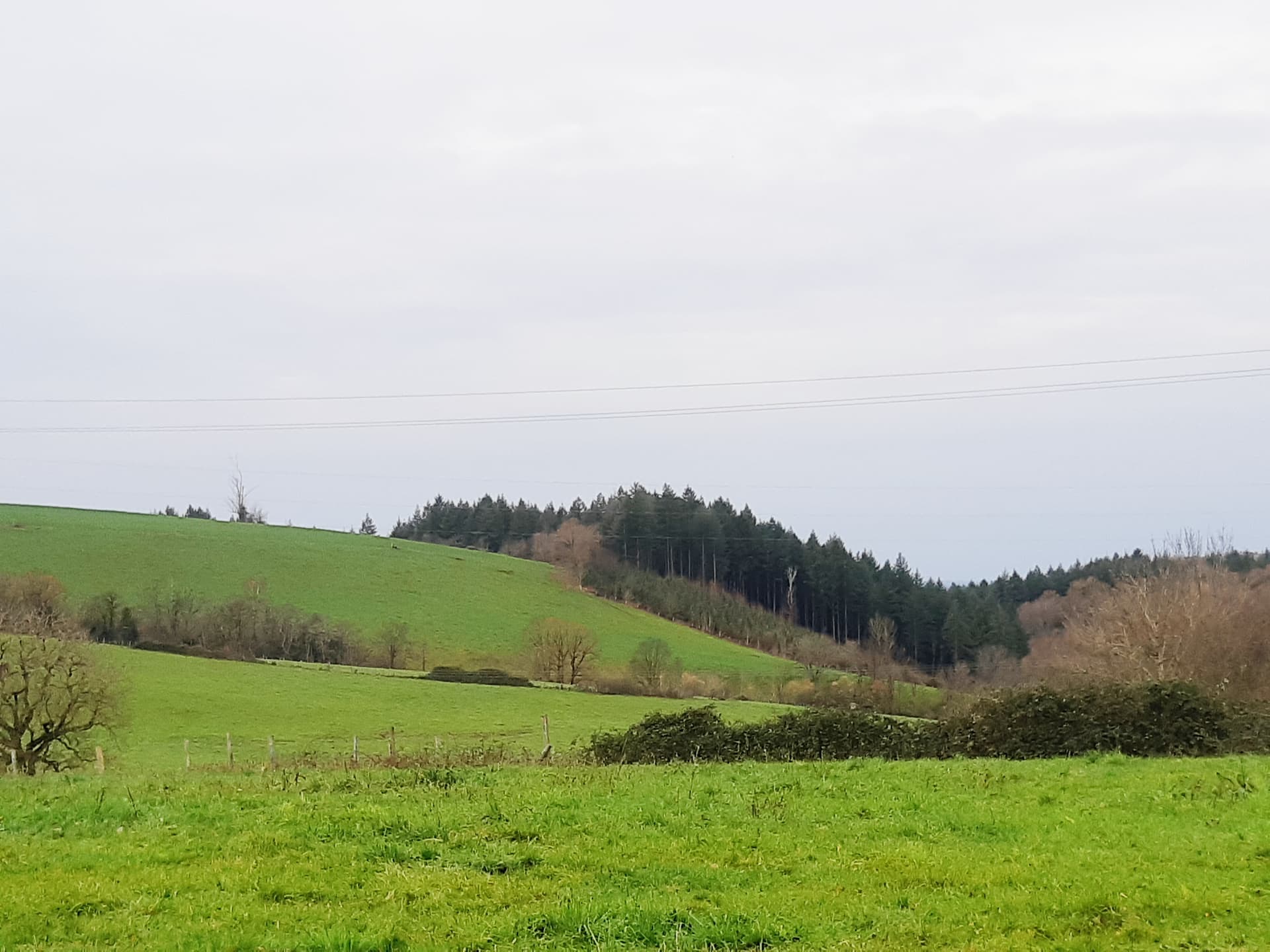
At the top to the north, in that murk lies the Cantal; but dear reader, you’ll have to imagine this too.
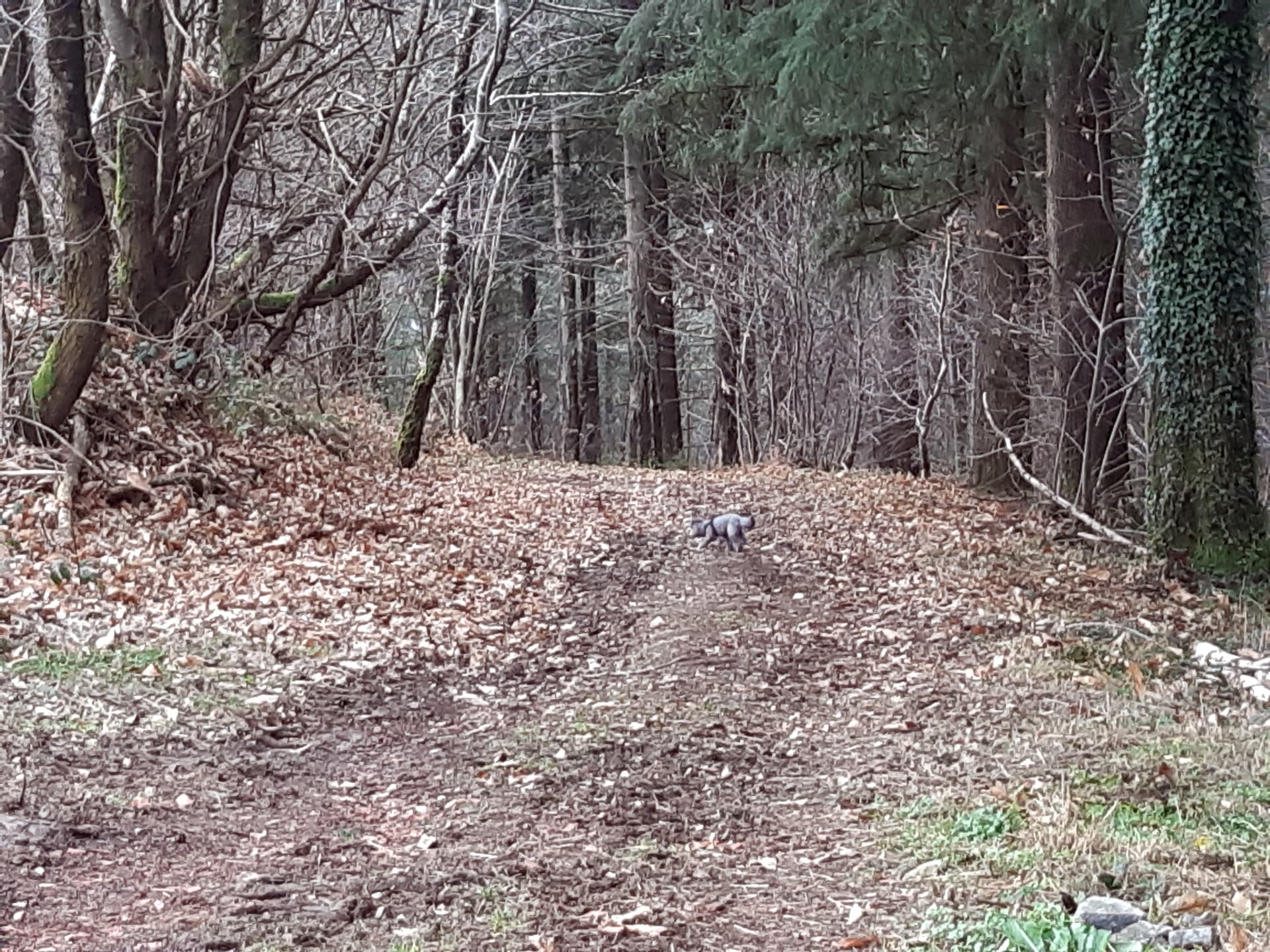
Soon, it’s another stage of the walk as Gigi leads the way into another forest, although actually one side of the chemin is a mediaeval broad-leafed wood and the other side, a modern conifer plantation
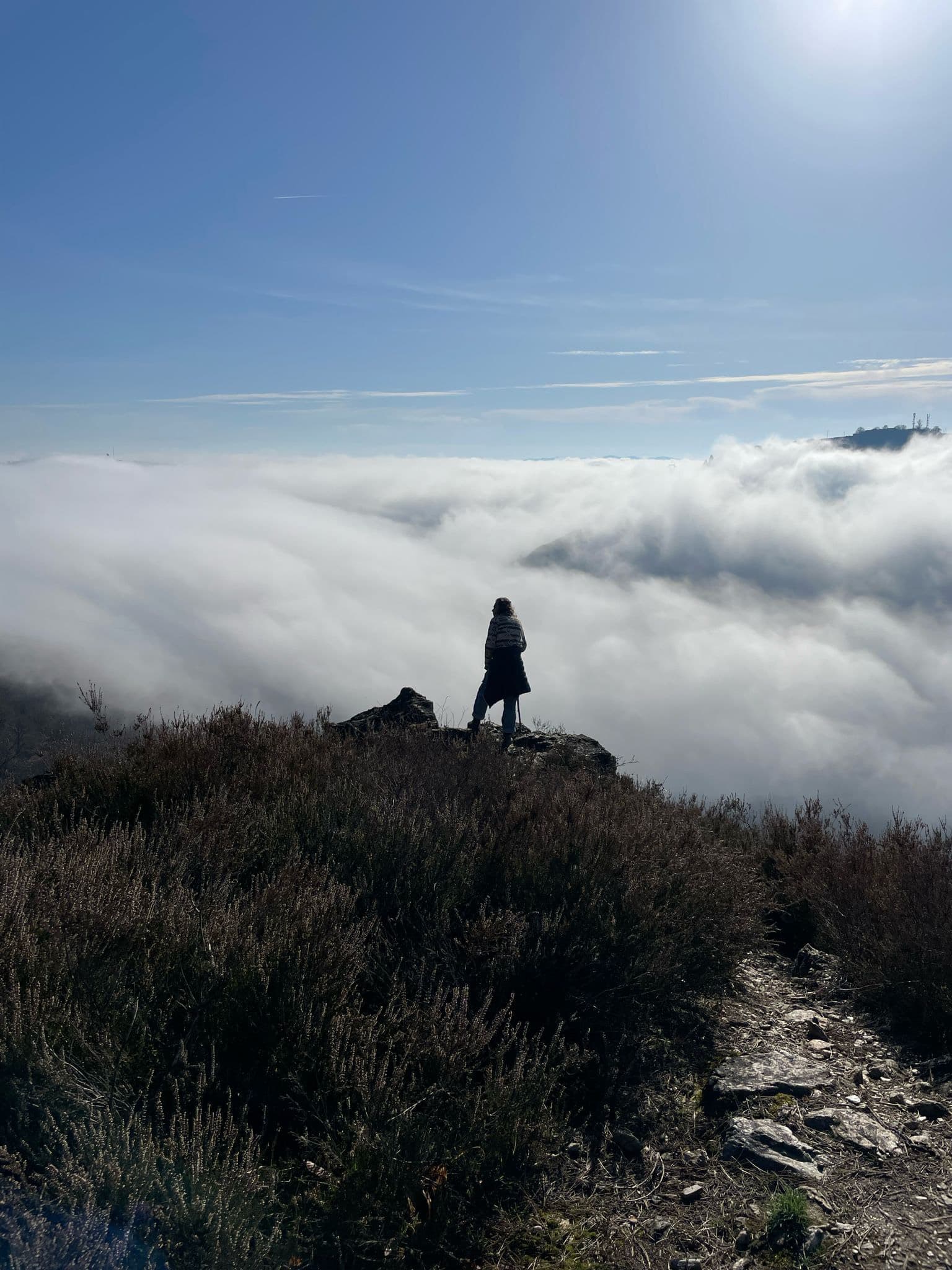
Eventually the path leads to a clearing, which is a traditional spot to halt, eat a banana, or whatever and look at the view - not that it’s always available - this is one of the first photos of the thread taken nearly two years ago:-
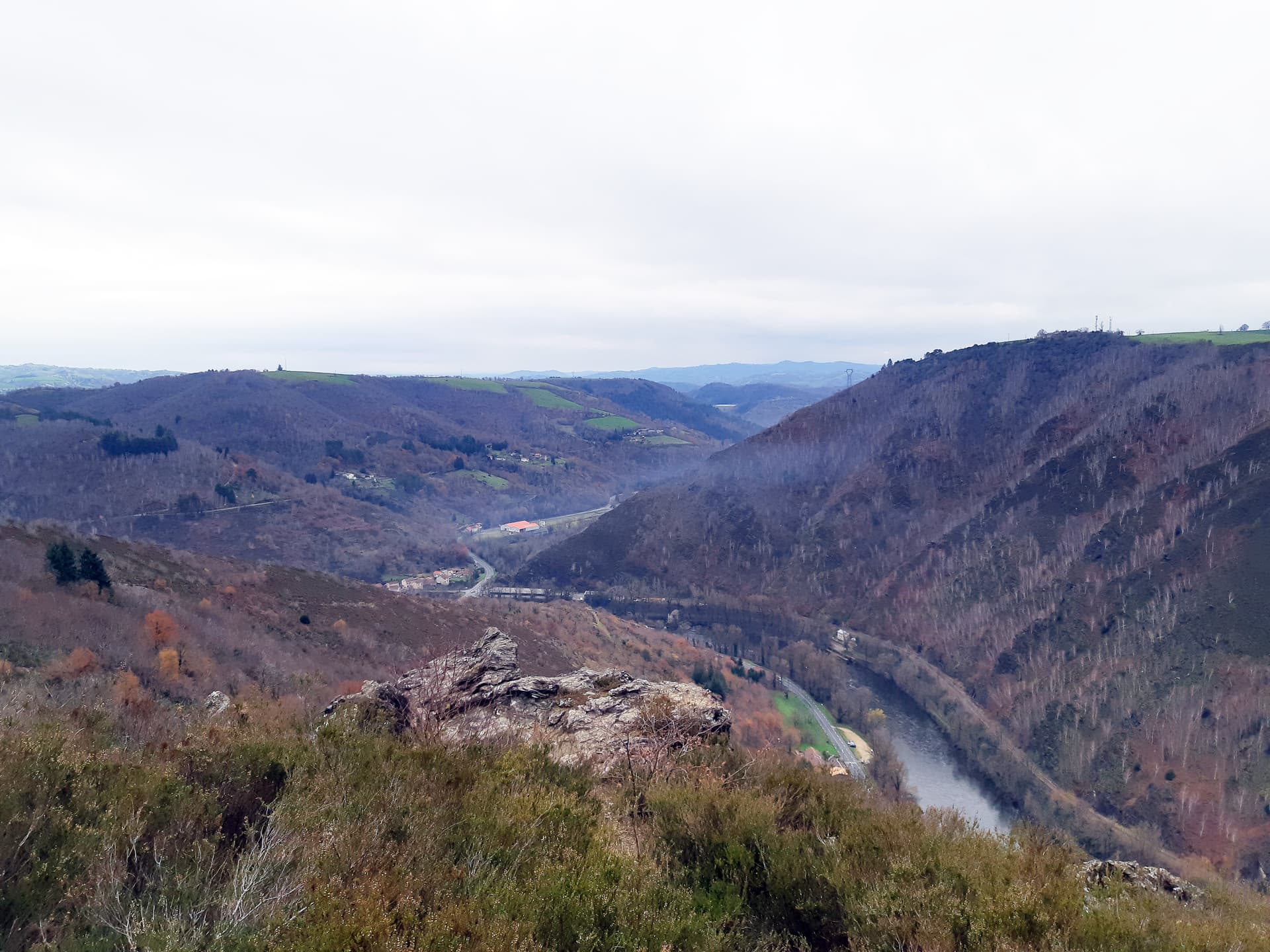
Yesterday’s view was rather less sublime, but you could see a bit more:-
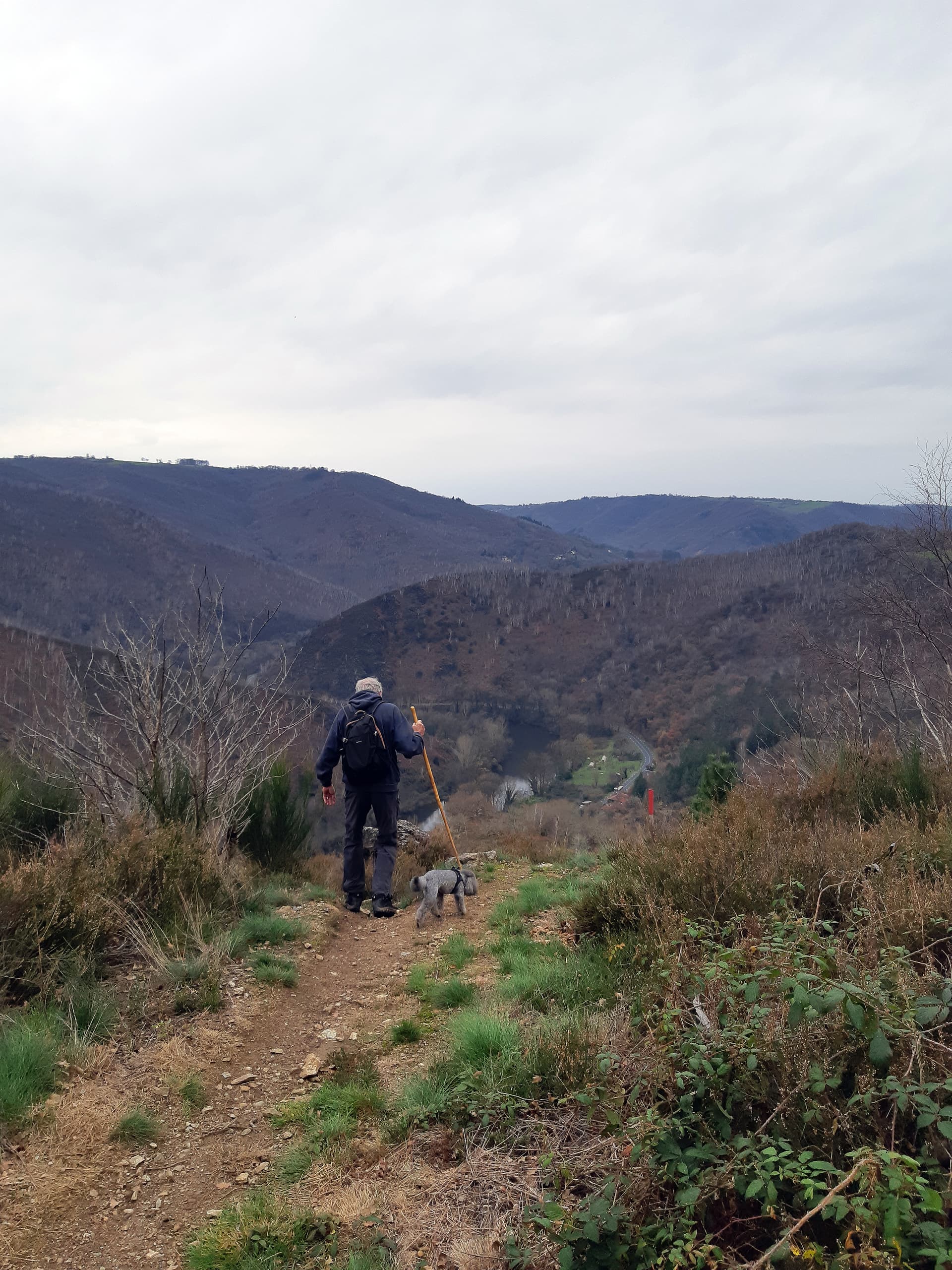
And now we take the track head down - Gigi knows the way…
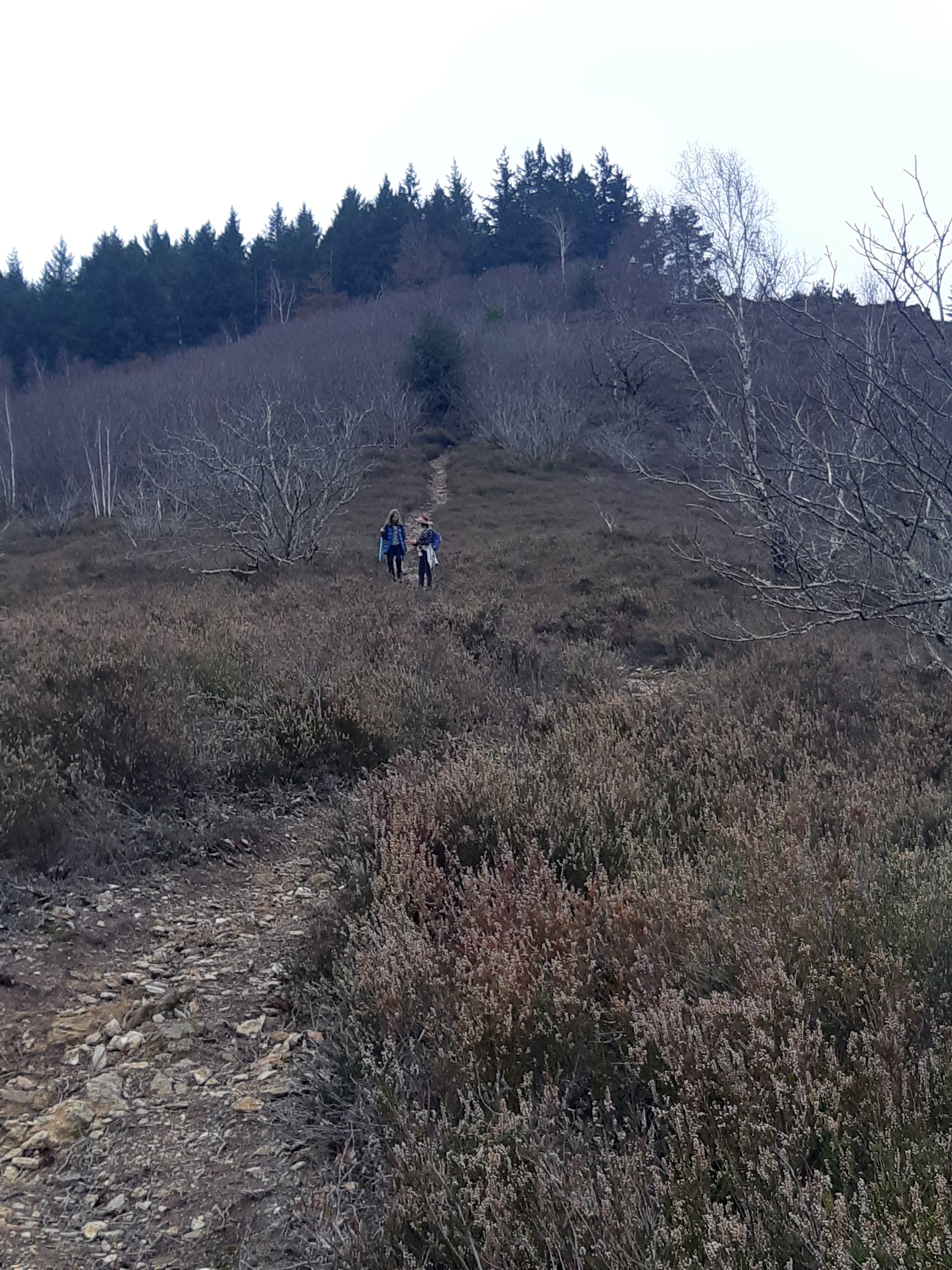
The path is very steep with lots of small loose stones underfoot, but if you have a stick and take your time it’s not difficult. However, Sonja and Mira are taking their time because they’re chatting too much.
Halfway down, there’s this strange monument erected in 2015 to commemorate the death of a 10 year old boy. I don’t know why it’s there or how he died, but it’s very close to a sheer drop of many metres…
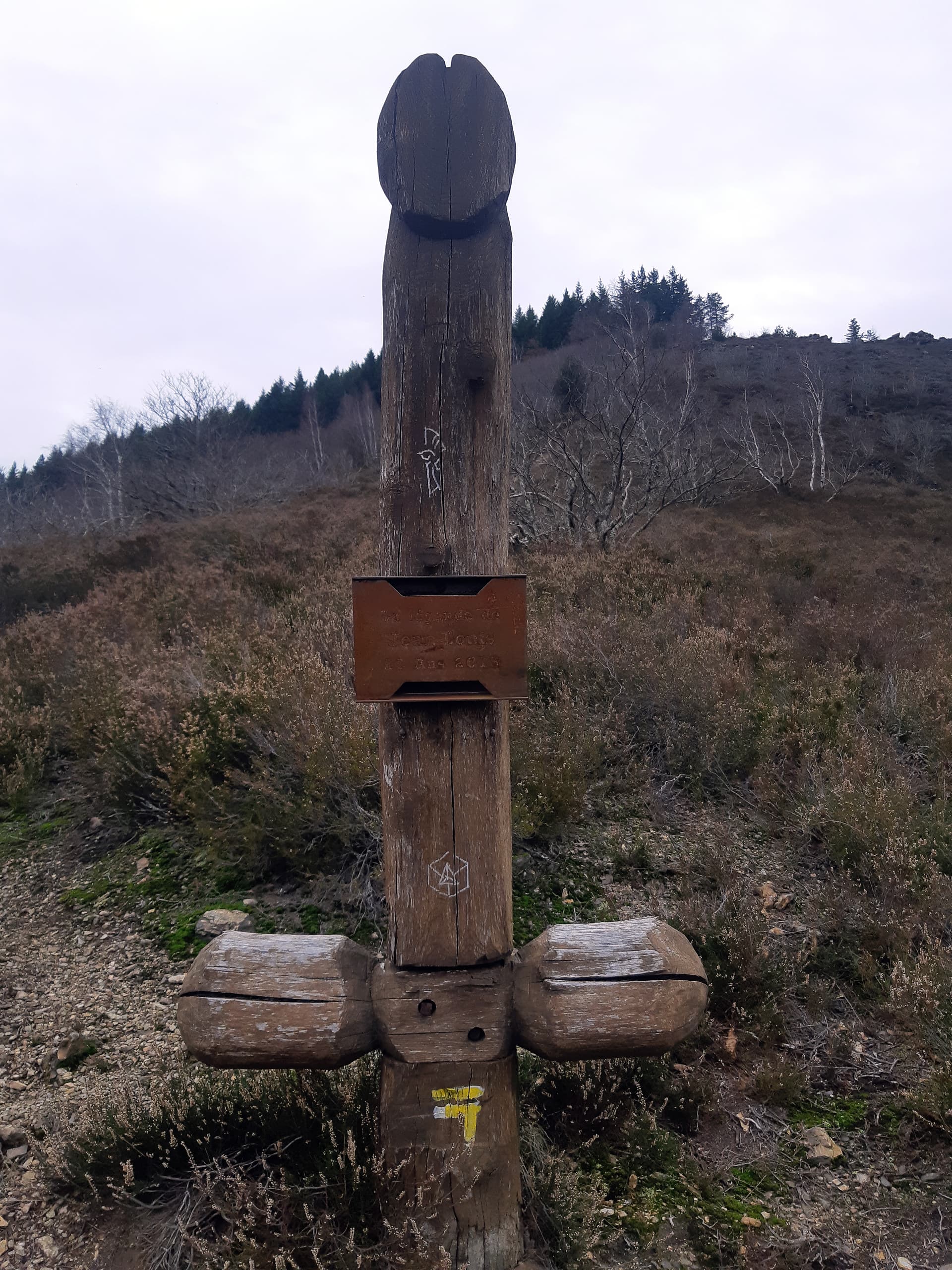
However, after the monument, the path becomes much less steep, though there’s still plenty of stones to slip on
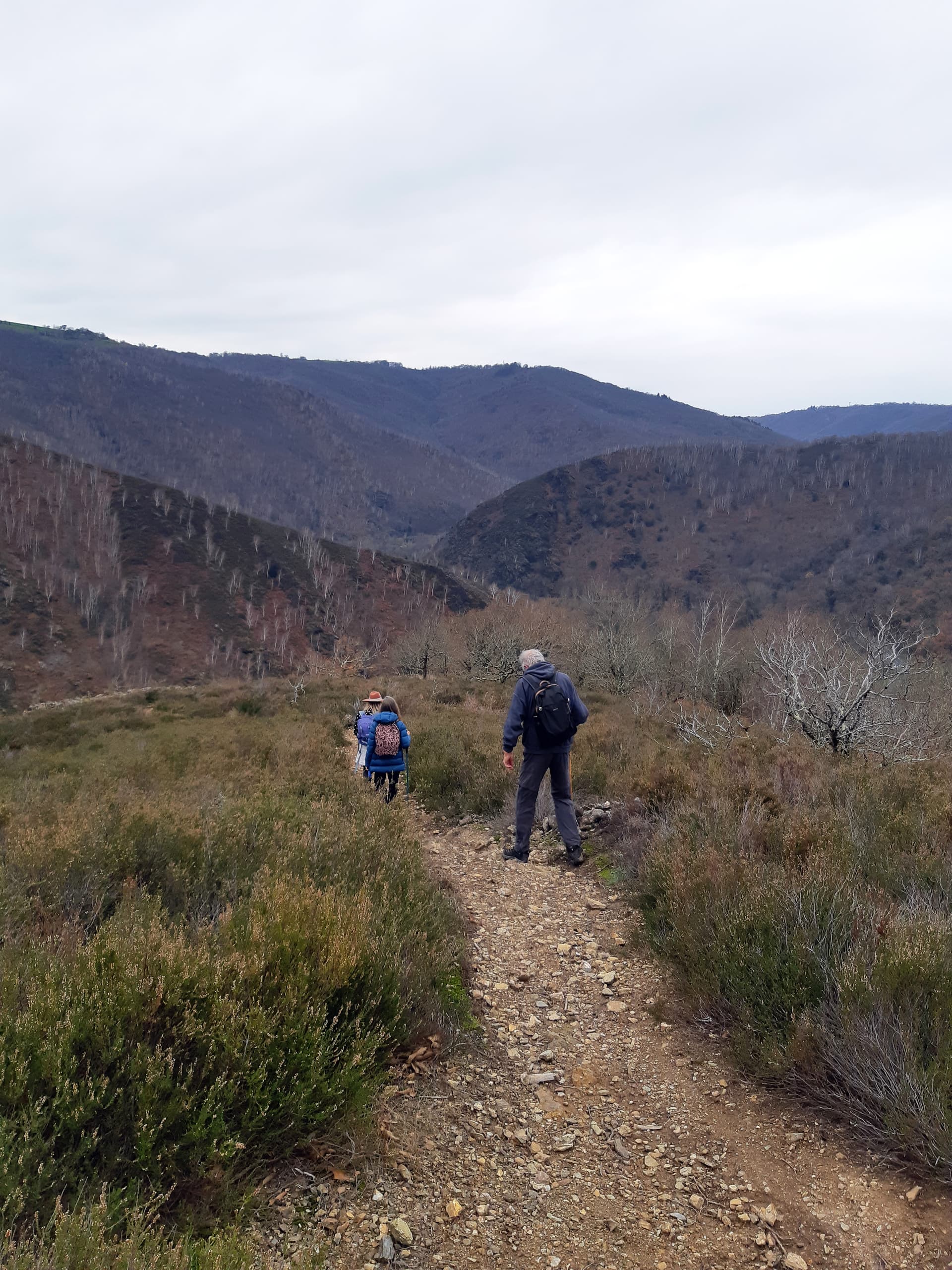
Eventually we enter another lovely little wood - an yet again I fall behind taking photos
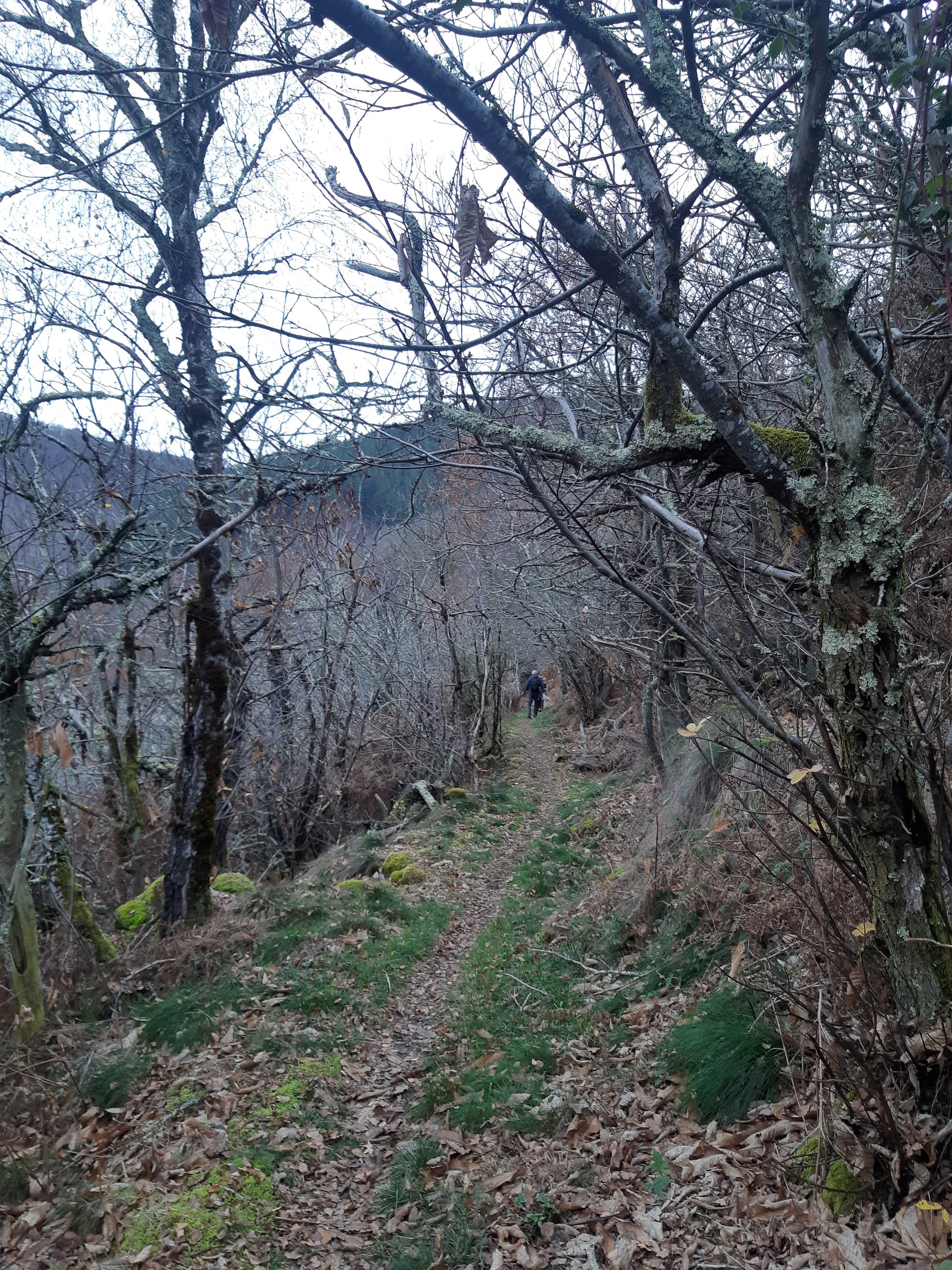
The wood is delightful in any season, but the path through it is difficult in a different way to previous ones, here all the irregularities are hidden by fallen chestnut leaves, but one still has to stop and wonder at the amount of labour that transformed this wood into an essential mediaeval source of food, fuel and building materials - everything came from the woods.
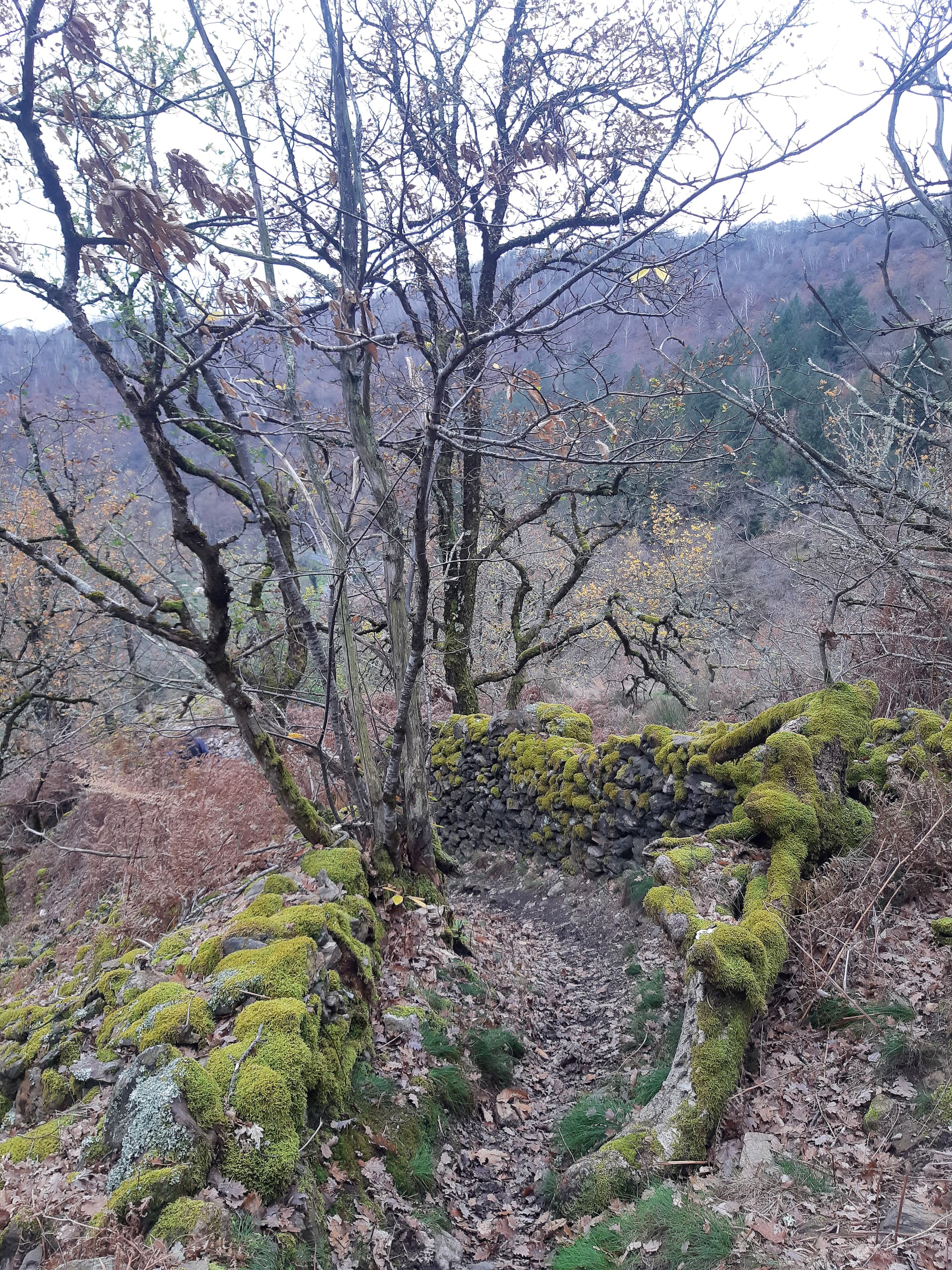
But eventually we descend out of the wood only a couple of hundred metres from home. And my knees spent the whole afternoon recovering - going down is much more punishing than going up!
4 Likes
I love the CDF photo!
Is it only me who sees this monument as phallic? 
Seriously strange thing to commemorate a 10 year old child
1 Like
Agreed - VERY bizarre.
It’s so obviously phallic looking, I doubt we’re the only ones. Of course it may look very different from another angle and Mark may have been being mischievous 
Moi…?
May be modelled on a some ancient fertility stone, but it also strikes me as being cruciform, but rather than being an inverted crucifix (heaven forbid!) its cross-piece is at a convenient height for sitting and looking at the view over the Lot Valley.
Many of the hills around here have a large cross (un calvaire) at a high point, that often commemorates some tragic event, or deliverance from it. There’s a late C19th one above the Marcillac vineyards thanking God for deliverance from the scourge of phylloxera.
Also , we’re on the pellegrin via podiensis route to Santiago de Compostella and there’s quite a steep few chemins marked with the Stations of the Cross, probably inspired by the chemin de Croix at the (fairly) nearby shrine of Rocamadour
1 Like
With a rounded top with a slit in it? P L E A S E. 
Surely it can be both?
I did a Google Lens search before posting my reply and every image that came up was cruciform. I think it’s probably a recent hybridised artefact that combines historical elements of local Christian culture (death and resurrection) with aspects of another culture - possibly Indian - the lingam as a generative force etc. There’s a certainly a sprinkling of neo-pagan aveyronnais around here.
1 Like
I saw you posted this a day or so ago, Mark, but I’ve been saving it to take my time with the photos and to imagine the walk and scenery. Thanks for posting.
1 Like
Thanks - still wondering about the strange monument because it’s a sort of cultural mish-mash, sorry ‘hybridised’ as we say in the trade.
As I noted above, its location resembles that of many local calvaires that mark a particular event, and this one appears to mark the death of a child, but OTOH it also partially resembles an Indian lingam pillar, but these grow out of a (female) lotus flower that symbolises the yoni and there’s nothing like that in this instance.
It would be no surprise if it was an intentional fusion of styles, and also possible the parents just liked that.
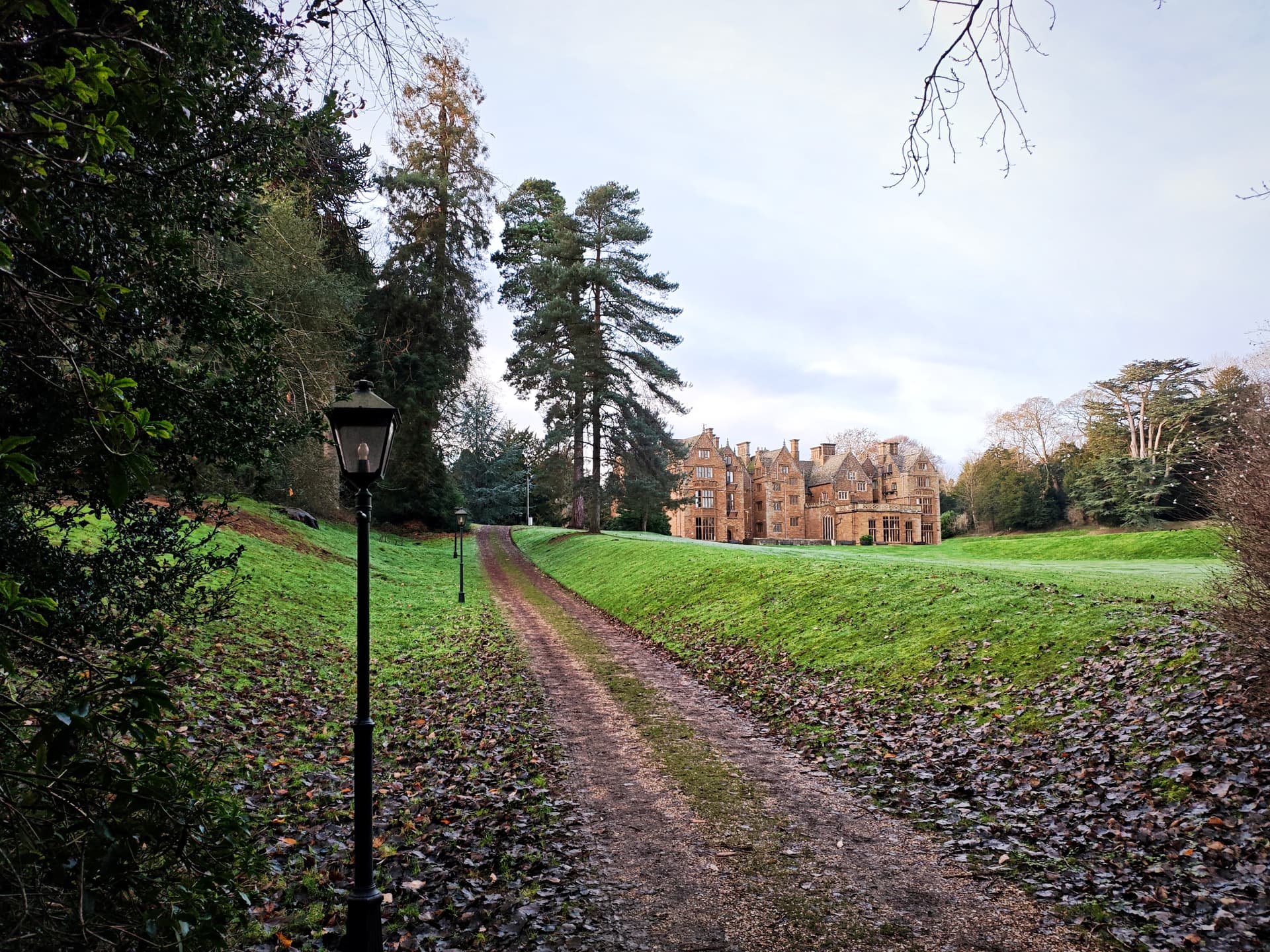
After days of rain we had a bright, sunny afternoon here, but we couldn’t do a local walk because everything is under water. We’ve also been round Blenheim a few times and it’s nice to have a change, so we headed up to Wroxton north of Banbury, where there’s a stately home that’s become an American college. The grounds are open and generally well drained, so we gave it a go.
The way in is to the left.
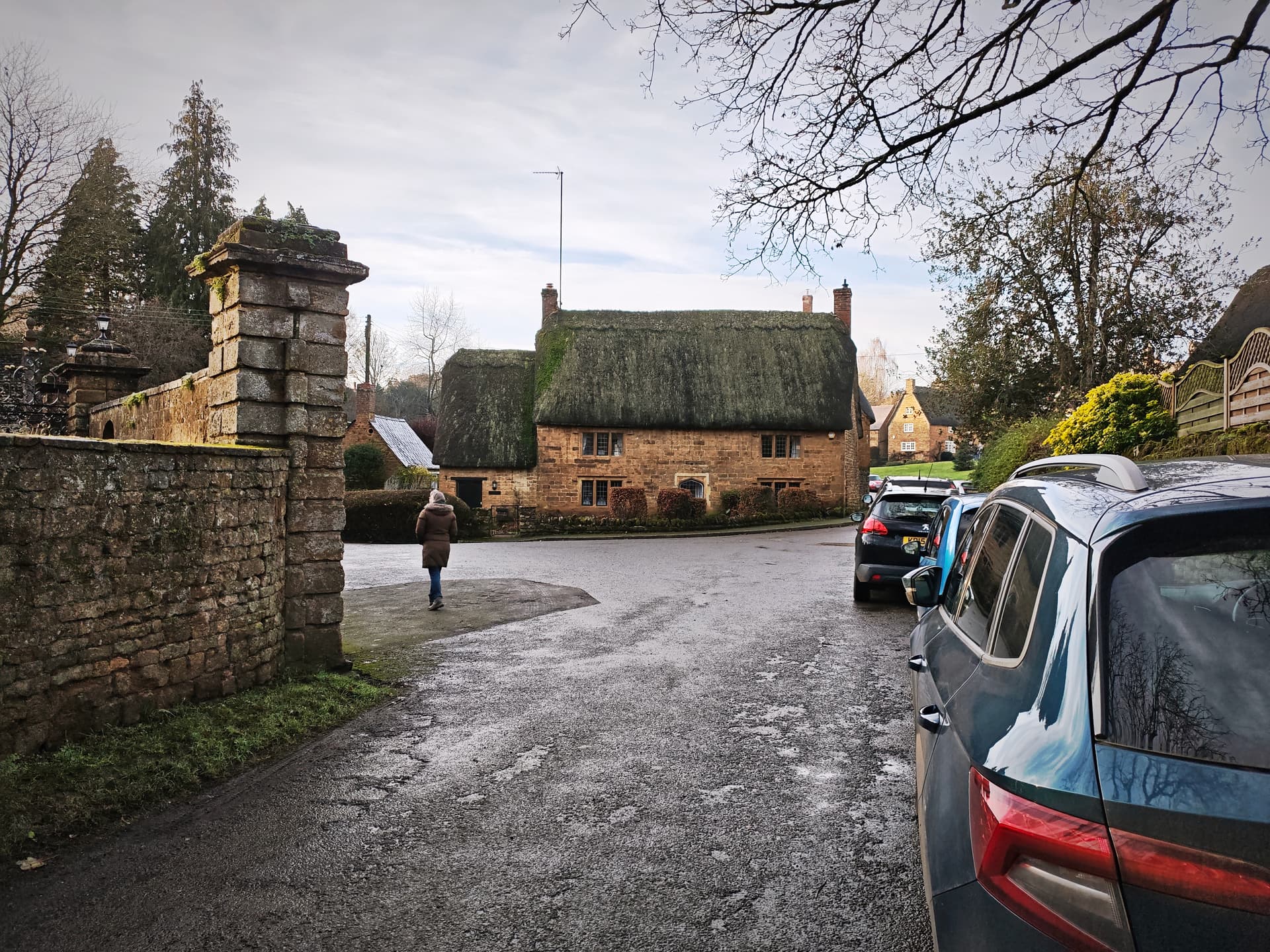
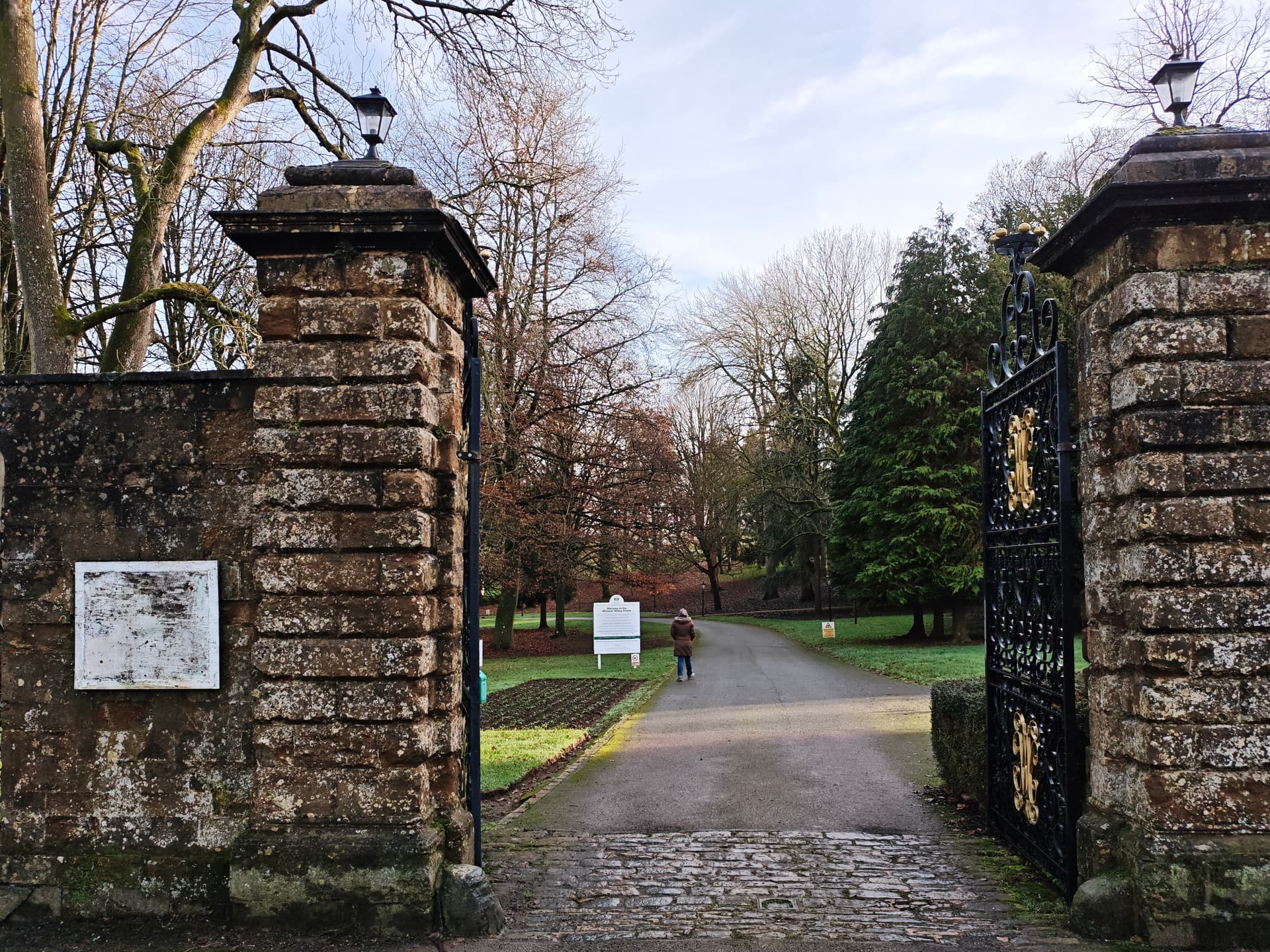
The house is a hotch potch of styles, obviously added to at sdmi-random over the ages.
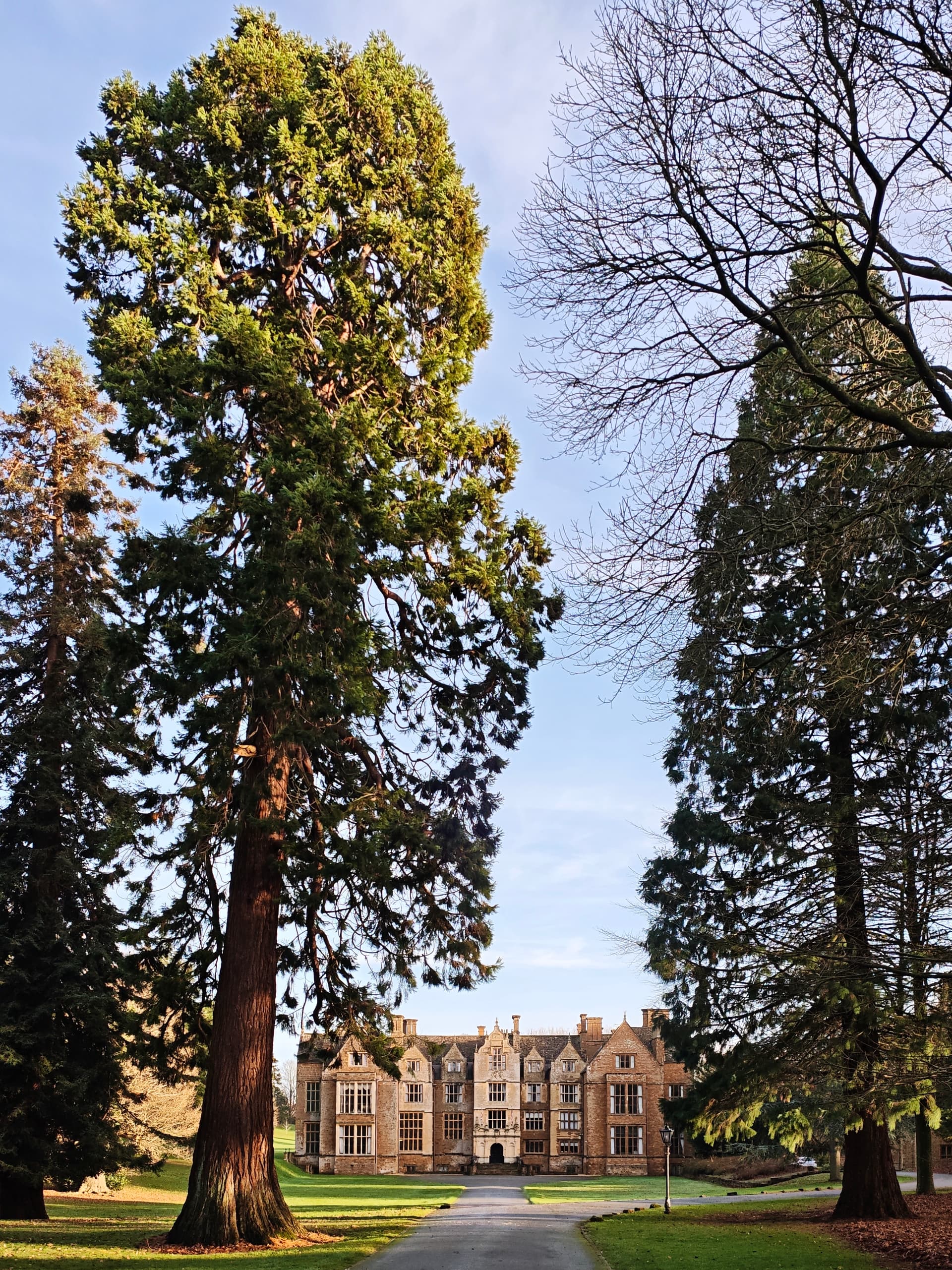
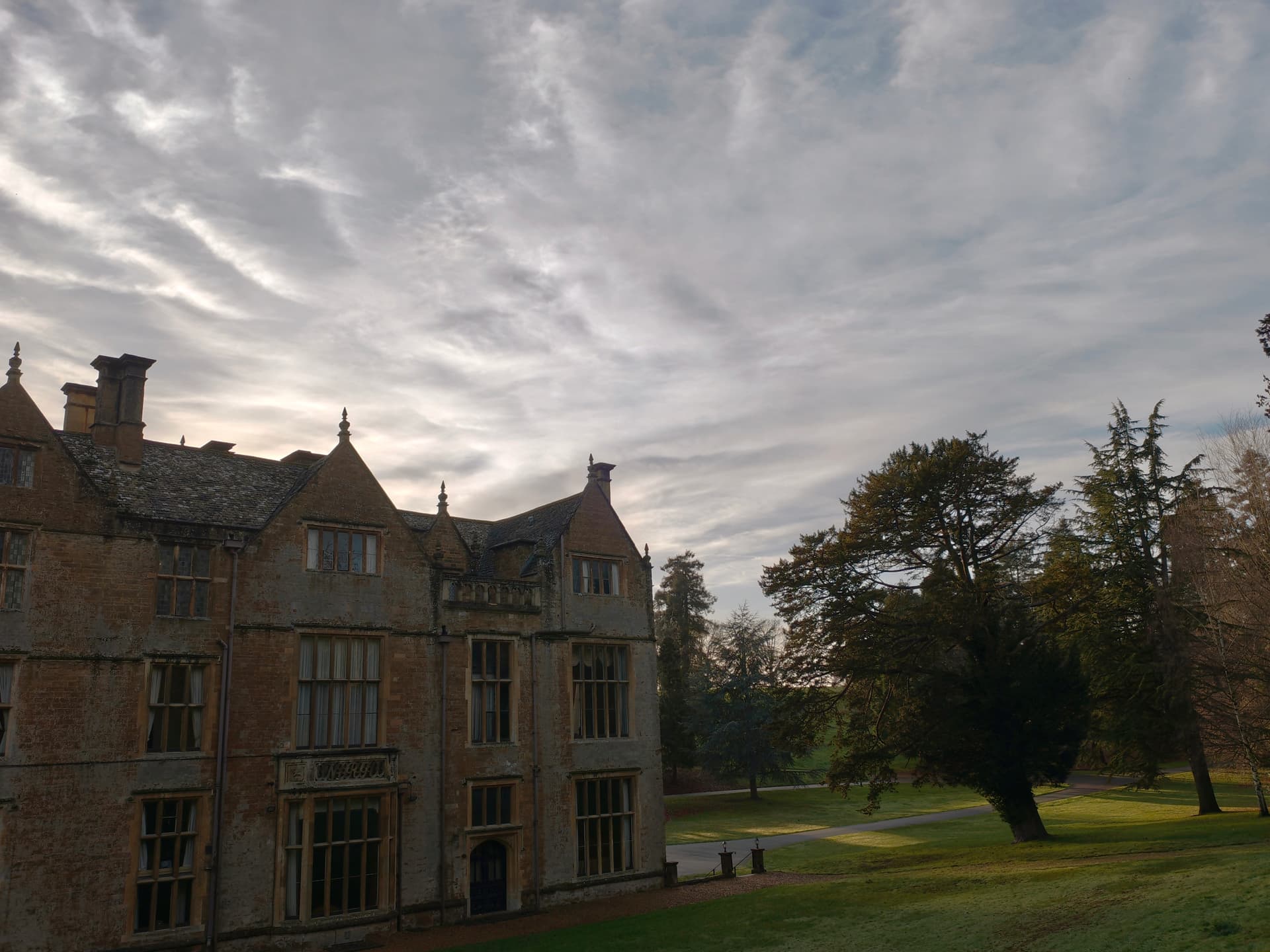
There’s lots of small paths, lakes and streams in the grounds, and we just walked in a loop of about 4 or 5 km from one end to the other and back up.
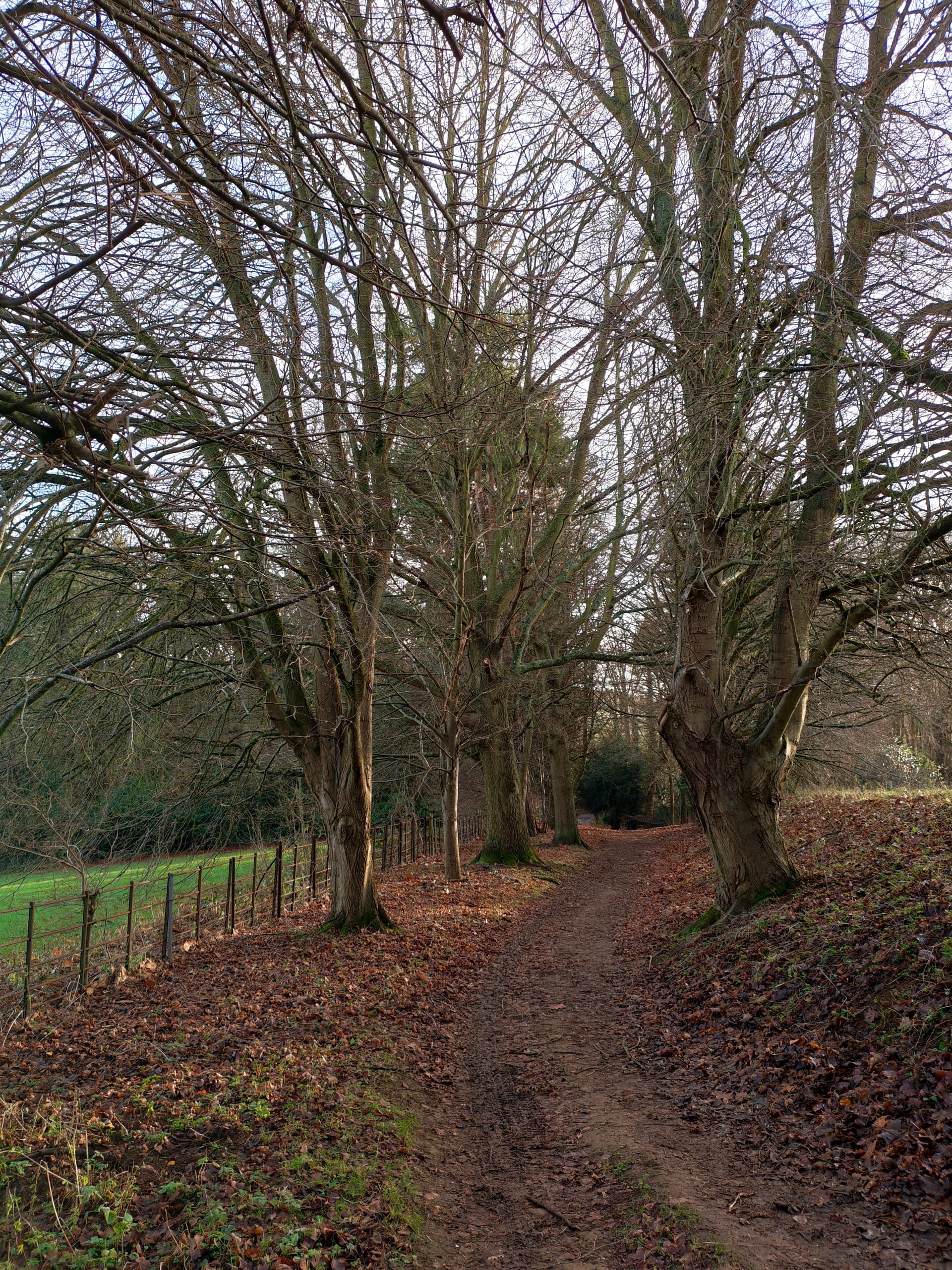
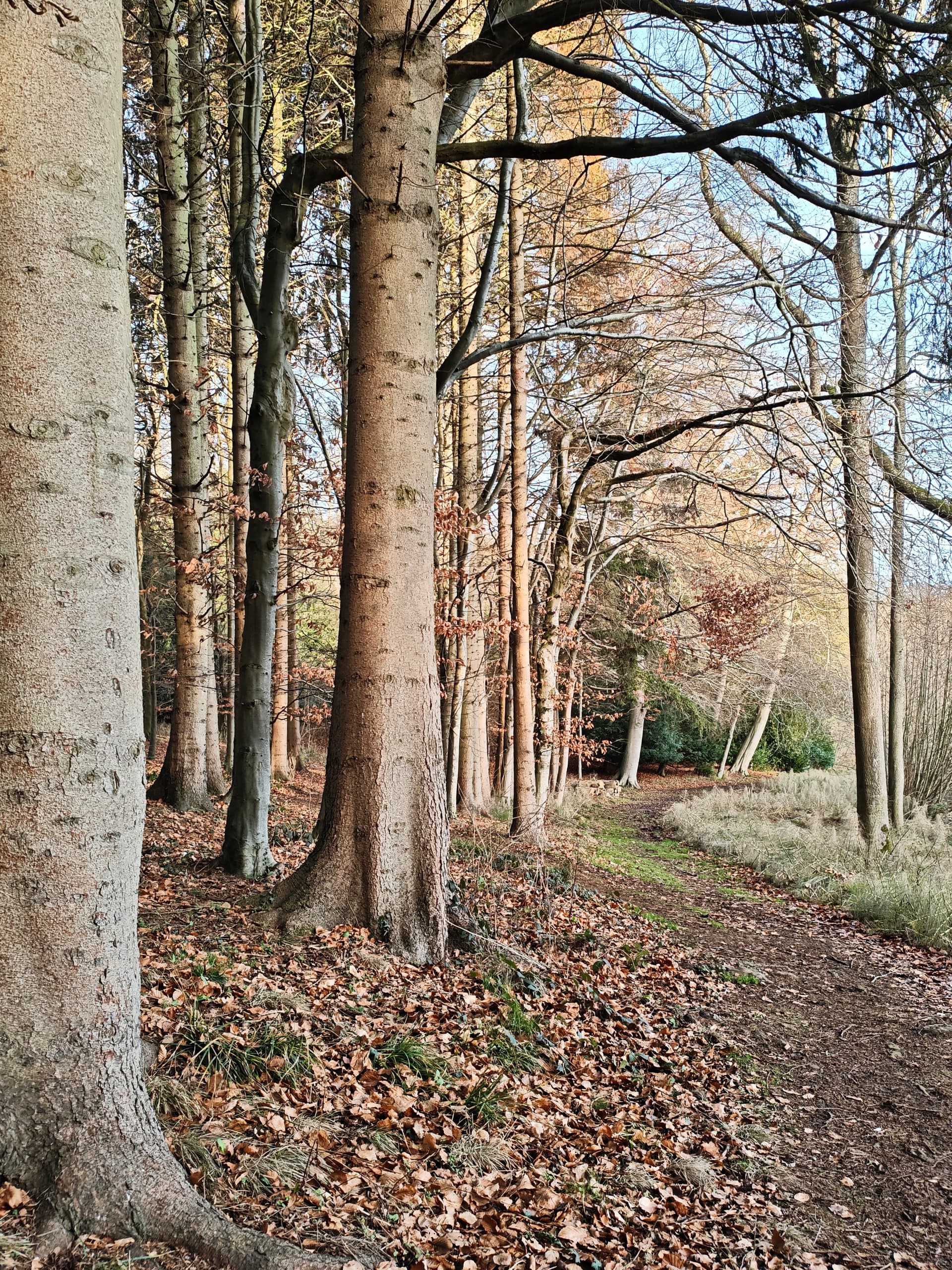
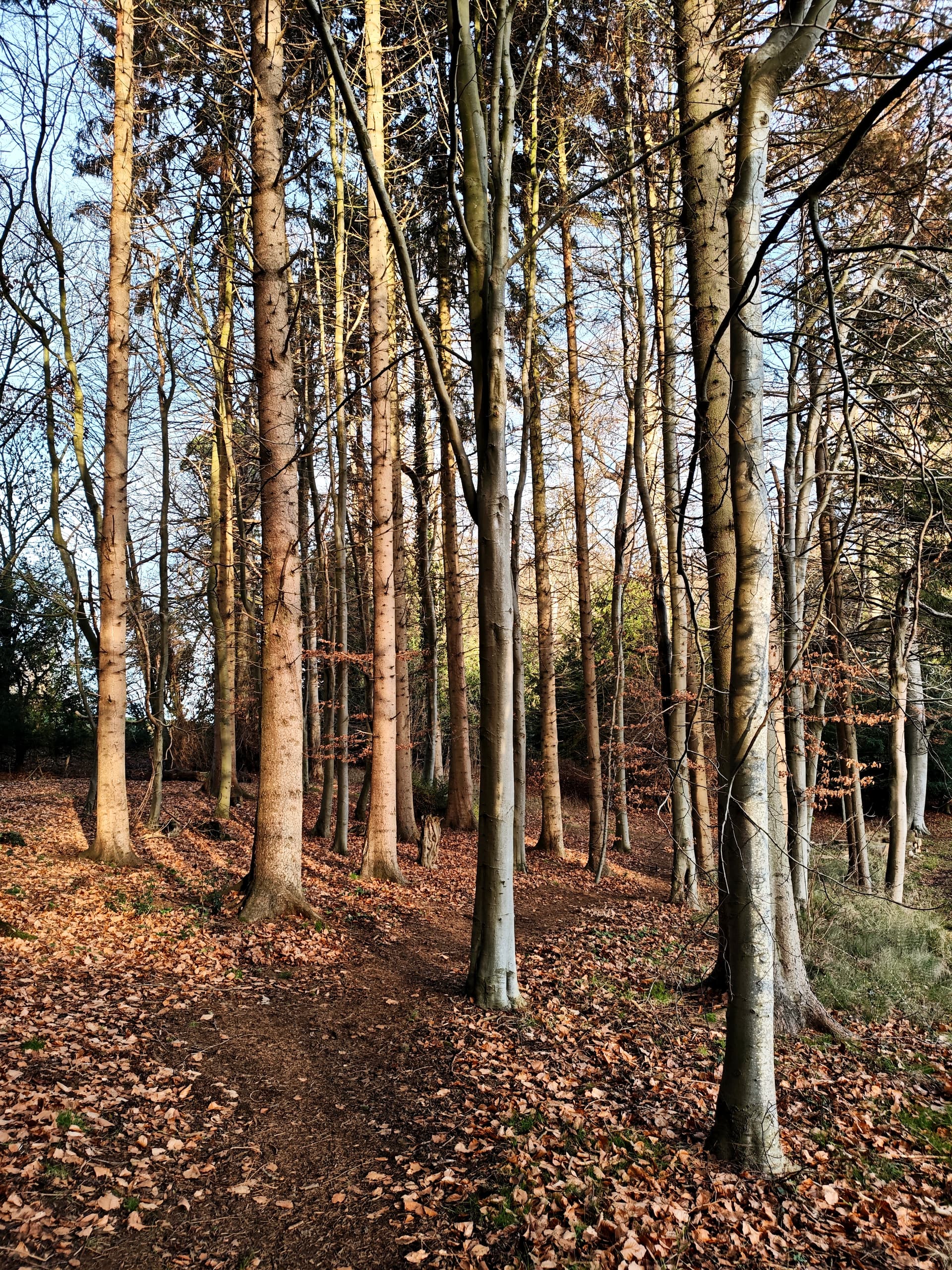
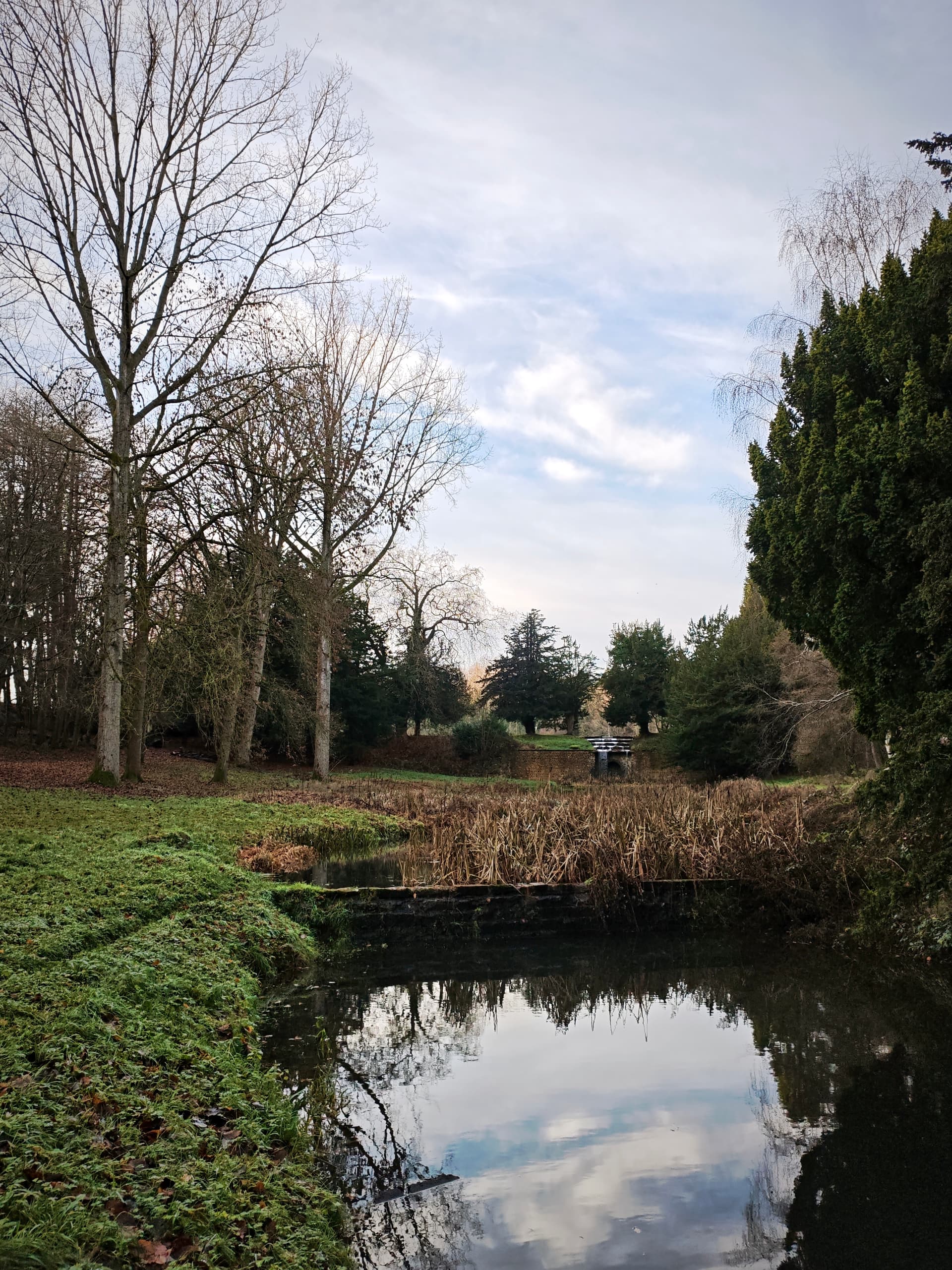
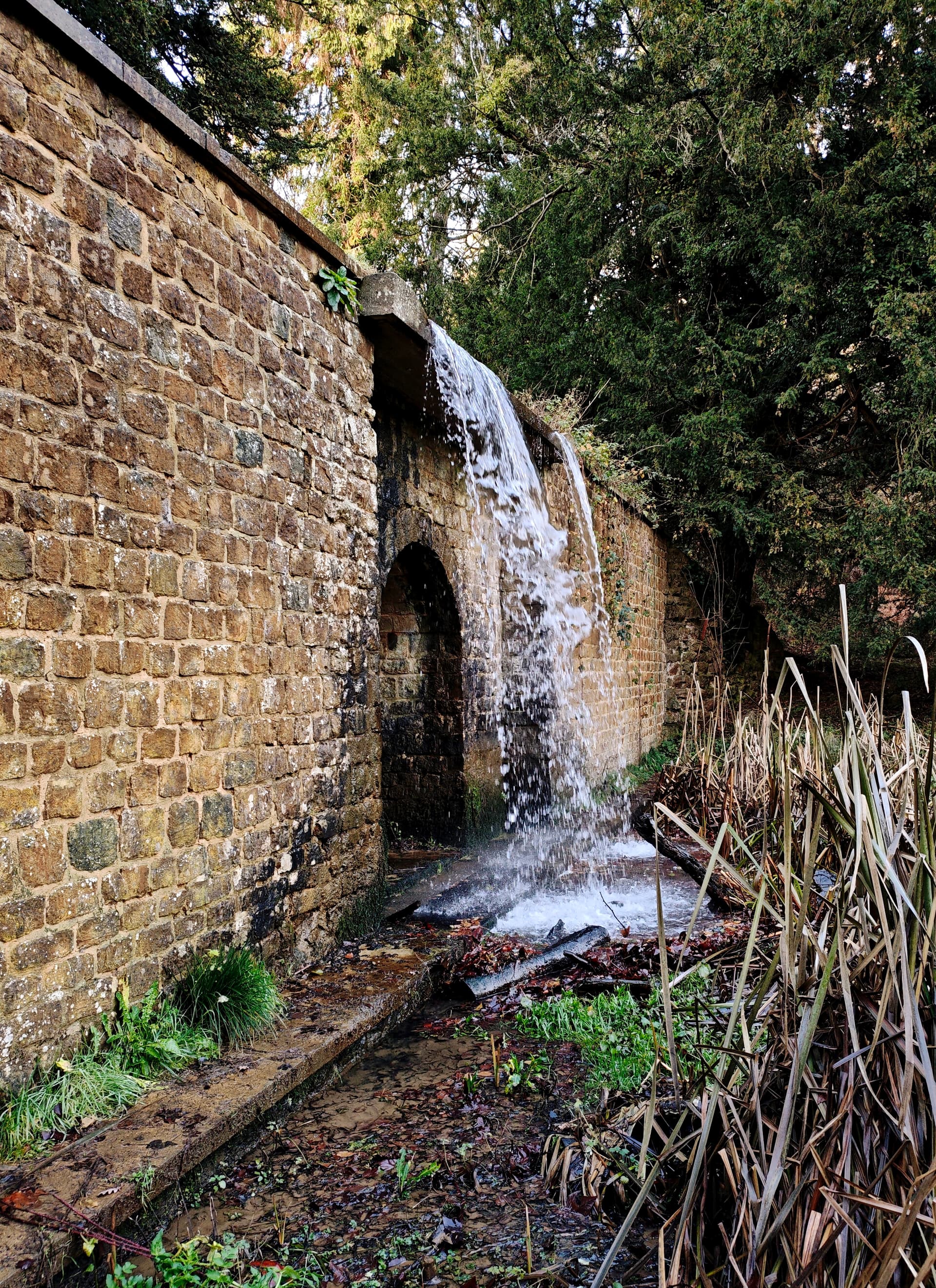
Part way down one of the streams there’s a high mound that obviously had a tower or something on it, and there’s a single good view up to a waterfall (more later).
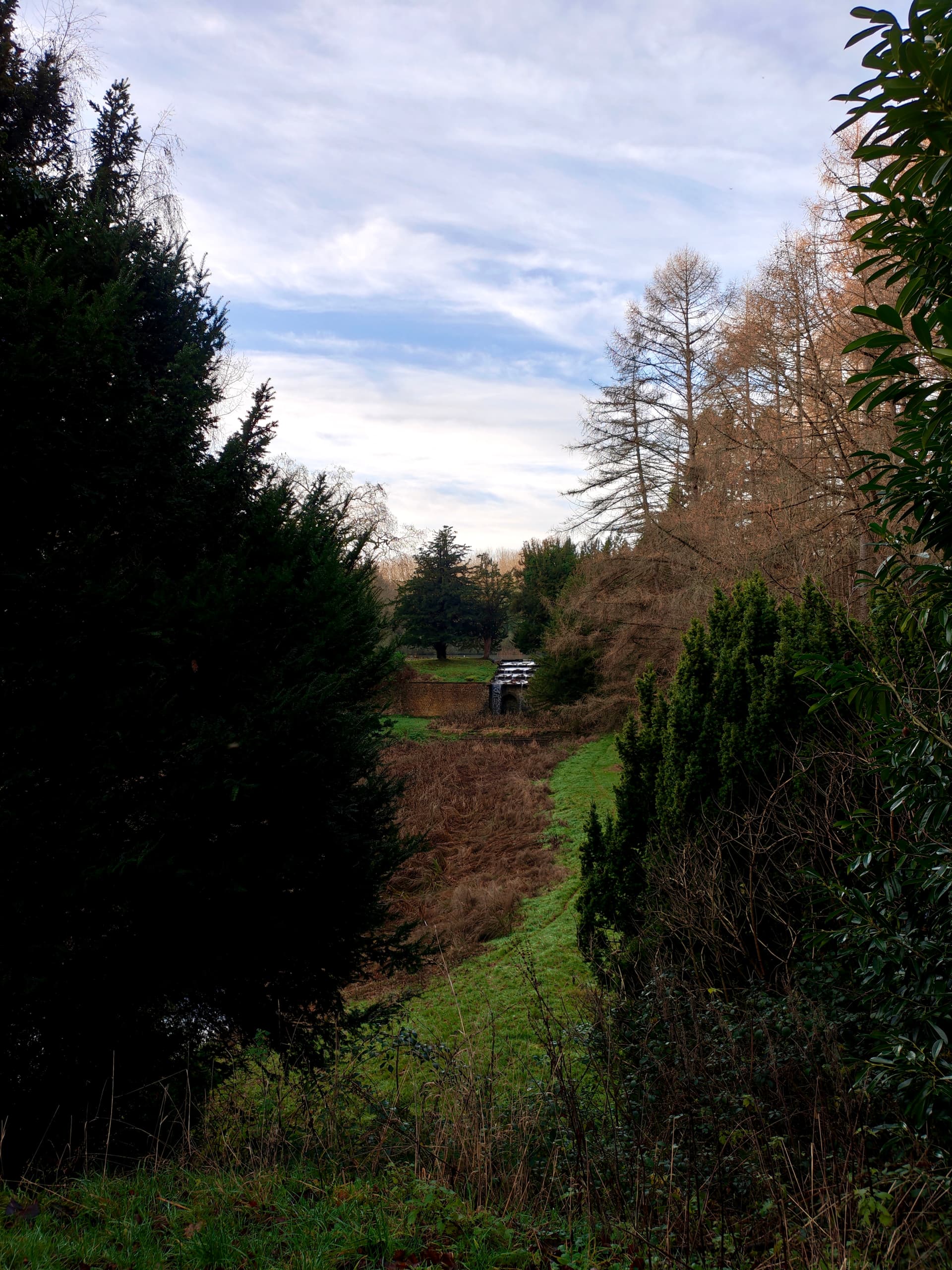
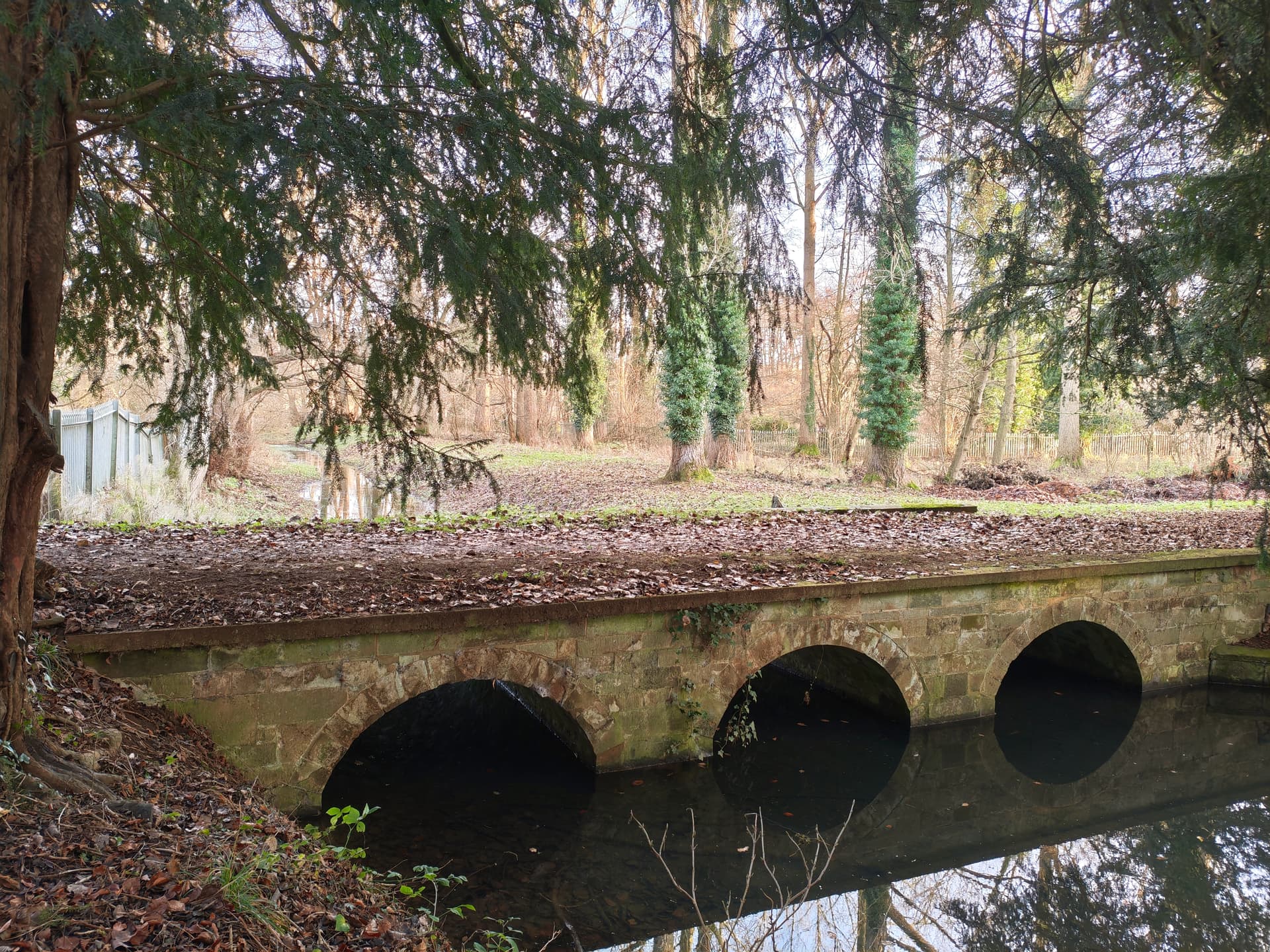
We crossed a stone bridge and then went down to the far end of the grounds alongside a stream.
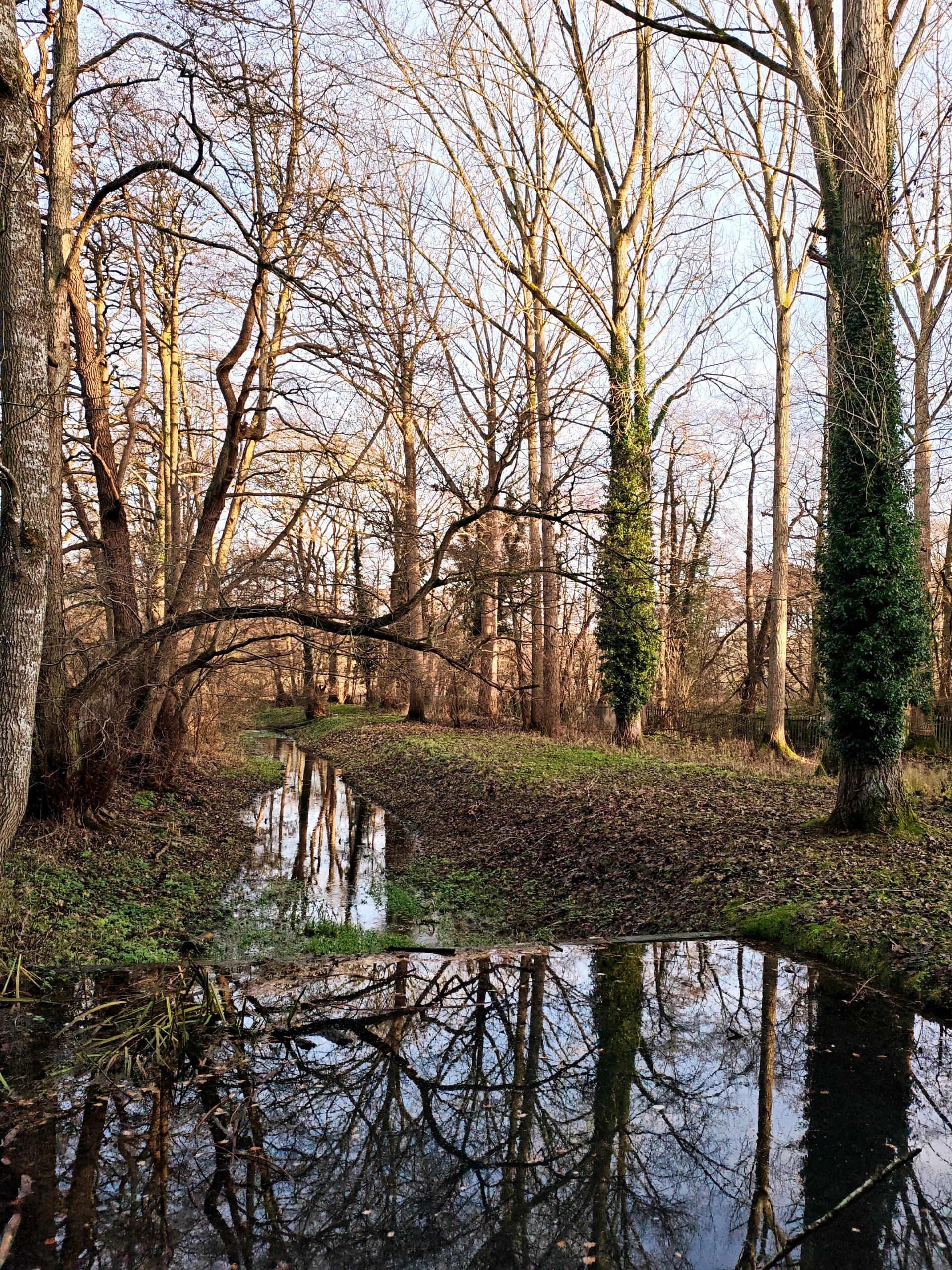
Then headed back up towards the waterfall and main lake.
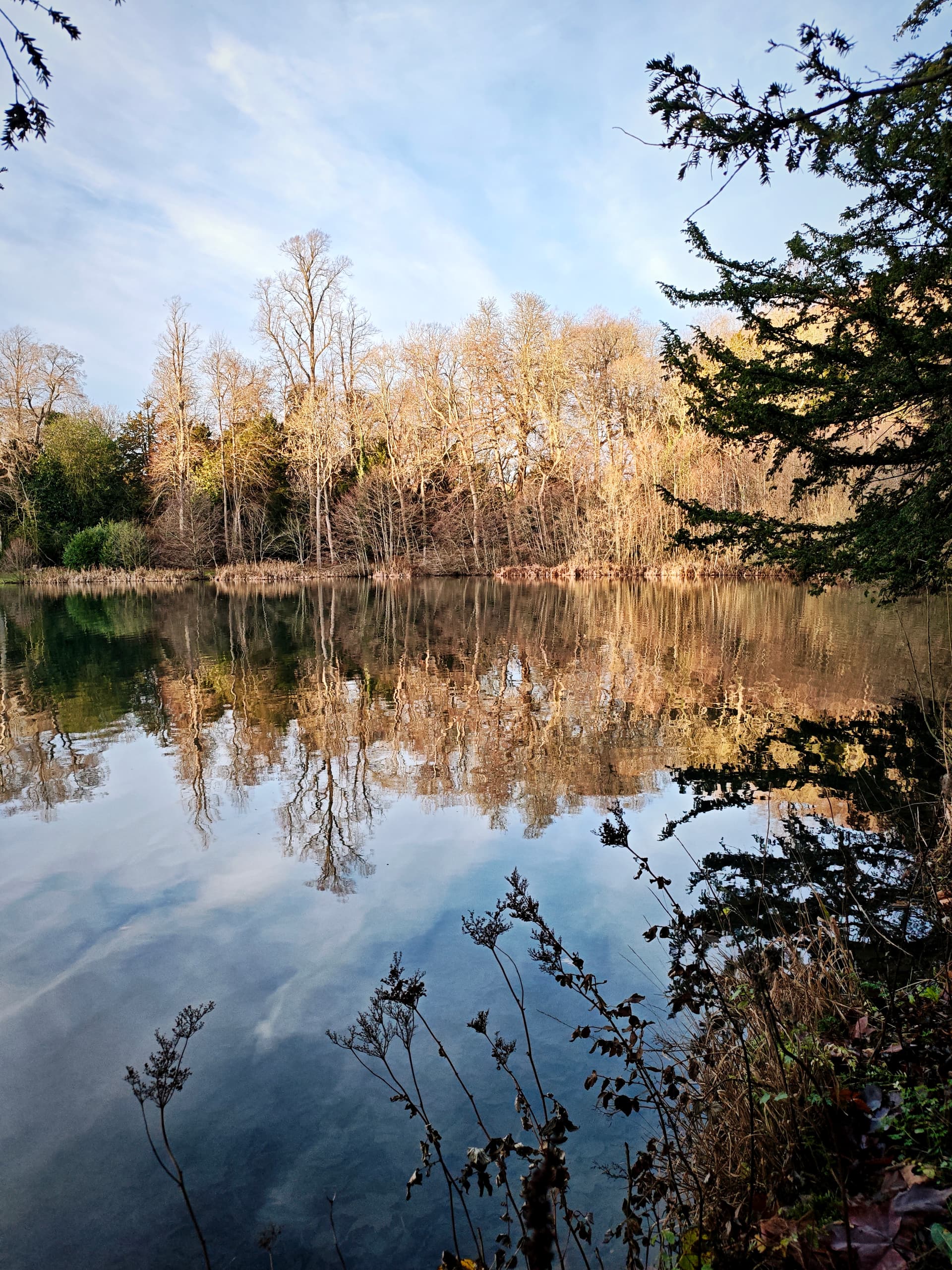
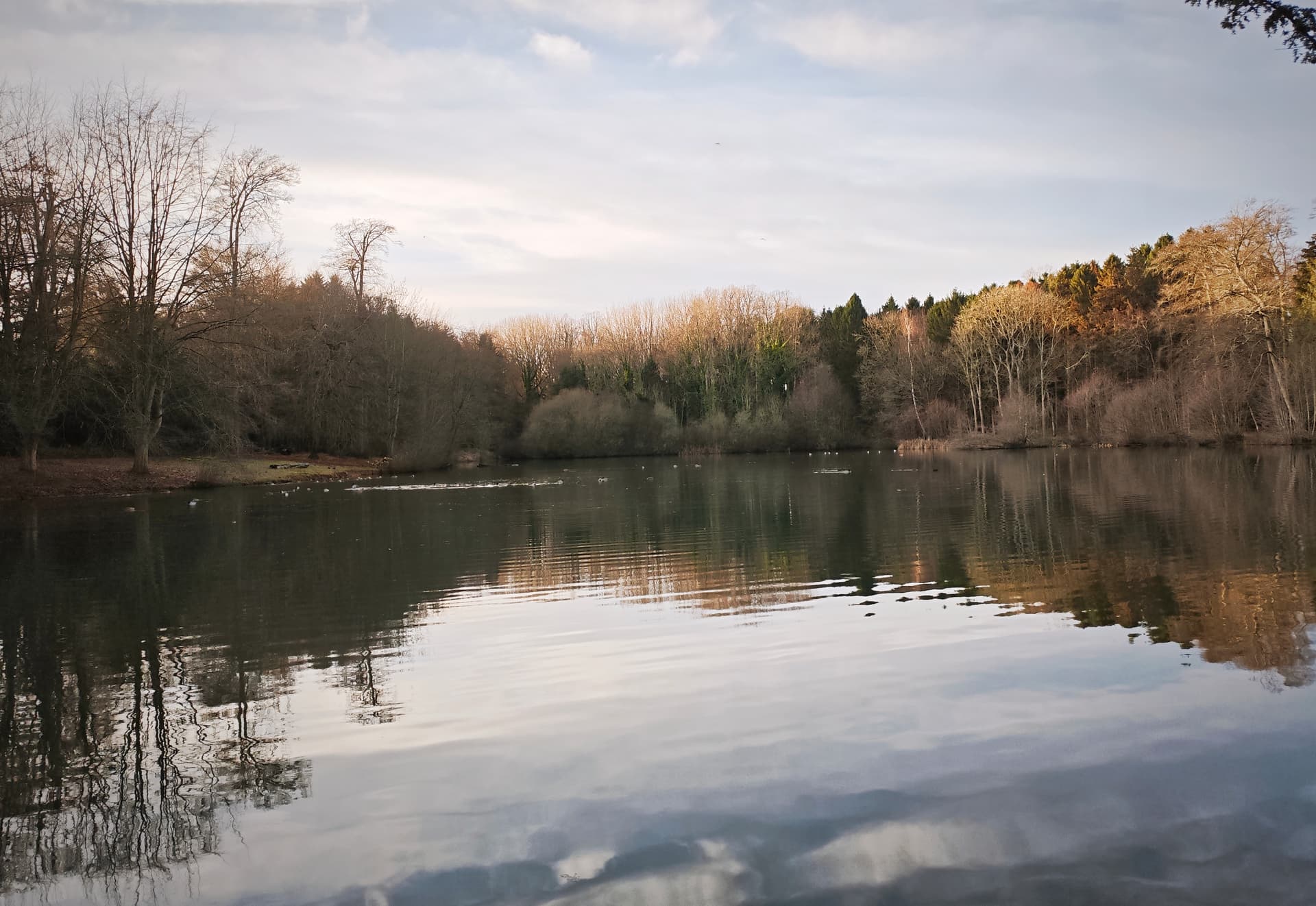
The ducks were out in force.
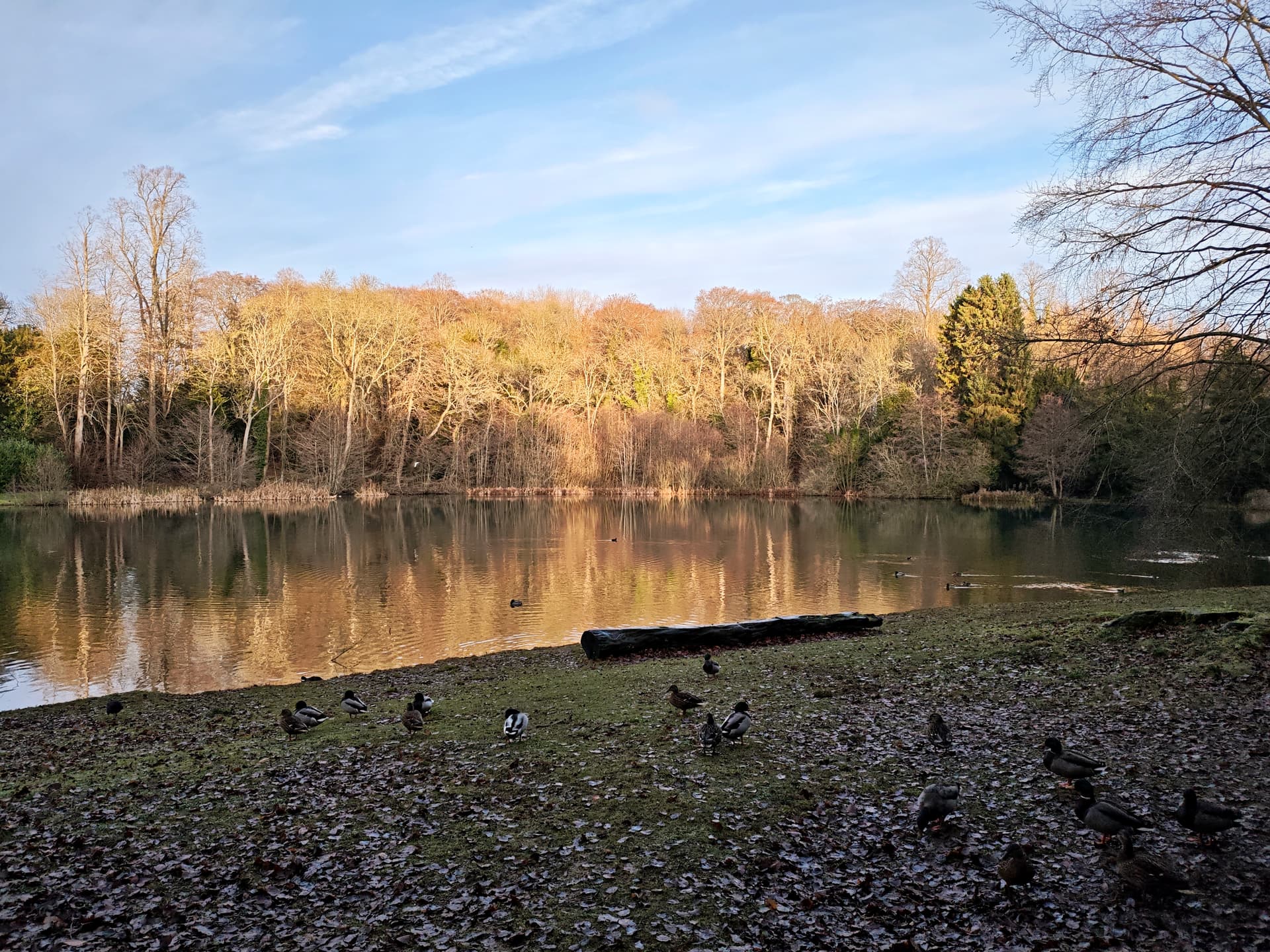
Cygnets too.
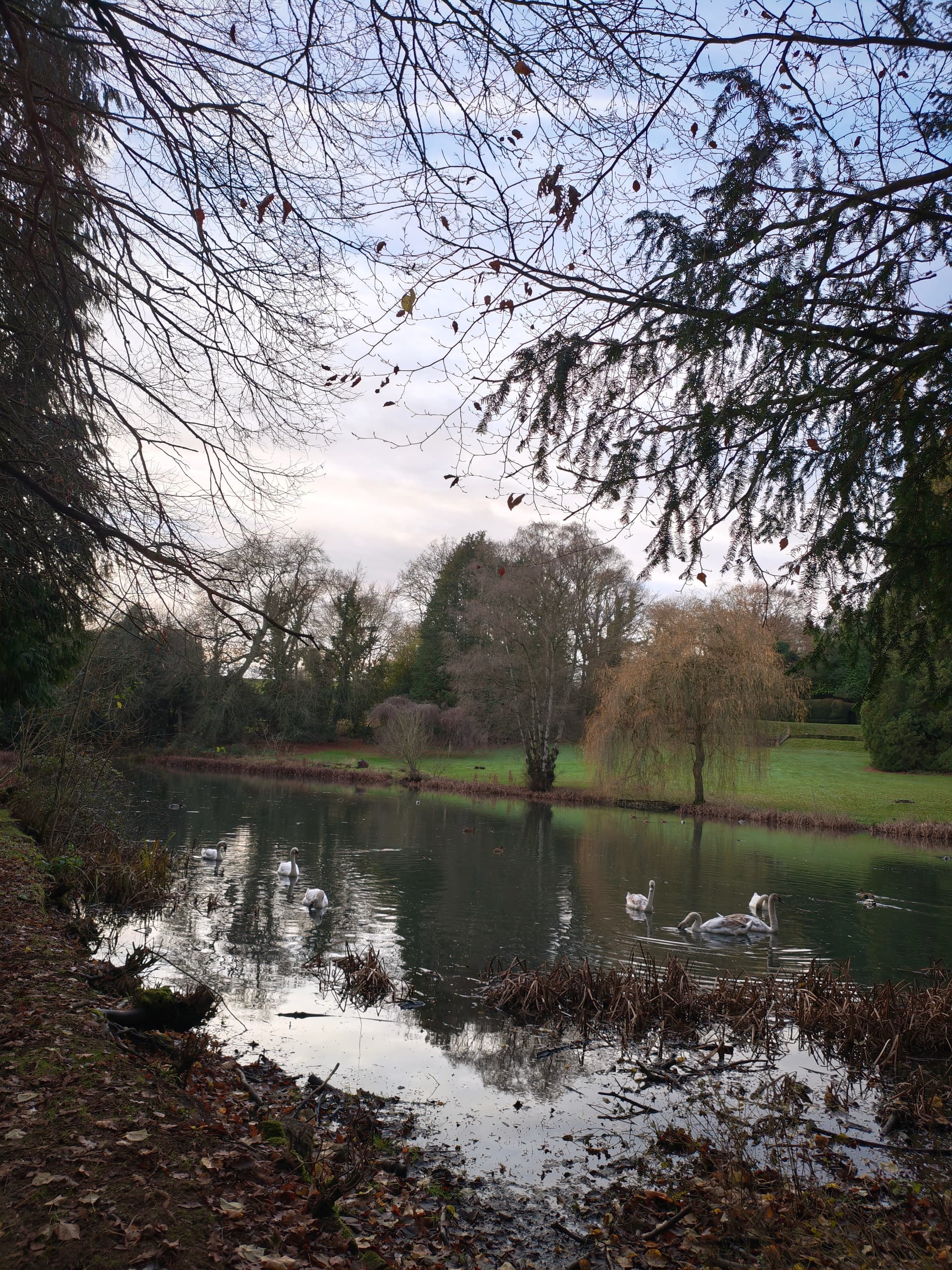
Then a wander through the more ornamental side of the grounds.
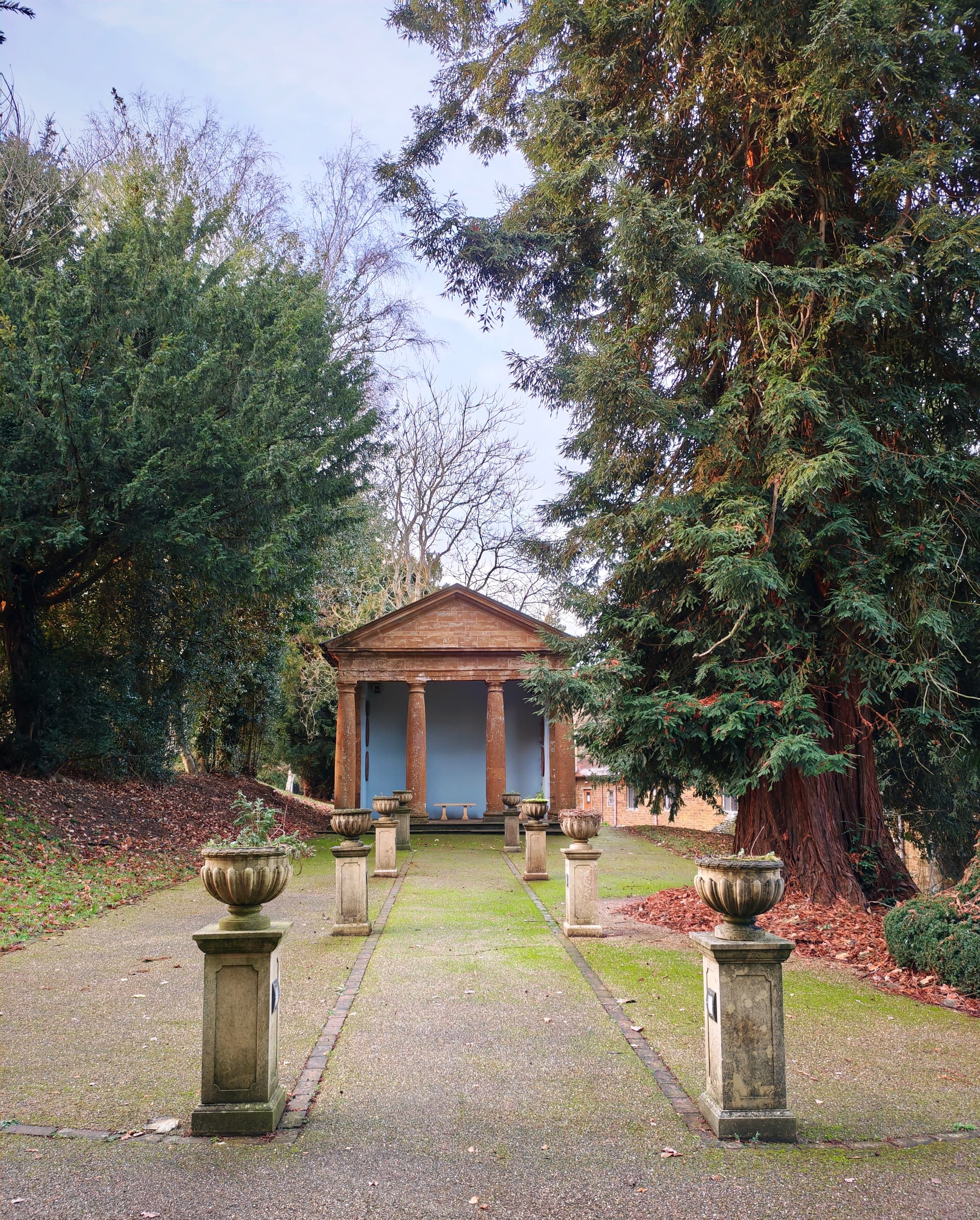
And finally the duckpond on the village green.
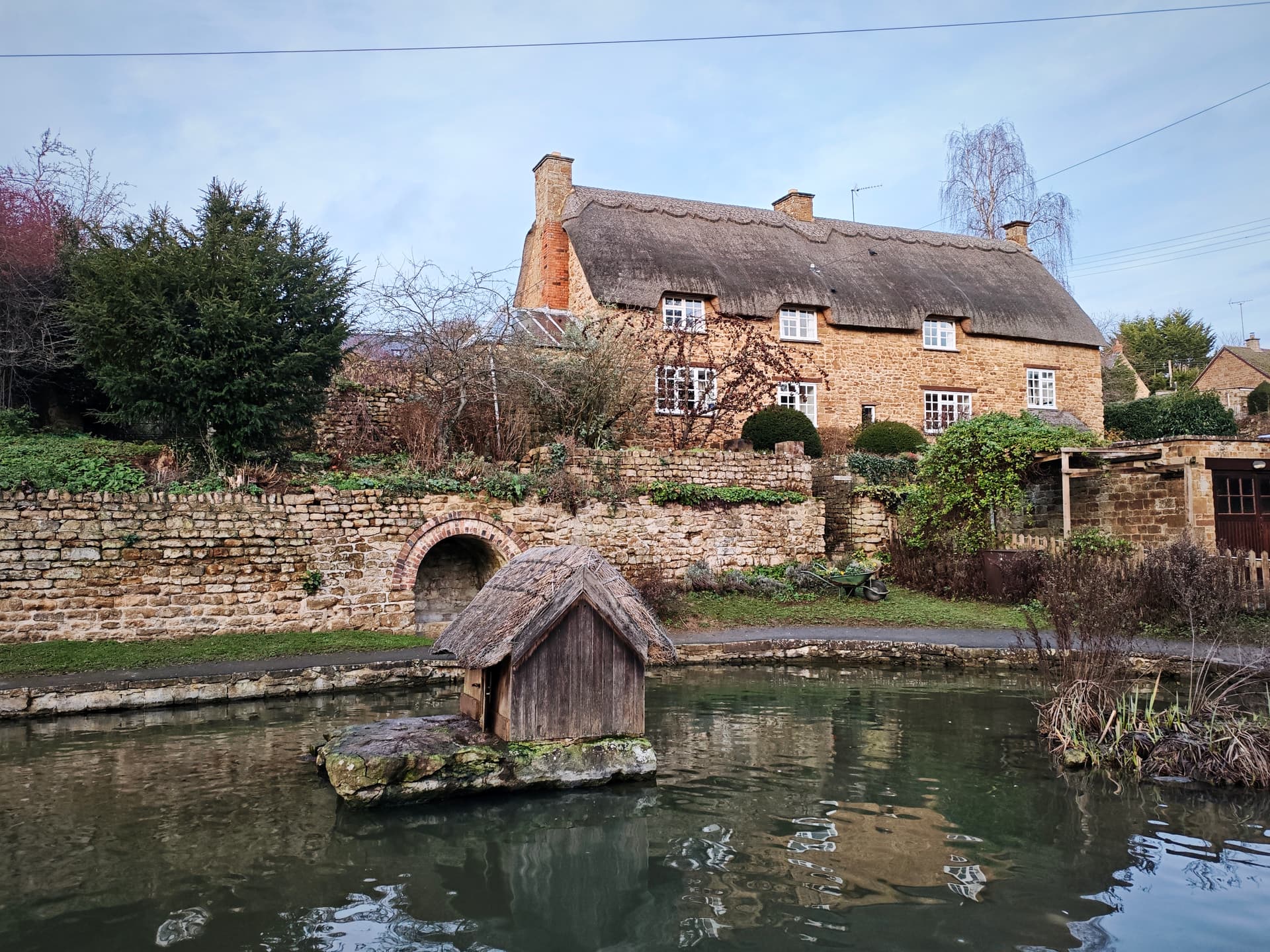
I’ll be interested to see how these look on a computer screen - this is a new phone, and photo editing is different from the last.
4 Likes
Such an idyllic walk, AM! Thank you for sharing.
My husband too, just got the iPhone 17 and the camera is so phenomenal I’m using his phone in preference to mine! Tech is certainly progressing in leaps and bounds🙂
1 Like
Thanks Toni,
The photos look fine - low red winter sun in the later ones?
The gardens of stately homes are fascinating, not least because they often incorporate several centuries of differing views as to what to emphasise in garden design - for instance the faux Greek temple may date from the second half of the C18th when the English were discovering Greece and antiquity through the Grand Tour that coming of age ritual for wealthy young men (and if they were lucky, their wives). Always amused by the contrasting ideas of garden design between English ‘naturalness’ and French geometry
2 Likes
Our favourite stately home for faux Greek temples and similar is Stowe, near Buckingham, and we’ll probably revisit when we rejoin the NT some time. Someone threw a lot of money at their fantasy.
Most of the places we’ve visited round here have at least one part of the grounds given over to this kind of thing, even Rousham manor up the road, which was a roughish country seat.
This is nothing like as posh as an iPhone (Poco F7) but the image quality is better than anything I ever saw from an ordinary compact, possibly thanks to computation. The editing tools are really quite good now, but when I started editing the image switched from what looked like default to RAW format, which then required a very different set of adjustments. There’s built in optical stabilisation that seems very effective indoors too.
1 Like
Absolutely!
I used to teach on an Open University History of Visual Culture module that included a section on C18th English garden design. One of its specially written course books has a very good chapter on Stowe’s background context and subsequent influence. I have the book in PDF format and if you like, can put the chapter into a separate PDF for you, or indeed anyone else who’s interested.
1 Like