Stupid French measurements

STUPID FRENCH MEASUREMENTS

Weight

Small stuff like in the kitchen use grams, 1000 grammes = 1 Kilogram
Medium stuff like concrete use kilograms, 1000 kilograms = 1 Tonne
Big stuff like construction work use Tonnes.

Length
Small stuff like carpentry use millimetres, 1000 millimetres = 1 Metre
Medium stuff like in the garden use Metres, 1000 metres = 1 Kilometre
Big stuff like mapping use Kilometres

STUPID IMPERIAL MEASUREMENTS

Length:

1 rod = 1 pole = 1 perch = 5½ yards = 16.5 feet
1 chain = 1 cricket pitch = 22 yards
1 furlong = 220 yards
A Smidgen = half a pinch = 1/32 of a teaspoon
A barrel of oil is 42 US gallons
A firkin of ale is 9 Imperial gallons

A common unit for liquids is the “fluid ounce.” Sounds simple, right? Ounces are a unit of weight, so a fluid ounce must mean the weight of a liquid, yes? Wrong.

The word “ounce” comes from the Latin uncia, meaning “one twelfth.” That’s why one twelfth of a foot is an inch. So, you might think there must be 12 ounces in a pound. Well… yes and no. It depends on which pound you mean. Back in the day we had the Tower Pound and the Troy Pound — both with 12 ounces. Then history threw us a curveball and switched us to the Avoirdupois Pound (a foreign-sounding word if ever there was one), and that unit has 16 ounces so an ounce became 1/16th and a fluid ounce 1/16th of a pint.

When it comes to stupid measurements, there seems to be a degree of pots calling the kettle black here.

1 Like

Or trying to start a fight when none is needed.

1 Like

Not intentionally AM. As a retired surveyor, I can be rather passionate about units and measurement.

2 Likes

Significantly less, then. Am surprised. Glad to have been corrected. Chapeau :slightly_smiling_face:

Me to, in moderation. My fave hobby-horse is that there is no unit that sensibly gives a fraction of a metre, after the cm. For rough and ready descriptions of an object or more formally if the cms/mm beyond the new unit are included, I propose The Metric Foot.

4 to a metre or 5 to a metre if sticking to a more metric unit.

So one could describe something as “Ooo - about 3 m.feet” Or “3 m.feet 47mm”

There are good reasons to introduce a Metric Foot. Back-along, when I had a boatyard, the Gov declared that all measurements had to be in metric. Boatyards used to charge by the foot . I did. Most boats were described a XX feet - even Nordic boats like the Halberg Rassay. Mine was a Sabre 27 - 27 ft LOA. Ted Heath’s first boat was the very excellent Contessa 32.

The exception to this were the corporate marinas around The Solent, Brighton and Plymouth who had always seen the advantage of rounding up to the next whole metre, even for a smidge over. So my 27 Sabre - 8.22m - would be charged at the 9m rate.

I introduced my berth holders to the metric foot - 5 m.ft = 1m - in order to be a decent chap and not round up like the marina bandits.

But a boatyard in Scotland, well miffed by the Gov dictat, published their rates at £/km :rofl:

Tss tsss the décimètre of course, a bit arcane perhaps but if you have a child at school a 20cm ruler is referred to on the list of stuff they need as a double décimètre.

As usual, almost, @vero I have to agree with you but will you allow me to mention the Roman based 20 in quatre vingt = (metric) four twenty? :wink:

If it makes you feel any better the Welsh have much the same idea eighty = pedwar ugain (four twenty) or wyth deg (eight ten). :rofl:

BTW, I think you will know what I am answering, even though you posted again while I was wrestling with my Welsh. :roll_eyes:

1 Like

I think the actual problem is a haphazard switch from Imperial to Metric.

As a total thread drift, I set out Brighton Marina in the early 70s. It is constructed with huge concrete caissons fabricated off site. My task was to set them down in the right place and more importantly to the right level. As a result of extensive measurements to ensure no mistakes, I discovered that the whole of Brighton goes up and down with the tide. I wrote a paper on it called The Rise and Fall of Brighton (a play on words describing a survey technique). This helped me qualify as a Fellow of the Royal Institution of Chartered Surveyors.

2 Likes

Before the decimal metric system was introduced, all cities in Italy, including Florence, had their own measurement system. This created many problems as the unit of measurement changed from region to region and even from city to city. That is why at some point, in the 19th century, it was decided to standardize the metric decimal system.

Before that moment, however, taking measurements was a quite complicated affair.

In Florence, the official unit of measurement was the braccio fiorentino, Florentine arm (58.36 cm), so called because it measured like the arm of an adult person.

The Florentine merchants were wily men and often had the apprentices measure the fabrics, being them 12-14 years old and with naturally shorter arms. Here was a big problem for the buyers: how could you make sure the fabric that you had been sold measured the correct length? Well, you had to go to Via de’ Cerchi, near Piazza della Signoria, and take the measurement directly from a metal rod built into the wall at arm height, which reported the official measurement of a Florentine arm.

At that time being ripped-off was so frequent, that it was precisely from this habit of the merchants that came the saying “to have short arms.”

Another place where the "right” measurements could be taken was in Piazza San Giovanni, where the measure of the Florentine arm was carved on a column of the Baptistery.

Here you could also find the unit of measurement that was previously in use, since the early Middle Ages: piede di Liutprando, Liutprando’s foot.

Liutprando was a Lombard king who apparently was very tall and with such large feet that they ended up being adopted as a unit of measurement.

When the Florentine arm became the new official unit of measurement, a rectangle with its measure was carved next to that of Liutprando’s foot, on the columns of the south entrance of the Baptistery.

(Corrected, though I suspect you were teasing)

And 12 pennies = 1 shilling, 20 shillings top the pound sterling.

It’s actually really useful, especially pre-calculators, for splitting the larger unit into quarters or halves of a whole number of smaller ones.

Hence the English Rod? :thinking

And while we are talking about arms, wasn’t the cubit that Noah used for the Arc about 18 inches, or the distance from elbow to fingertip? Mine are about 16 inches, but I have just cut my fingernails. If I want a rough guide comparison measurement I often use that and tell myself in cubits. :grinning_face:

This one?

No I genuinely have no clue, those measurements mean very little to me.

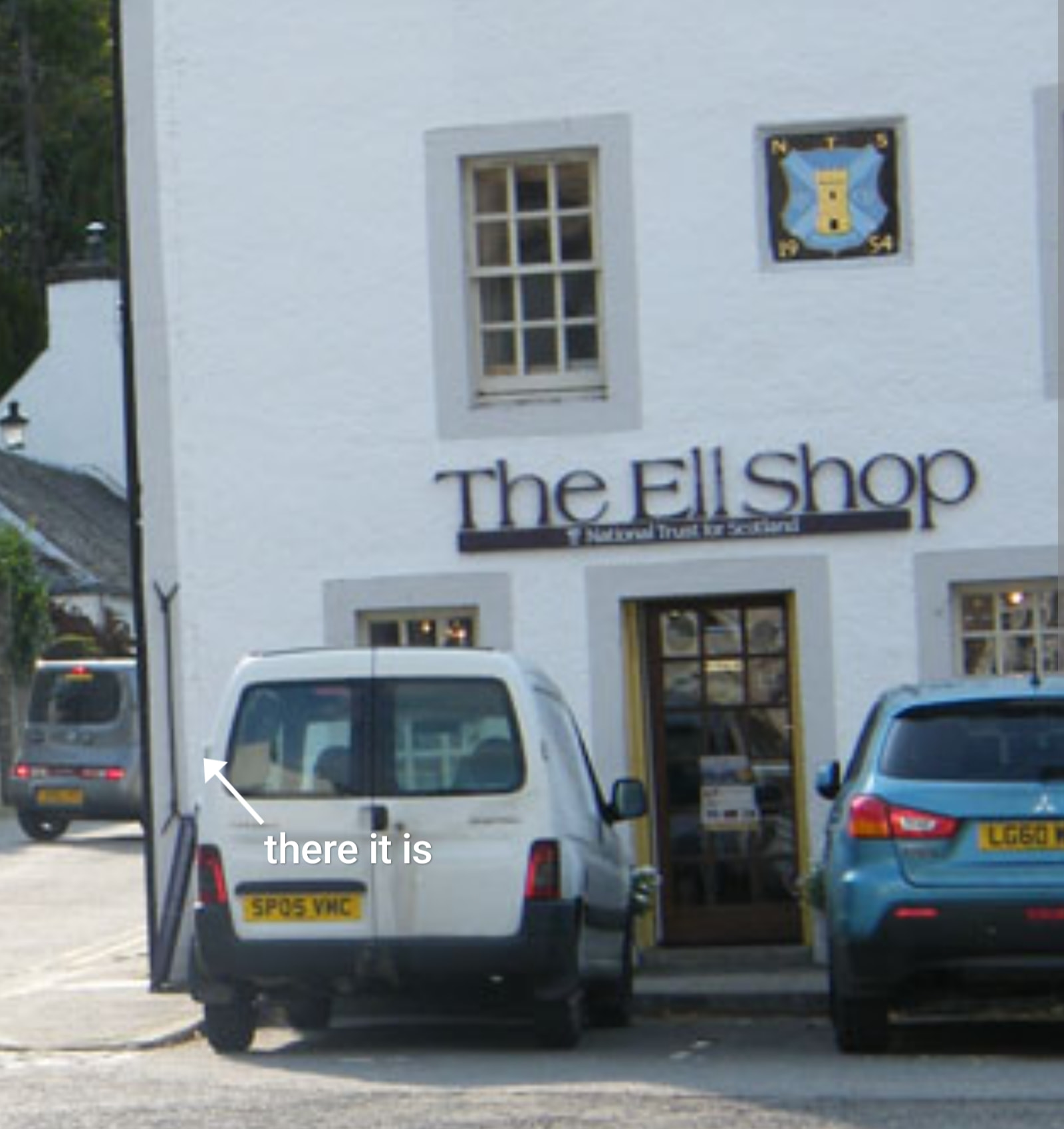
There’s an ‘ell’ on the wall in the marketplace in Dunkeld (Perthshire) for measuring fabric. I remembered that but had no idea how long that is so I googled, (oh dear, oh dear): It’s usually held to be 45 inches. The ell was apparently originally a cubit which was then replaced by the cloth-ell or double cubit.
Oh I’m so glad I looked :roll_eyes:

Bloody Romans

No one under the age of 35 really does imperial measures except miles. Imperial is taught as a secondary system, sendary to metric. It’s easier to understand. 1000 metres equals 1 km , whereas 1760 feet equals a mile. I mean!! Really. That eejit Rees -Mogg wanted to revert to pounds and ounces, a step back in time. My engineer husband says inches etc are not accurate enough.

I have just finished a fantastic book by Emma Southon about Agrippina the younger which is fab about her but also about the beginning of the post-Augustus period in general and I thoroughly recommend it to anyone (I also devoured 2 other books of hers, which I equally recommend, A Fatal Thing Happened on the Way to the Forum and A History of the Roman Empire in 21 Women). Enormously fun and lively and interesting and proper scholarship worn lightly.

1 Like

Chapeau!

Moonlighting from flat refurb for a season’s D-Day 40th Commem battlefield guiding [*] in '84, the 20-something son of one of my veteran clients was wildly exited at being in UK on account of there existing the profession of Quantity Surveyor, which they don’t have in the US.

On a more serious note, his father paused as we walked up the dunes on Omaha beach. “I saw my first dead German right here”. He was a surgeon, Brigadier O/C forward medical units.

[*] I had to study and pass a very comprehensive London Tourist Board course. 2000 years of English history, from Caesar’s landing in +/- 46BC to 2Who is 5th in line to the throne? And where would you take a client who needs his hat refurbished? "

I passed all this and then - first gig - Normandy landings!

Exactly my point re the metric foot! We need something between the teeny cm and the somewhat lengthy m.

Well then, I’ll buy that but why is it not in general use!? That ruler could be called a m.pied - we already have the m.tonne.

Yes, that’s the one. Only thing about that story is that I reckon that all the meat eaters ate the veggies who were pleased to be eaten because there was no veg on board and then they all died when they ran out of food. Except Noah who by this time was very fat.

I am 99% metric and have been for very many years though taught nothing of it at school of course. With one sole exception, my height, when required to answer the question I have to pause long enough to multiply 5 by 12 then add 6 and divide the answer by 39. Finally ask for a longer piece of paper to cope with the 17 digits and not forgetting the decimal point.

Possibly because of what I do, a flexibility with units is essential. So for a solution it might be described as grams per litre, percent, moles or milli-mols etc. and all are correct. As an assay development scientist I tend to measure in mass/unit volume, but those with a chemistry background want moles. When I started, a 4oz bottle could hold 100mL and many archaic container forms like pomade pots were in imperial sizes.