I have had good experience with laine de bois. It’s relatively inexpensive (compared to fancy rigid foil faced ep) and you can easily friction fit it between your joists and stuff it into awkward nooks and crannies.
To stop it falling, I staple garden netting and/or polypropylene cord in a lattice.
A membrane is not really needed as this normally is fitted to the warm side (I guess you are not heating a cellar?).
The membrane is to prevent air leaks (drafts) and with spun fibre it’s open form naturally allows air movement so a further loss of heat is likely compared to solid types. thermal efficiency is highest in foams so less thickness required so not always a lot more. I do like laine de Bois for acoustic absorbing properties as well as being nice to work with.
I would like to backtrack a little, if you air seal too much without mechanical ventilation you can run into trouble with mold and unhealthy air quality
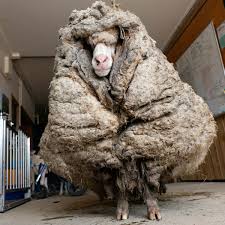
It is for that reason that sheeps wool would be the environmentalists choice … Naturally humidity absorbing and regulating , less allergies than other materials and not combustible …smoulders but not flames . So a few centimetres thick as a pad , and kept away from pooling water ,makes an excellent semi porous absorber
It wouldn’t make much difference if you fit a membrane, you still have to vent the interior. Not using a membrane and a an open wool structure insulation will allow the timbers to breath but won’t insulate as well as foam types due to air passage through the material so insulation values are about half that of foam types. It’s not easy but any insulation is better than none.
It’s treated so moths don’t go there, settling is only really an issue with glass fibre as it collapses over time, and water ruins it. Rockwool and Sheeps wool don’t suffer that issue and peculiar to Sheeps wool is damp it’s even better
The term damp is missused n this context .. sheeps wool can absorb 30% of its dry weight as moisture without being wet or damp …and affecting its insulation properties ..This makes it unique . .it’s a particular characteristics of its molecular structure (I have been informed ).. . The molecule untwists to make space for the water molecule and it weakly bonds ..Then when humidity decreases the water evaporates , the molecule twists tighter on itself . You cannot wring out this 30% …only air it out of a sweater . Neither Glass fibre nor rock wool has this ability and any water absorbed reduces insulation.
However once over this threshold ..damp or wet wool can support moulds and rot … And of course wool is totally biodegradable.
So as Yann had recommended … Sheep wool ..suitably cleaned is recognised as the best ..Of course expanded polystyrene or polyurethane has a higher U value per unit thickness and will be lighter ..but also is nearly impermeable to water vapour ..
Except that, like glass fibre, it’s available in stiffer format (panels, not rolled) for use in vertical applications.
If you find slumped insulation behind your placo dry lining it’s probably because some cowboy used the cheaper rolls that are designed for horizontal use.
The brown/Kraft paper is there as a vapour barrier & should face the internal space/warm side .
The vapour barrier needs to be contiguous so all joints need to be taped.
Nowadays a separate continuous breathable membrane is used, especially in conjunction with materials that don’t come with a vapour barrier such as wood fibre.
True but it still helps. Not seen anyone tape the joints in french glass fibre panels with paper on them. The Intello rolls are much easier to use but pricey likewise air sealing tape, fortunately people often over order so I can often pick them up for a bit less.
It’ is not whether it absorbs water which matters ..it is that if water lodges on or in it the water conducts heat. Being hydrophobic means that water beads on it .With sheeps wool it incorporates the water molecules ino the wool molecule so it’s still dry .
It is, consider glass fibre, mostly hydrophilic, takes on moisture and the structure collapses so no more insulation. Rockwool stronger structure, hydrophobic water does not get in so it maintain integrity and thermal value. Sheeps wool a class of it’s own.
Referring back to the original post, surely the answer to the question would depend a great deal on whether the cellar is wet or dry.
Also, does the cellar contain any combustion source (my oil fired boiler is in the cellar), as if so, then surely any insulation fitted above it would need to be non combustible.
Perhaps @JWM could clarify these points please.