I just wanted to say that my chicken recipe was entirely fictional and intended to demonstrate a confusion of measures. It was meant to be taken in a very light-hearted way. I was just having a bit of gentle fun, not to be taken seriously at all. I’m sorry if it came across differently.
1 Like
I’d probably also add some lemon juice and grated garlic to that.
The following is one of my favourite sub-cutaneous rubs - the chicken is spatchcocked:-
olive oil 3 tbsp
garlic 4 cloves, minced
dried oregano 1½ tsp
sweet paprika 1 tsp
thyme leaves 1 tbsp, or lemon thyme leaves
unwaxed lemon zest of 1, finely grated
lemon juice 1 tbsp
salt and black pepper
1 Like
Having been following a lot of baking recipes recently, tsp/tbsp seem the normal measure of smaller ingredients, and using grams is weird, though obviously more precise if your balance is reliable.
I think you should describe what country you are getting your recipes from. An Australian tablespoon is over one third larger than an American one so in baking that could make a huge difference. Of course, here in France, they use cuillères à soupe, cuillères à café or cuillères à dessert
What is weird about using grams when people in any of those countries then understand EXACTLY what is meant?
And yes, I know my scales are accurate to the nearest tenth of a gram because I even went to the trouble of buying a set or certified calibrated weights to check it when challenged on a previous occasion.
It didn’t - it amused me. Cooking times via Archers episode could be a sound technique fo all but a soufflé.
1 Like
Drug dealer scales 

2 Likes
Do you know the price of good stuff these days?
I did a little research in my pantry to see how many tsp/tbsp. were in my tins/packets of various baking ingredients.
Baking powder 250 gms no mention of tsp/tbsp.
Dried yeast 125 gms no mention of tsp/tbsp.
Sugar 1000 gms no mention of tsp/tbsp.
Flour 1000 gms no mention of tsp/tbsp.
I suggest it is rather weird to buy stuff in grams and then spend time converting it to less well defined measures.
If the ingredient list of a recipe asks for 5 cups of flour and your kilo bag of flour is only half full how do you know If you have enough flour?
By contrast, if the ingredient list asks for 600 grams of flour and your kilo bag of flour is only half full then you know instantly that you have some shopping to do.
1 Like
By the way - if anyone is still curious as to the density of milk, here is a handy table.
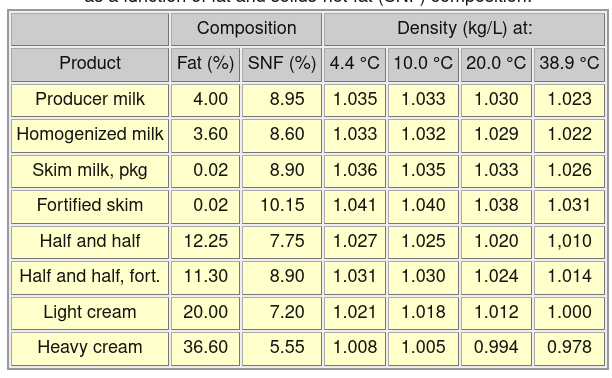
I guess “semi-skimmed” is going to be halfway between homogenised and fully skimmed at about 1.033g/ml (or kg/l if you prefer) at 10°C
1 Like
Currently having a baking day as its raining! Cupcake recipe I’m using had cups but with gm next to it, perfect as I just bung it in the mixer bowl. The only thing that didn’t was the oil, and i didnt have anything to measure 1/3 cup accurately but I looked it up and heh ho 73g. Can definitely see Mik’s point 
2 Likes
You don’t even have to look it up if you have Alexa. “Alexa, how much does a third of a cup of oil weigh?”
I’m about to try the bread method I linked to in the other thread with the combination of flours and other ingredients that I usually use for my granary loaf - sometimes it works well, sometimes there’s no oven spring. It always tastes great, but can be a bit dense.
1 Like
Nope do not and won’t have a spy in my house!
4 Likes
That is a shame but a subject best kept for another thread.
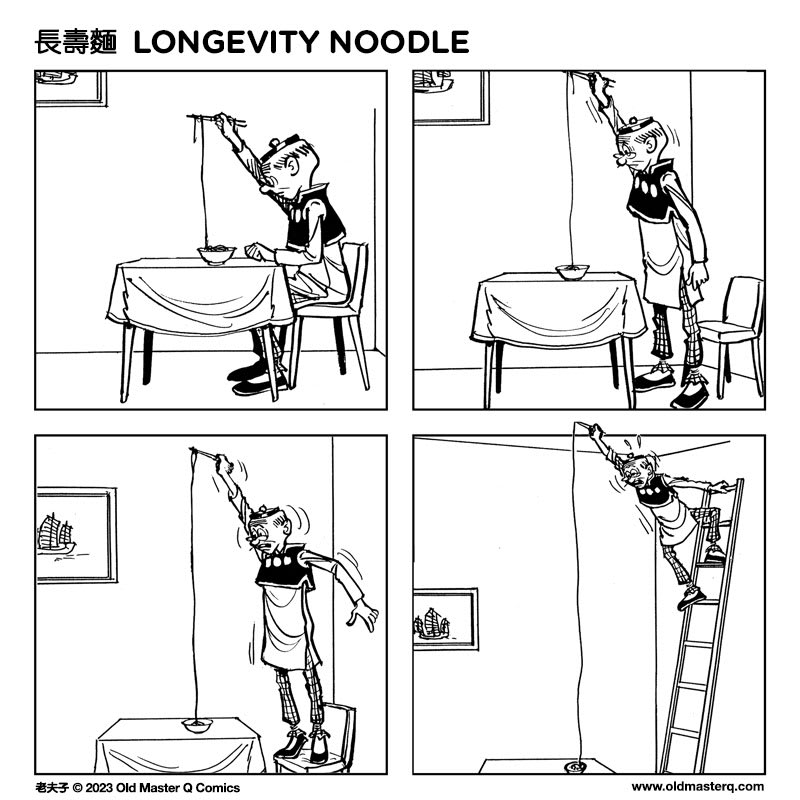
Thinking about this a little further, I suspect my aversion to precision is due to it being a bit too much like work
Yes I can relate to that feeling “much like work”. I used to do a lot of mileage in connection with my work. After I retired and moved to France I took great pleasure in sitting by the pool on a Friday afternoon, glass of wine in hand, and listening to Sally Traffic on the radio thinking what a good decision I had made.
My penchant for only using grams has its roots in pure idleness and has nothing to do with precision. I can’t be bothered with sourcing, storing and washing-up various measuring devices when a single kitchen scale does everything and then only needs a wipe clean.
If I find a recipe I like, I decipher what the author means, convert measurements to grams then save it in my recipe book, including any adjustment I made. Repeat execution of that recipe is then a breeze.
If I pass that recipe on, I would hope that my changes would be helpful and unambiguous.
Maybe somebody can clear up something that we’ve been considering lately:
Which is larger, a teaspoon or a coffee spoon, and is this true in every country?
I think a coffee spoon is smaller. My German wife thinks it’s bigger.
Cuillère à café measurements in recipes here seem to mean a teaspon.
Though at least one highly competent foreign maker of couverts I have bought from long-term has both coffee and tea spoons in their ranges. With the coffee spoons being smaller. And sometimes but not always, the coffee spoon is called an espresso spoon to distinguish it. I think even Ikea distinguishes “coffee spoons” that are smaller than tea spoons in some of their ranges
Is this turning into another Critair thread?
1 Like
Yes. 
