In Namibia everyone cautiously approaches junctions and they take it in turns to go on a first come basis. Very civilised. And it seems to work.

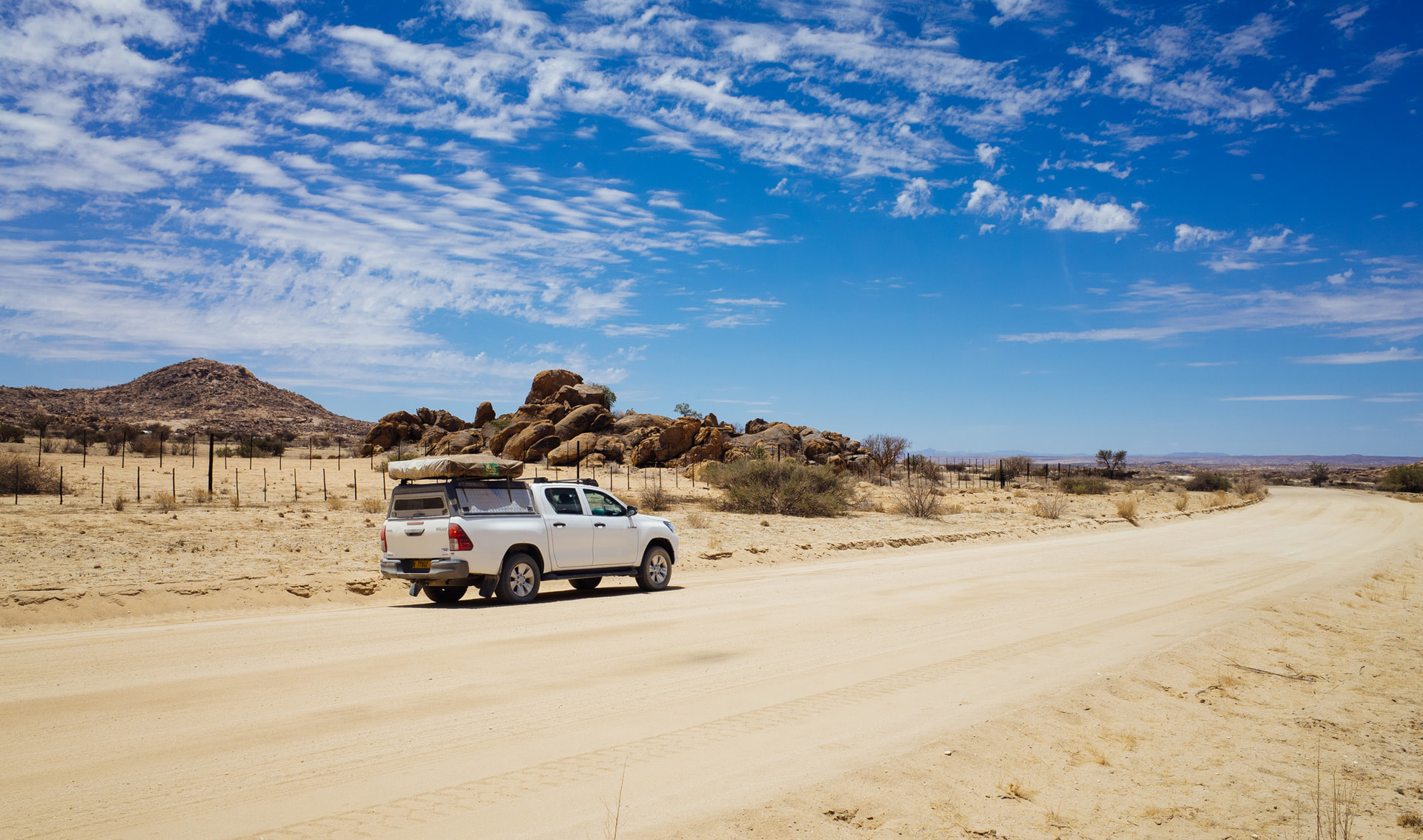
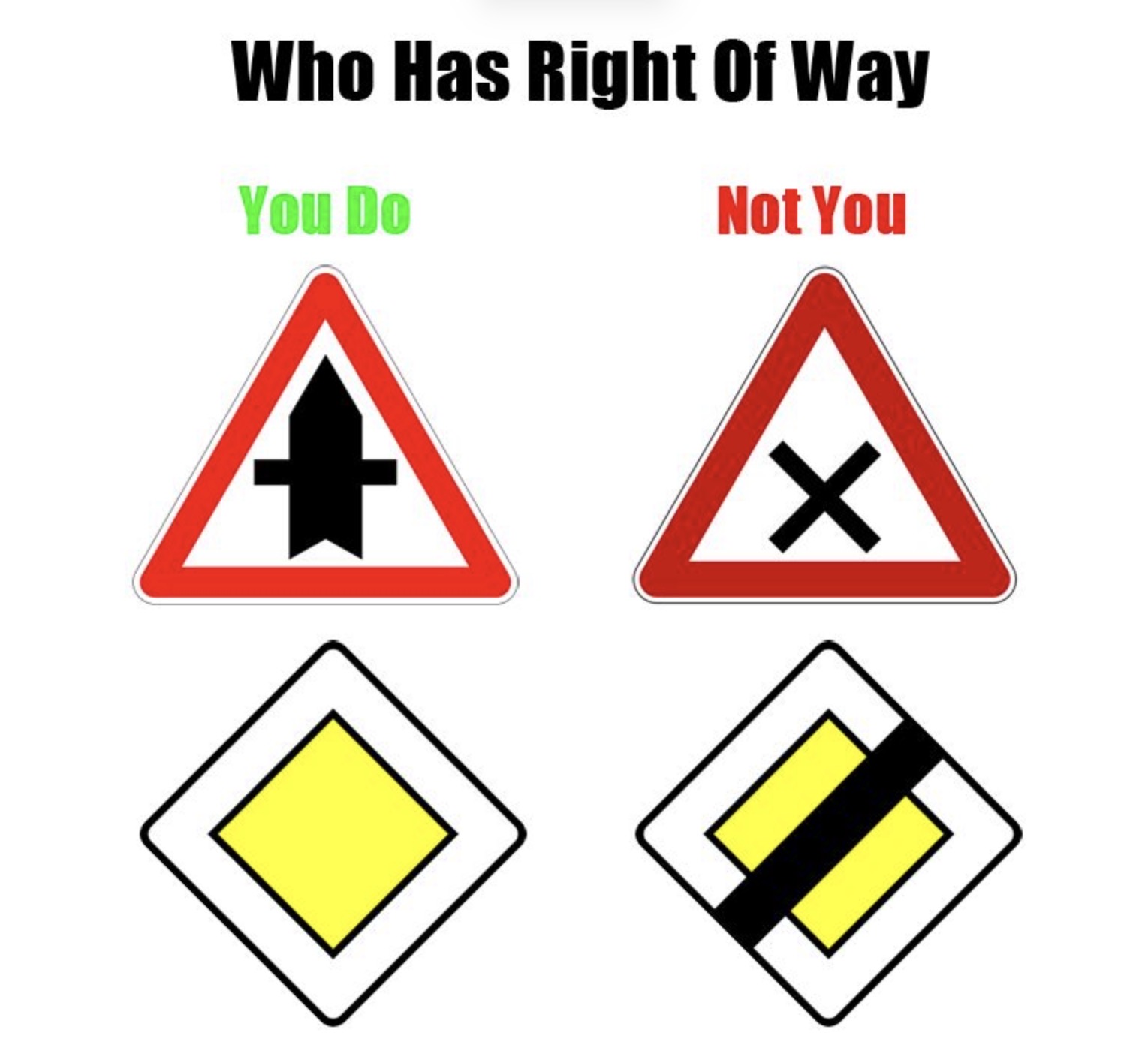
Clearly there aren’t many junctions outside of towns with a population of about 6 million in a huge country. But in towns like Swapo and Windhoek with comparatively large populations there are a good many cars and junctions.
1 Like
The thing about junctions in SA, is knowing which ones to never stop at.
If you don’t, hire someone that does to do the driving.
There a large ‘square’in Marrakech called Jemaa el-Fnaa. It covers 2 hectares and it’s criss-crossed by about 8 roads, used by trucks, cars, mopeds (many, many mopeds!) horse drawn carts, donkeys, locals and tourists. There are no traffic signs whatsoever. I happened to sit in a cafe overlooking the square and was joined by a policeman. I asked him if there were a lot of accidents caused by the apparent bedlam displayed before us. ‘On the contrary.’ he replied. ‘The bedlam creates safety. Everyone is aware of the dangers so takes care to avoid it.’
This experiment has been repeated elsewhere - notably in the Netherlands. A similar ‘shared space’ scheme was implemented in Exhibition Road, London. Prior to the changes, Exhibition Road was widely regarded as tawdry, intimidating and dangerous. The new scheme involved paving over the entire street with no obvious distinction between footpath and roadway and the removal of most instructional signs for vehicles. Exhibition Road is now widely regarded as more elegant and appropriate for the August institutions it contains (including my alma mater, Imperial College).
According to data from the Royal Borough of Kensington and Chelsea, average vehicle speed reduced by between 15% on average. Maximum vehicle speed reduced by 25%.
Collisions reduced by 60%, and injuries by about 80%.
It sounds as if removing the rules can actually make things safer.
2 Likes
We have one of those in a neighbouring village. Who gets priority seems to depend on who gets there first or who pulls out first. It seems to work very well as people here seem to be very courteous behind the wheel and don’t seem to mind who goes first.
1 Like
With all the official on-costs and admin costs at local and national levels, orobably more than 2500 euros per sign.
I recall the French Transport Ministry estimated that 14% of all accidents leading to an insurance claim were directly attributable to disputes over priorities at junctions. No doubt there is an indirect cost to all of us drivers, via increases in our insurance premiums, in part due to this issue of junction priority.
And the other 86% ?
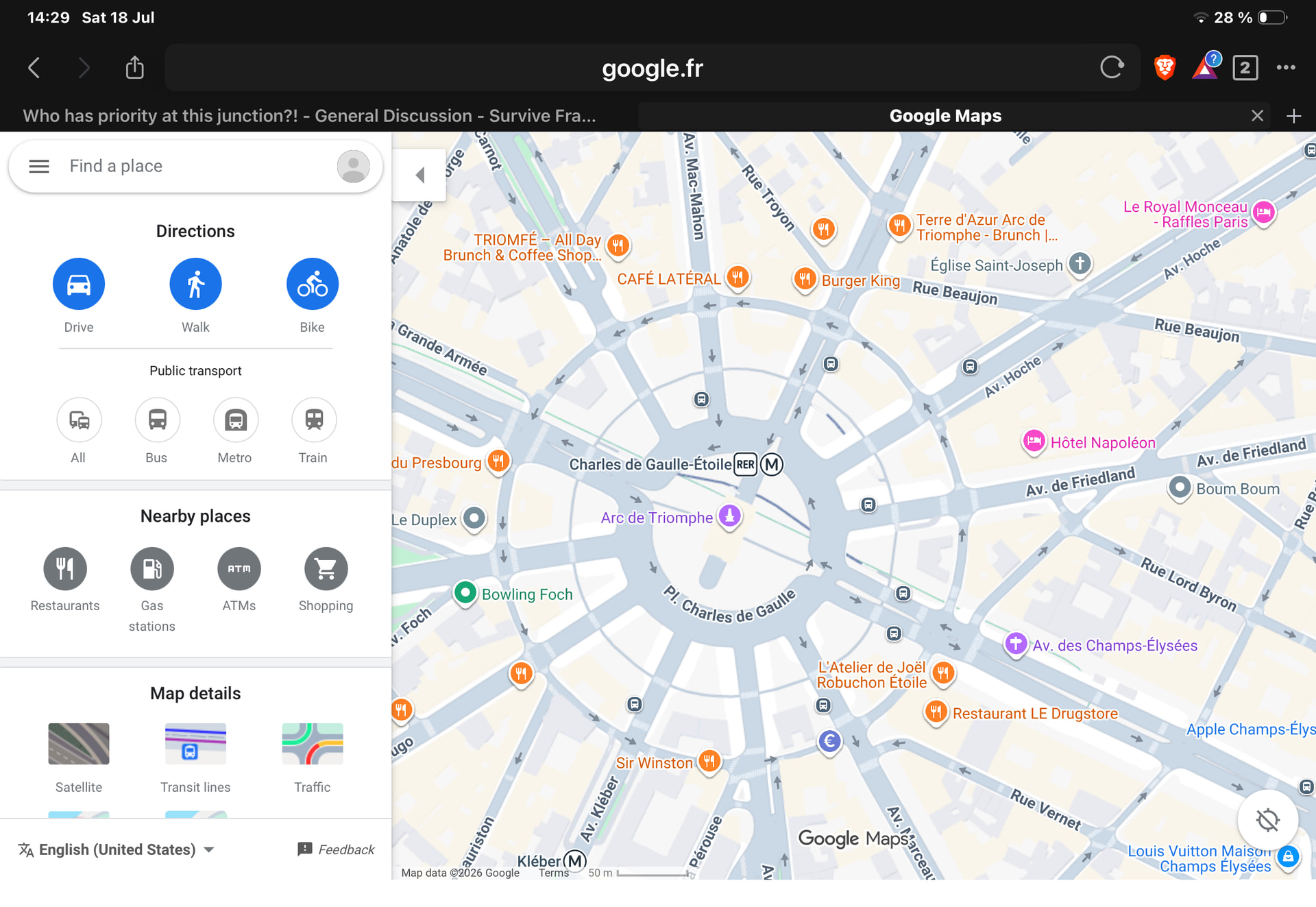
Reminds me of the Arc de Triomphe in Paris, I had just loaded a little dog in one of the streets off the Champs Elysees and was driving up it towards the Arc. Assuming it was
the usual roundabout rule of giving way to those already on it I slowed and approached cautiously. To my surprise about 4 lanes worth (I don’t think there were any lane markings) of heavy traffic all came to a halt and I realised, partly due to being overtaken, that I had the right to enter. Fortunately at the next junction round I was saved from making a mistake by vehicles in front of me stopping. I was going almost all the way round and had to keep concentration high as I did so. Stressful, and fortunately, was never required to repeat the experience. 
For those not wanting to drive like a BF 109 pilot being chased by a Spitfire round the Arc de Triomphe, there is a more leisurely route.
So why not take down all the signs, even the yellow diamond ones, and we’ll all be safer (?)
Having worked in the Highways Dept of a large LA a single stop sign and white line would have been well over £1000 back in the 90s. Consultation, planning, construction and installation soon adds up 
Here is a break down of France’s fatal accidents in 2025:-
Speed 29-32%
Alcohol 21-23%
Distraction (mostly mobile phones and screens) 12-13%
Drugs 9-11%
Fatigue (long journeys) 8%
Figures published by the Observatoire national interministériel de la sécurité routière (ONISR). Before anyone points out that the figures don’t add up to 100, it appears that many fatal accidents (60%) involve two or more factors above.
I managed to get through unscathed. It took a while, but I just kept cool. My wife was having hysterics.
A’s local - knows they have right of way and isn’t slowing down anyway. B’s Parisian and going wherever they want regardless. C’s a tourist and dare not move.
2 Likes
Who has priority at this junction?
I do! 
You should know better 
We would always make a point of taking visitors around the Étoile de Gaulle * even if it was off route from where they needed to go. Evil? Perhaps. Good fun? Absolutely.
*Our French colleagues would always profess ignorance if we talked about going around the Arc de Triomphe.
1 Like
So no category for tailgating which gives no time to react or avoid. Excellent just ignore it. 