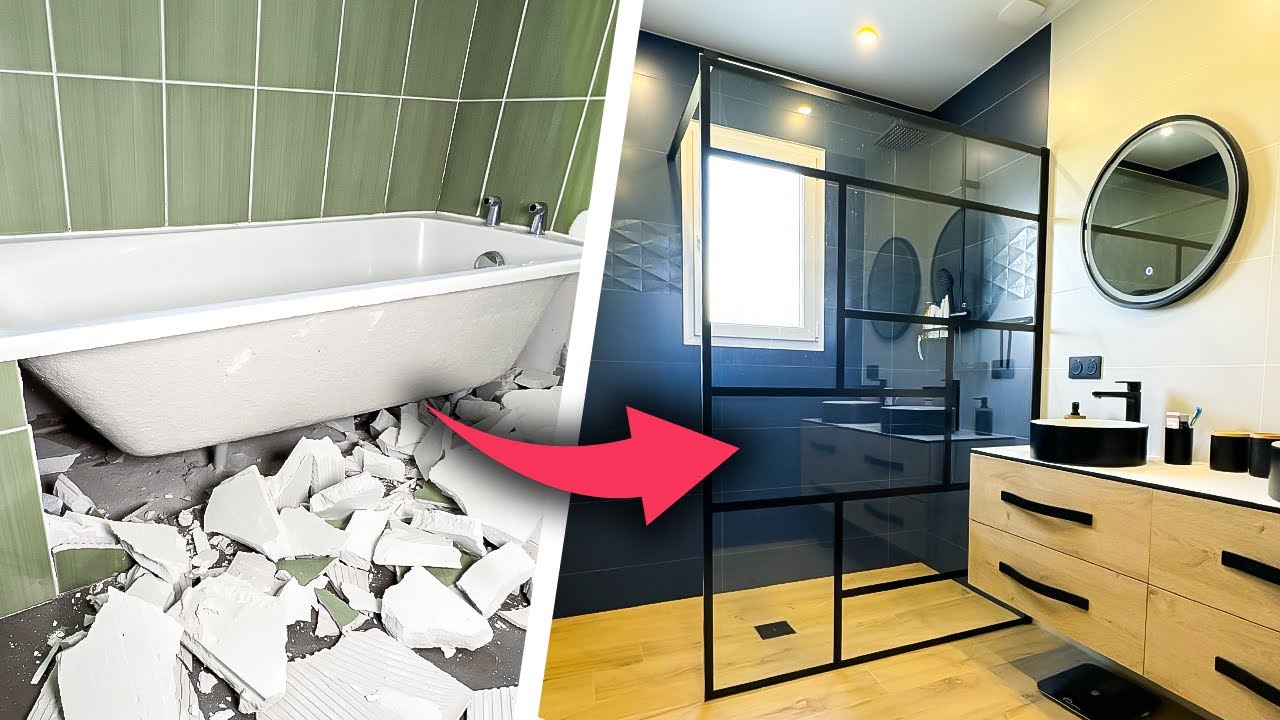
I’ve done a bit of diy in my time but this is a real professional at work. We need to do just this - replace a bath with a walk in shower. We don’t have the luxury of a void under the floor and it would take me too long to complete a project like this. We’ve just the one bathroom.
I am not a DIYer, would make a terrible one but I do implore you to think again.
You can shower in a bath but you can’t bath in a shower and I bitterly regret the decision some years ago to do just what you are contemplating.
I must have had an inkling at the time, because that bath was not thrown away or broken up but is sitting and filling with leaves in the back garden. Every now and then I gaze at it wistfully, thinking how nice it would be to have a long hot soak again.
As we get older, getting safely into and out of the bath becomes increasingly difficult. While some retain more strength and flexibility than others, there must come a time when having assistance is essential.
Even so you should be able to reconfigure it (mat or pipes?). In any case, the most important stuff to go under the floor would just be outflow/drainage, whereas the water supply etc. can be higher up behind a stud partition wall.
FWIW we’ve had a shower with upstand for 9 or 10 years now without trouble. Prior to that I had built a raised base using short timber joists plus a water-resistant chipboard base to support the shower tray.
Plumberparts has an appropriate video for this (and he also looks like the ‘dame’ actor from It Ain’t Half Hot Mum).
I know what you mean but the funny thing is my safety thoughts have gone into the opposite direction. As I have got older I have become more aware that I might get dizzy or slip while having a shower, disorientated by having eyes shut against the soap.
So I have taken fewer and fewer showers, I have a bidet to take care of all below the waist and a large wash bowl to have a strip wash above it.
My answer has been to re-import the shower chair insisted upon by the nurses who treated my wife in her final year, and with careful use of grab handles on the wall, have a sit down shower. Heavenly, but no comparison with soaking allongee in a hot bath.
I have both a walk in Italian shower in one bathroom(the old fashioned trays are not fitted any more in new builds) and a full bath in the other and love to switch between the two. However the OP needs to make sure that the VMC is above each and the toilet(s) if separate as is the norms for ventilation and must be where there is all water being used including the kitchen and utility room.
Had my last bath on 14th December last year, the evening bfore completion of our French home.
Have always loved a long soak but times change.
Our new home has both a walk in shower and a bath so my wife can still choose the bath but more often than not she now prefers the shower.
The walk in shower is fantastic, a large wet area that is safe and easy to use with none slip tiles and an amazing drainage system connected to a gizzmo that harnesses the heat from the waste water to return the heat into the house system.
Showers all the time for me.
I recently renewed the vmc and ductwork so no problem there. We currently shower in the bath so no change there. By the way, one can buy a stool for the shower.
We alternate, bath and shower, our bath being big enough for 2. We’ve never owned a home with extractor, and it just hasn’t seemed necessary for those houses.
What a good idea, mind you I would have to build a double bath sized new annex to contain one, wonder if it is worth it at my time of life, the only sharer on offer at the moment, is Jules.
I don’t know if you’ve lived in more recently constructed houses but they tend to have fewer gaps in doorways, windows, floors that allow ventilation. The place we bought here in France is our first modern house. Although there are very few draughts , we still get cold air currents that develop at the double glazed windows and patio doors. We need insulated curtains. I think a vmc is more important in modern houses.
My own experience is that the risk of slipping in a bath is far greater than in a shower. Many baths - I had one myself - do not have flat bottoms and sides at right angles. The sides curve from the bottom up the sides. My bath had a flat section down the centre of about 30% the width of the bath. Dangerous.
I have often slipped by stepping on the curve, never resulting in injury, fortunately but I have fallen into the bath.
Getting into and , especially out of, a bath a risk every time.
The other aspect is water quality. I have given up visiting a couple of friends in London who refuse to have a shower, even over the bath, for ‘aesthetic’ reasons.
London water is so hard that a bath at their place is to sit in gallons of scummy water. My friends would rather do that - and maintain the look of their bathroom [carpeted floor inc] - than save water, energy, time and be cleaner.
I think I saw a recent reg that restricts the height of a shower plinth to XXmm. It seemed very low, making fitting plumbing below the tray dependent on having space below the floor.

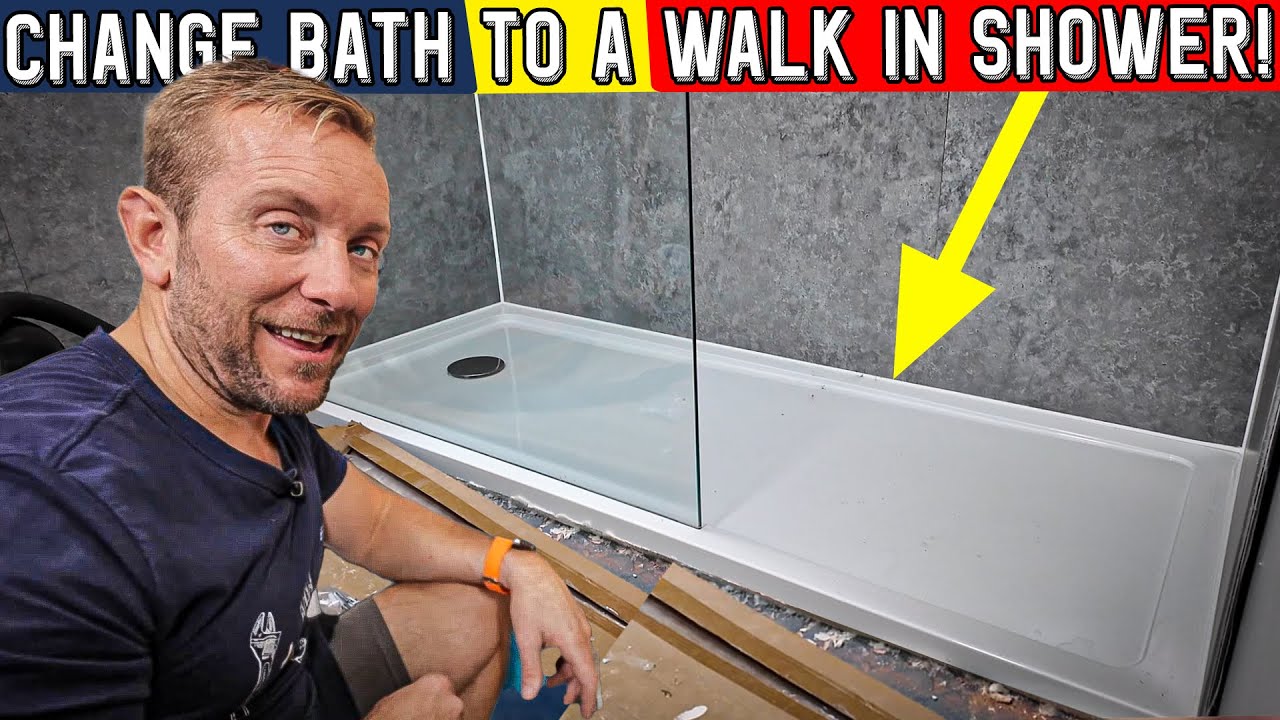


 raise the tray