To avoid confusion I must add that although the connectors are the same some EVs only charge on/from one phase i.e. they will ignore the other two if they are present at the charger.
Equally an EV that has triphasé charging capabilities will just use one phase if that is all that’s on offer.
N.B. Many years ago one could get 18kVA mono supplies but these have not been on offer for nigh on 20 years. 12kVA is now the monophasé limit with, logically, 36kVA being the maximum for triphasé.
I suspect that the Engie (not Energie) info you have quoted is incorrect.
"i suspect that the Engie (not Energie) info you have quoted is incorrect… " Well the website is quoted as March 2026 .. I believedc the information I gave about EVs accepting 3 phase is also correct ..To check this I looked up the Wiki ..
.I rem ember wondering about the pins on the CCS2 when I first got the VW ID3 .. One will enable 3 phase charging if available and will use single phase otherwise.
Just jumping in here to say that I installed a Schneider Mureva EVlink 3.7 Kw EV charger last year. I purchased it because I could control via Home Assistant because it has built in Zigbee support. It worked fine for about 9 months or so but recently it’s been tripping due to overheating ( it has an internal temperature sensor). I thought it might be my charger plug having worn contacts but this was dismissed when I tried a different one. This only happened when my car was drawing the full current of around 15A or so. When I reduced the charging Amps to around 60% the problem disappeared - so definitely a heat-related issue due to probably a poor contact. After some research I found others were experiencing the same problem and so if you come across this item I suggest you give it a miss. I’m about to replace with a Legrand Green’up socket and will be taking this up with Leyroy for a full refund. By the way, we’ve been happy with just a granny charger because it’s for my wife’s car and she only does local trips.
Ii confirmed on the Wiki last night that the EU CCS2 connector is a 3 phase AC connector with lower 5 pins as N,PE L1, L2,L3 ..and the top 2 pins being the communications protocol used by the EV to communicate charge voltage , current levels and whether it is using only one phase ..L1 or all three . The t two pins below on the extra part are DC .My VW ID3 from 2021 and similar cars would be unable to achieve it’s rated charge rates at commercial charge points ..(not DC Superchargers) except by using all 3 phases.
I’m not sure why you’ve written all of your last post. I’ve not been trying to say anything different, apart from disputing your belief that all European EVs accept triphasé (which they clearly don’t).
I’m also trying to point out that you keep talking about DC/rapid CCS2 when the conversation has been about AC/fast Level 2.
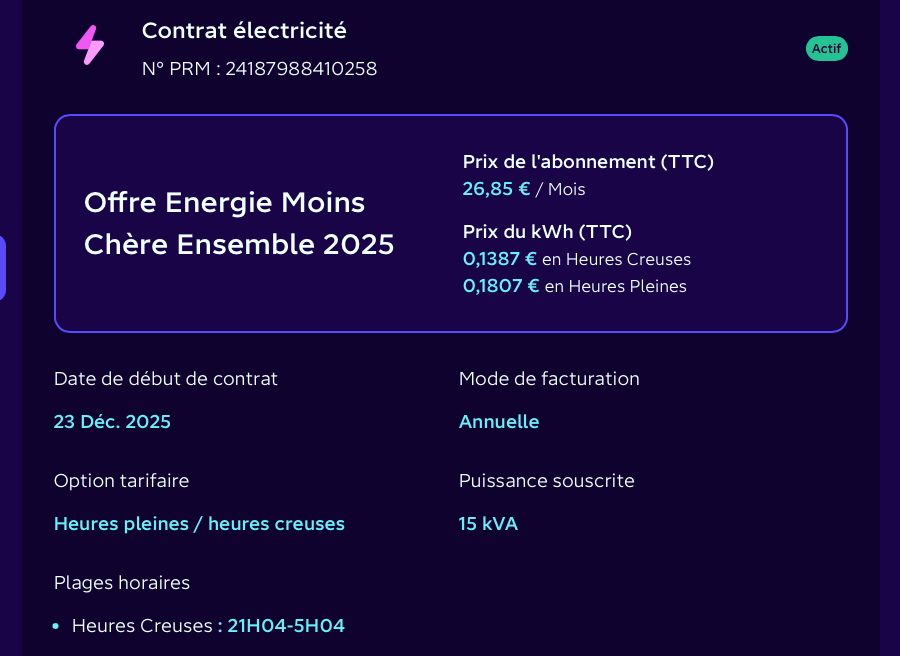
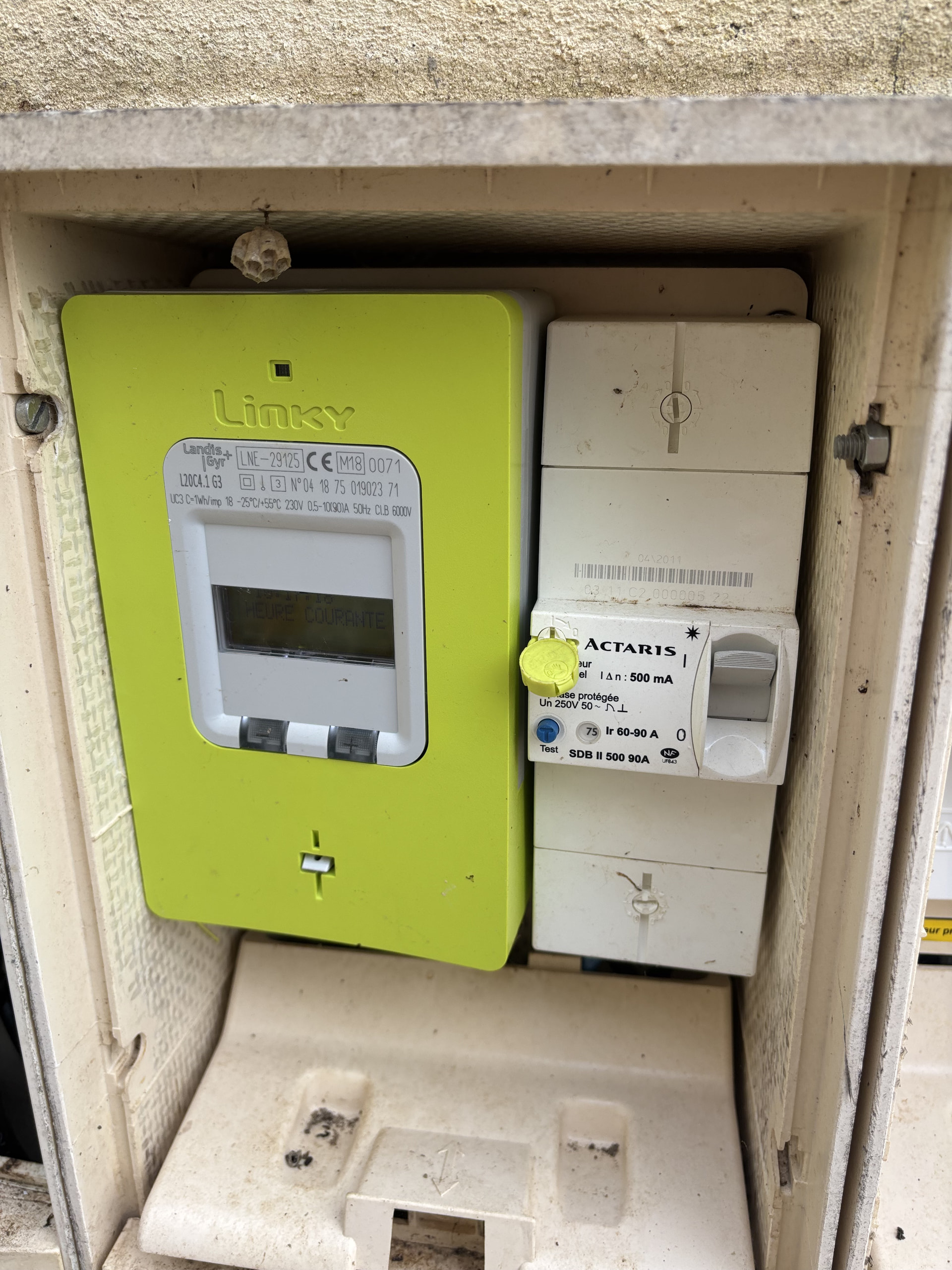
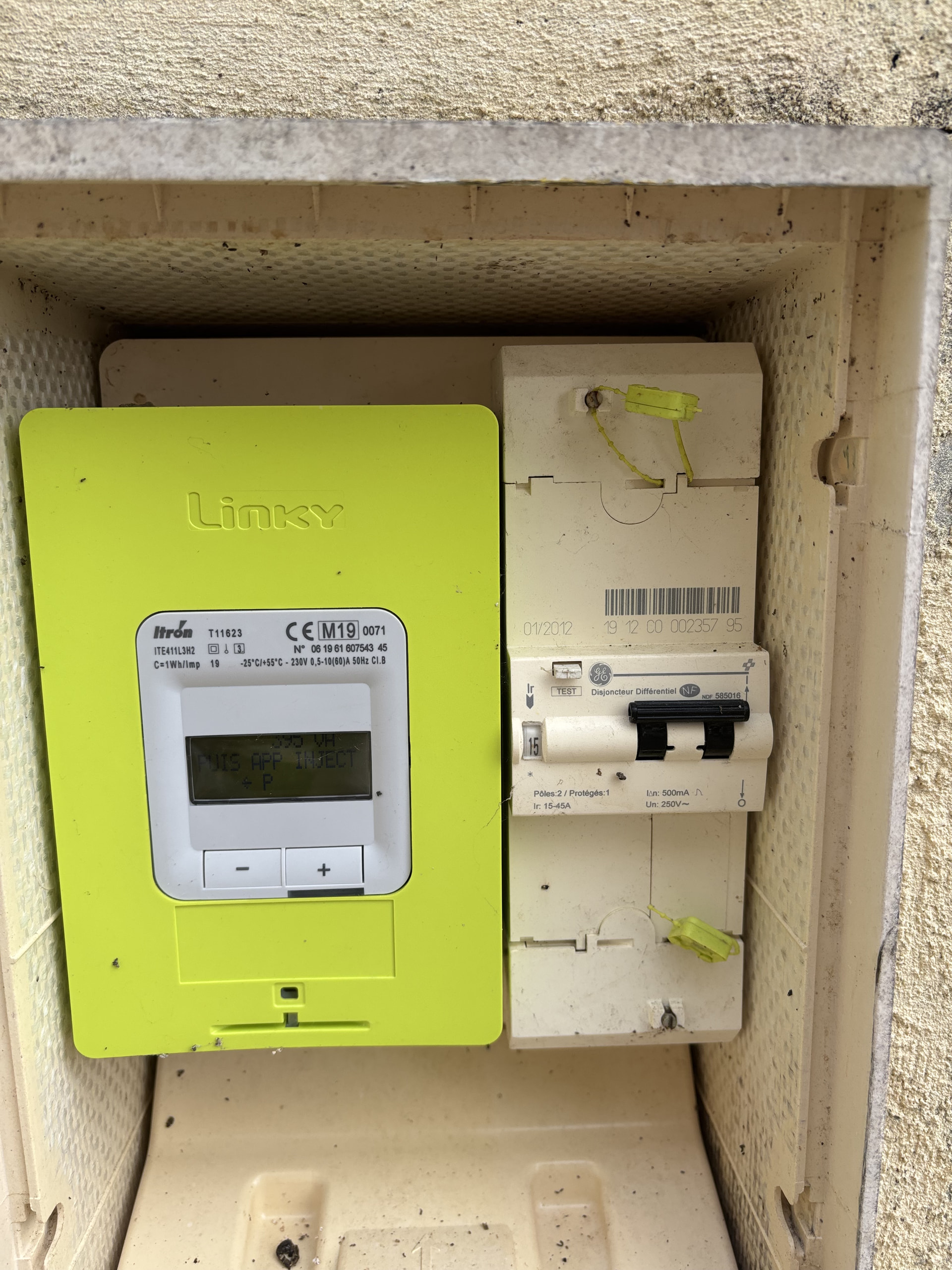
This answers all the questions. You have one of those larger monophasé supplies that were tolerated back in the day as clients already had them & it wasn’t practical to reduce them. As I said, if you applied for one now it would be refused & you’d be expected to go over to triphasé if you wanted more overall power.
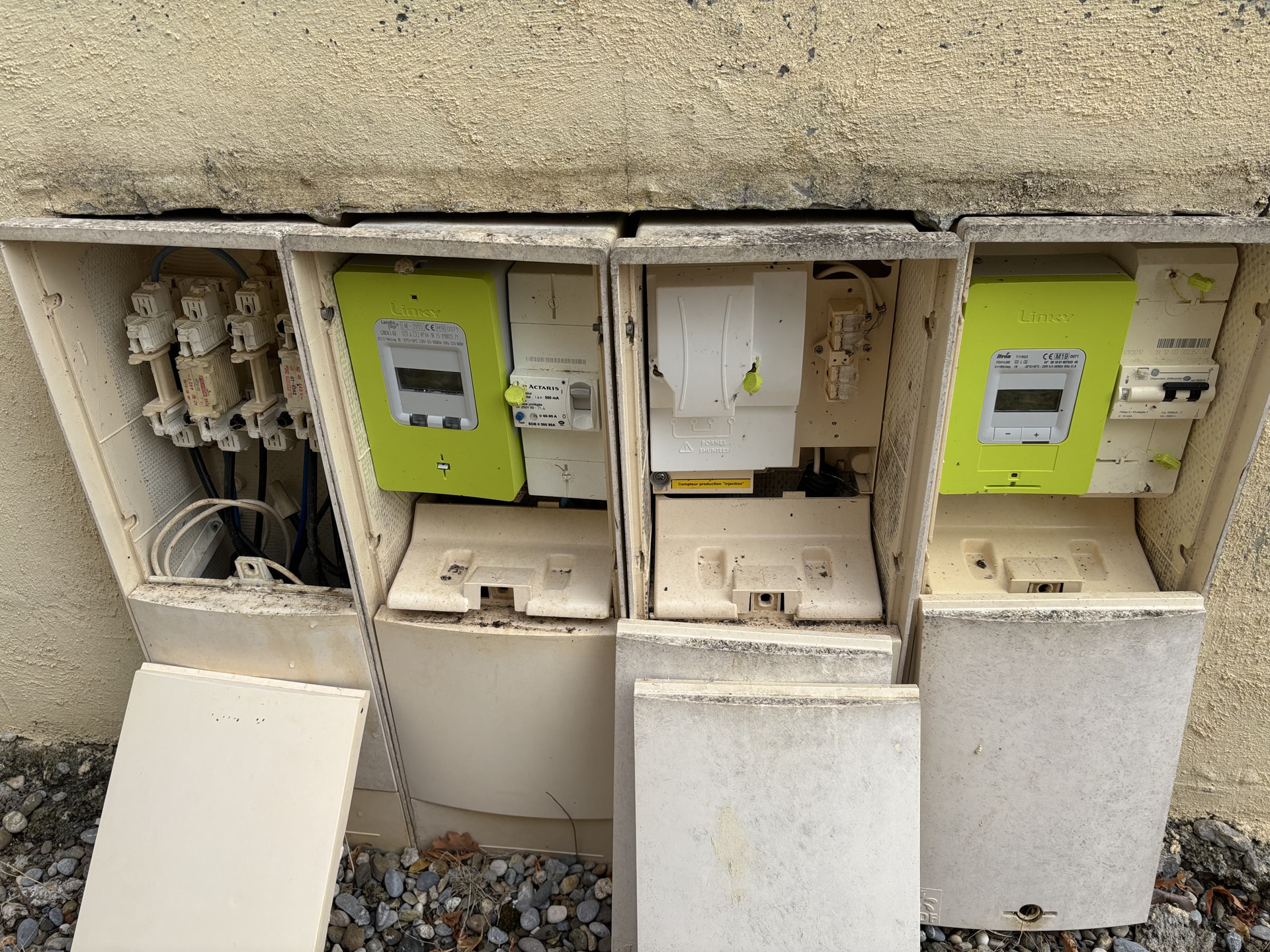
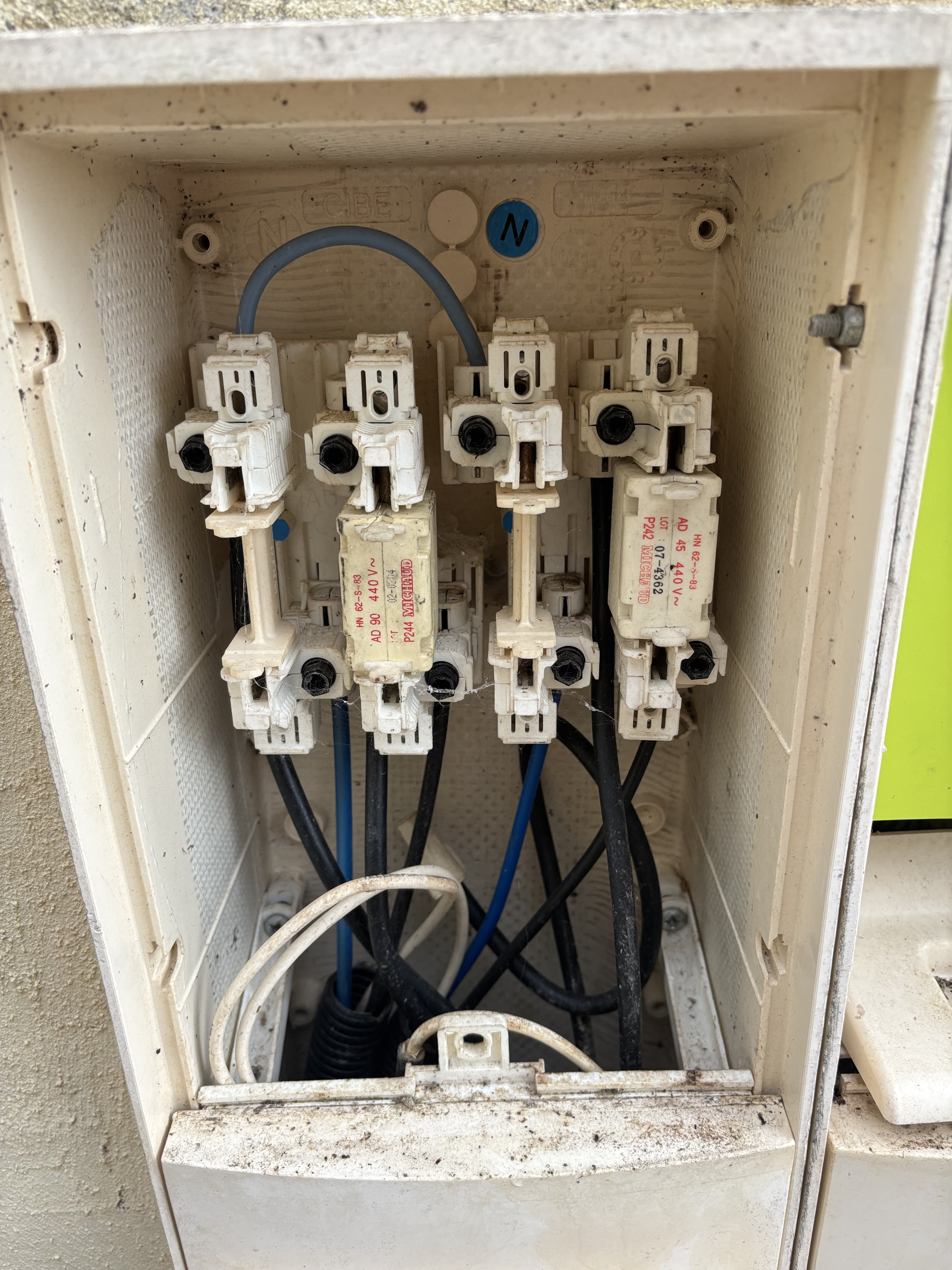
N.B. The cabinet on the left with the ENEDIS fuses in should not be accessible to mere mortals. Next time you have any intervention from ENEDIS it’s worth pointing out so they can put a seal on it. You don’t want to be accused of getting free power by tapping in prior to the meter
Why does France then have this low limitation? The blow is 100A in my wife’s house in Burford as I imagine most other houses might be. Is the UK grid that more resilient to melt downs?
How do these private chateaus work? I ‘know’ someone with a mansion on d’Azur where his staffed kitchen must draw 12kVA on its own… I cannot see him tolerating electrical trips during a party with his Parisian mates…
Above a certain size these chateau would be no seen different than a secondary school or large supermarket and might be getting a 3.3 KV 3 phase and their own transformer substation (or whatever the intermediate voltage is in France ). . And larger enterprises would have 11KV … All the way up to 110KV for major hospital ..Utilities anywhere don’t like supplying much above 15KW as single phase. .It becomes inefficient and there can be a significant parasitic voltage on the Neutral line ..but as consumers that’s not our problem.
It’s a lot easier to manage grid when you have information such as the maximum draw possible. By giving a financial incentive to keep load down (by having a higher standing charge more for more available power) you.
If UK grid operators thought that their domestic customers might all draw 100A at som point they would have to look at things differently. Clearly, smart meters now give them much better information about use patterns, but you get my point.
Another factor is the fairness. In rural areas it’s not uncommon for a remote barn to have it’s own mains connection & all it’s used for is a very occasional light & an electric fence. In that situation having the lowest possible/cheapest abonnement of 3kVA makes sense.
In France there are three electrical tarif types…
Tarif bleu is the lowest cost & is the only one which trips if you exceed an agreed abonnement level. It’s what 99.99% percent of private homes & small business premises will use, albeit repackaged by a third party energy reseller - EDF, Mint, Engie, Octopus etc.
It is limited to 12kVA monophasé & 36kVA triphasé. Your quoted mansion on the Cote d’Azur will probably be quite happy with 36kVA.
Tarif Jaune is for needs above 36kVA but not at industrial levels. The power arrives from a local transformer (that will also supply other consumers) at ‘low’ voltage i.e. the same as domestic/tarif bleu, meaning 230V single phase/400V three phase.
Finally there is Tarif Vert, which is for larger users. This involves a grid connection at around 12kV to a transformer wholly contained & used by that consumer i.e. a shopping centre, large hotel complex etc.
Whilst I almost understand France’s logic, I would wager more people have a higher abonment than normally required to cover the few months they need it in winter for instance for heaters. I must admit to being a bit lazy now I have the Linky so changing is free to lower ours to 6kw and only increase to 9kw if we are there in winter.
I can see trouble ahead - one day, it will be commonplace to have a small house with two EVs on the driveway, a heat pump and a kitchen with every mod con going. Plus a host of other electrical appliances. Even with solar panels for water and PV, that 12kVA is not going to go far..!
Yes with the push to decarbonise and switch to electric I see the need to end what call the sillyness of the Current situation, no doubt there will be some Resistance to change it but additional Capacity is required. All our Ohms need a bit more for all the appliances we will have soon.
Spot on with the timer advice. I tried tinkering with a multi-circuit contactor setup a couple years ago to squeeze out savings on the water heater and an old pool pump, and it just ended up being a messy headache with wiring. Honestly, unless you’re running heavy industrial gear all night, sticking to smart plugs or letting appliances use their own delay timers saves you so much grief in the breaker box.