Our Panasonic is on its way out - dunno if it’s French bread or age, but I suspect the latter - so we need to replace it.
Any suggestions?
Our Panasonic is on its way out - dunno if it’s French bread or age, but I suspect the latter - so we need to replace it.
Any suggestions?
Another Panasonic. Not sure the new small crunchy loaf one is going well, though, so probably the grey one (vs black or silver which are each slightly different). Of which I have one I got a really good price for on amazon.de in one of their events. But my Lidl one is still hanging on.
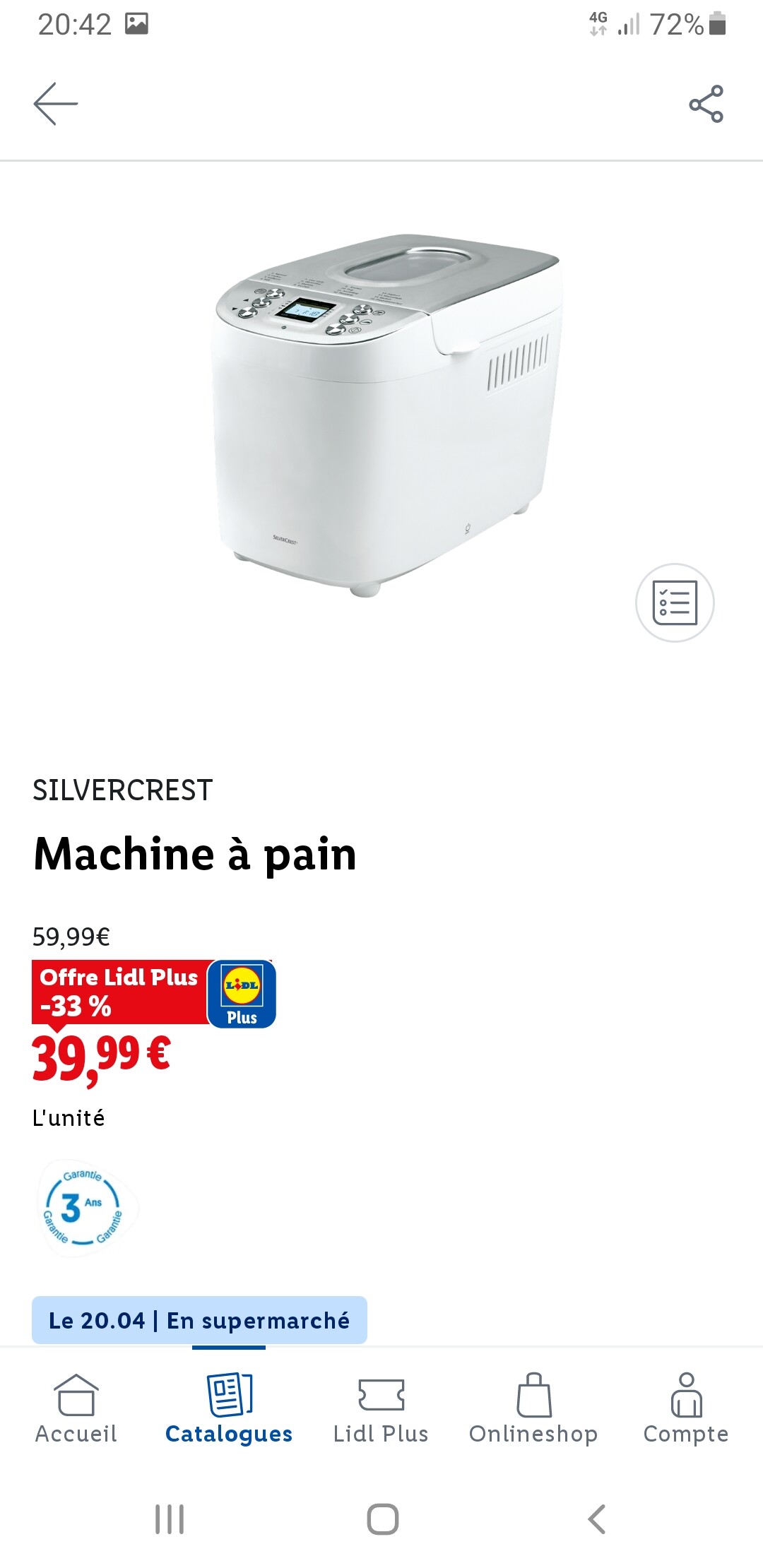
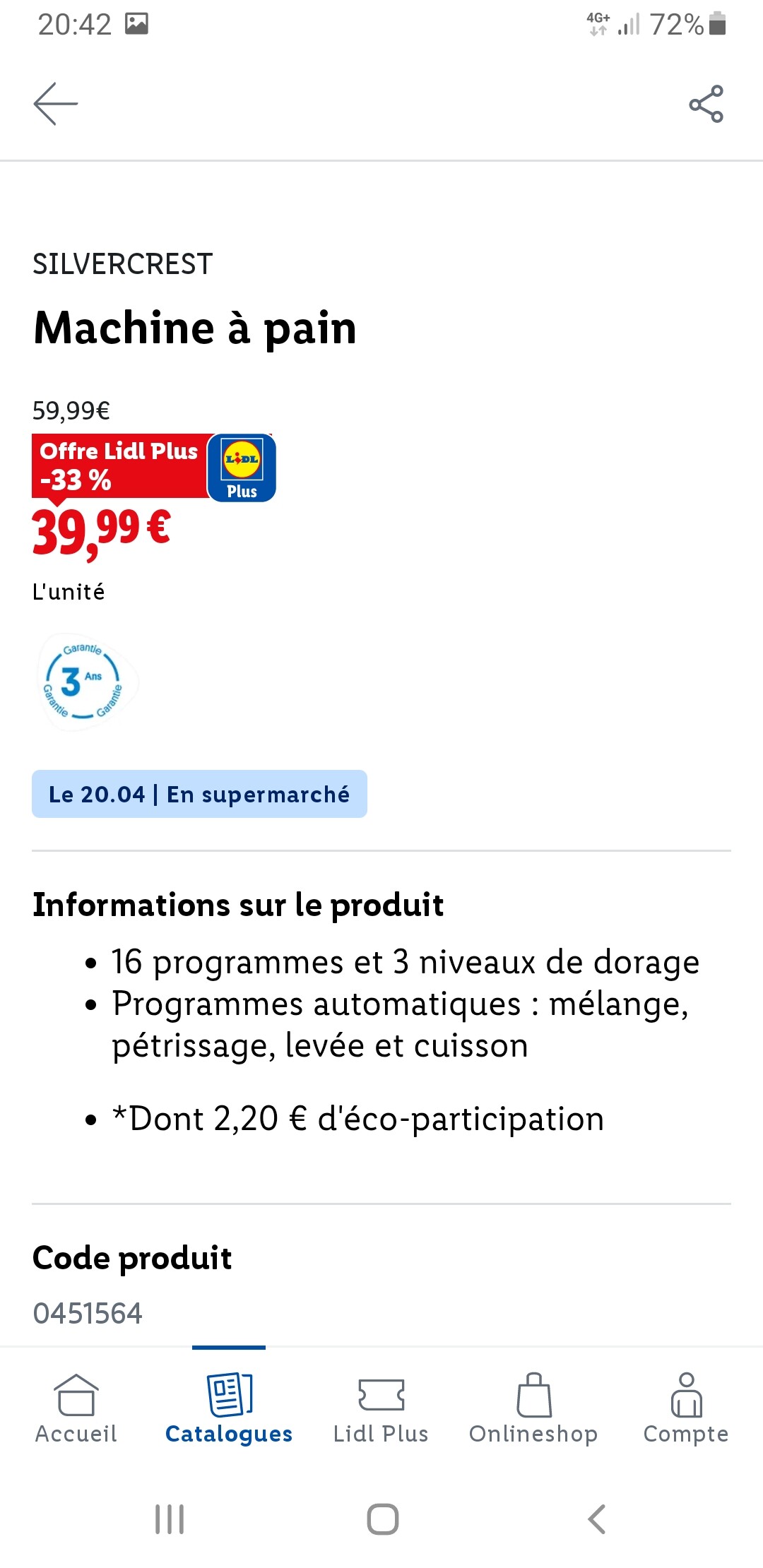
If you’re ok with 2-3 years before it fails then as of today Lidl France has theirs in shops for an unbeatable 40 euros net this week if you click to activate a Lidl Plus coupon to get 10 euros off. At 40 euros it’s unbeatable, I’ve had 3+ over many, many years. Very versatile and flexible, also does jam, cakes and yogurt. I think the guarantee is 3 years btw.
You can automate just the parts of the program you want to, or go fully auto with about 16 programs. I use locally milled whole flours in mine and good results
Unfortunately my OH is not for hire, or purchase.
You could just learn to stretch and fold. 
It’s more effort, but not too much, and the bread seems nicer than stuff made in a machine. I’m learning techniques at the moment which keeps bread moist and fresh for 4 or 5 days after baking without any industrial additions.
Olive oil 1-2 tbsp helps
I’ve tried oils in various quantities, yoghurt, butter, oats and a variety of other things. I came across a YouTuber making high hydration bread using a scalding technique (tangzhong?) and a poolish ferment culture. While the poolish made it taste bad and that plus a high proportion of scalded flour spoiled the structure, it gave me a starting point.
Present recipe is to add 75g of flour (can be white or 50:50 mix wholemeal) to 250ml boiling water as the scald (mix together thoroughly).
After cooling blend 7g instant yeast 8g salt into 150ml water, add the scald and break up the lumps, then blend in 375g white flour.
Do 4 rounds of stretch and folds to build strength, then coat in oats/seeds/wholemeal flour etc and final proof in a shaped container about 40min. Give the loaf a slash and a squirt of water from a spray bottle before baking.
Bake at 230-250’C under cover (Dutch oven if available) 20min, then uncover 15min.
I like to add poppy seeds to the dough, and sometimes roll the dough in a tray of sunflower seeds before the final proof, which is a very pleasant way to make it non-sticky. Cumin seeds, caraway or a sprinkle of oregano in the dough are nice too.
I’ve tried variations of this making a buckwheat or pearl barley porridge as a base, but this is the best I’ve found so far.
I think you’re right that the answer is in the seeds (ground or not to whatever extent) that your flour is made of.
I’ve found olive oil and butter behave the same. Currently I’m up to about 34% whole-ish solidish grains of which 56% is locally ground rye flour. The rest is white-ish but actually made of finer ground local grains most of which is wheat.
The biggest single difference I’ve found to making bread that keeps is adding rye flour. But tastewise I’m at the max of 20-22% rye. Btw I found Bacheldre (the fine ground preferred to the coarse) rye excellent in the UK, Waitrose used to have it.
After that I suspect true sourdough, ideally not just a poolish, is how French breads keep a week or so.
I’d suspect Germany would be a good source of recipes, on Readly and, I think, Pressreader, there is even a monthly magazine called Brot or similar with what look like good recipes.
Your high rye content sounds like it should have a fantastic flavour. At one stage I made some breads with a dark roast malt powder, but my wife really didn’t like those. Mostly now my bread is made with white flour plus a little wholemeal and seeds. Interesting comment about French bread keeping: we enjoy pain de campagne at times, and I never once considered that it might not be industrial.
Not a personal fan of sourdough, it’s just not a flavour combination for me.
Rye you have to have a longer rise IME. Ditto the more complete the grain, the longer rise seems to be needed for the flavour to develop.
I’ve just switched to Caputo yeast and it’s brilliant - it can take a longer rise than other dried yeasts, but does not have to have a long rise if your flour doesn’t need it.
The Cotswold Crunch sometimes in Aldi, but you can get it on Amazon, is made somewhere not too far from you and makes a nice granary. Which it sounds is about as far in that direction as your wife wants to go 
Do you REALISE how it hurts when you lot blithely talk about making real bread to someone who’s tried repeatedly and failed EVERY DAMN TIME?
Mine is all machine as in the Lidl one above. If I can do it, you can do it.
Btw I have never found a yeast in a French supermarket that didn’t flop. And I can’t stand French supermarket baking powder - odd taste and not so strong or reliable as I’m used to - so since my Waitrose baking powder ran out I make my own. I resorted to Allinson’s dried yeast for bread (not the yellow tin one, it was green till recently now it’s another colour). But gradually Allinson’s is either getting weaker or the local flours I’m using are getting stronger. It was running out of puff so I got a brick on longer rises. And I do mean a brick instead of a loaf so I feel your pain. .oops unintended pun.
So I invested in a 1kg pack of Caputo yeast off Amazon and will never look back.
I don’t have time to mess about with a proper sourdough and my kitchen is too small to have flour everywhere - yeah I’m messy - so I’ll be sticking to a machine. Just follow the recipe and you can’t go wrong
Has anyone tried the cubes of fresh yeast that I see at the bakery or some supermarkets?
Yes, I use them fairly frequently.
Thank you. I guess the results are good or you wouldn’t be buying it still?
Fine! There are some things we still use dried yeast for but cinnamon buns, muhli-weggli and some other things we always use fresh yeast cubes.
Cinnamon buns sound delicious. 
I am now on my third Panasonic and I live in France. A French friend was jealous and wanted one so I offered to bring one out from the UK at my next visit. Her husband wouldn’t wait and went out and bought a non-Panasonic bread oven. She never managed to make a good loaf of bread so she bought a second one of a different make and she had the same degree of luck with that one. So I took them home and tried. Out of 5 attempts in each machine I only got one good loaf.
I remember the words of a sales assistant in John Lewis in Nottingham all those years ago. My kitchen had just been re-fitted with black, white and stainless steel and on the shelf in John Lewis was a lovely black and stainless steel oven. A pefect match so I picked it up and took it to pay. I casually asked if this was the oven the assistant would recommend. Her response was “Well actually no. The only one I would recommend is the Panasonic. Unless you make a mistake with the ingredients you will never fail to get a good loaf”.
I put the attract black and SS model back on the shelf and bought the Panasonic.
The only thing I would add to the Sales Assistant’s advice is use fresh ingredients especially the yeast and the flour.
The fresh yeast cubes are really good for cinnamon or cardamom buns and all that scandi stuff.
My daughters in Australia make fabulous sourdough once or twice a week. If I’m by myself I tend not to bake but I make sourdough and brioche and flatbread etc etc all the time if there are more of us at home.
Apologies if you’ve mentioned it already and I’ve missed it, but do you have the model number of the recommended Panasonic please?
Quite seriously, if you really want to make bread, give this a go.