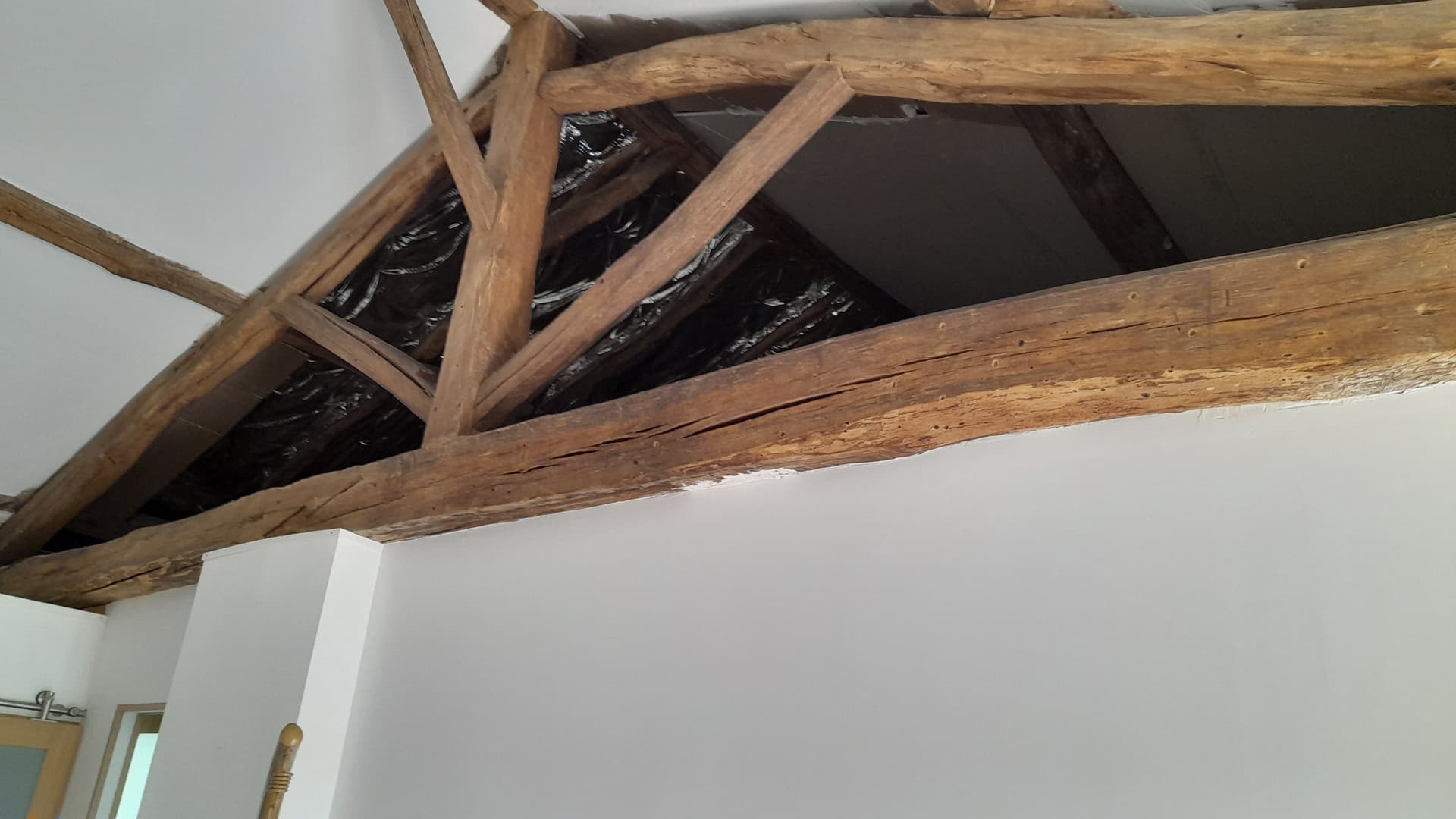
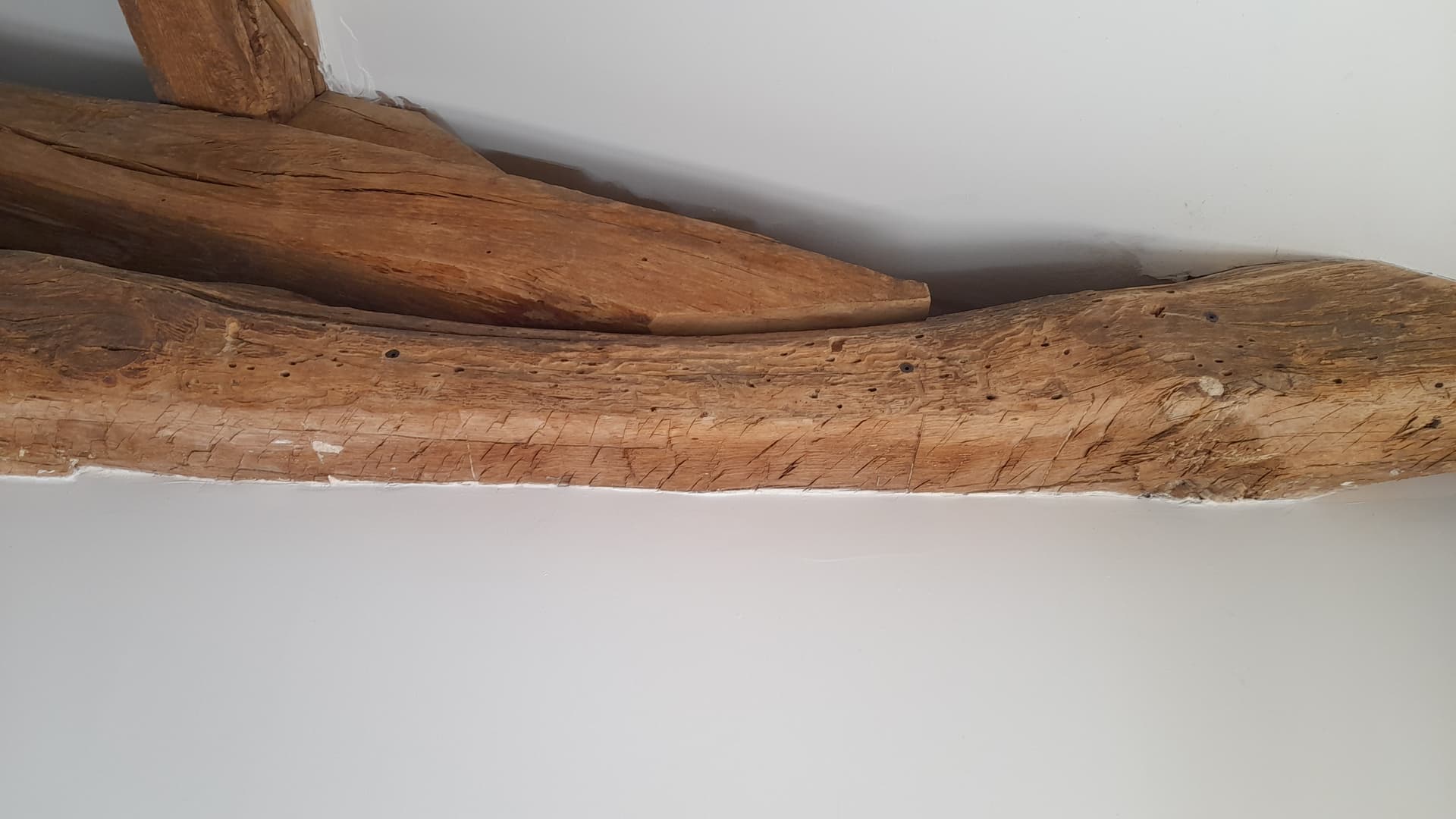
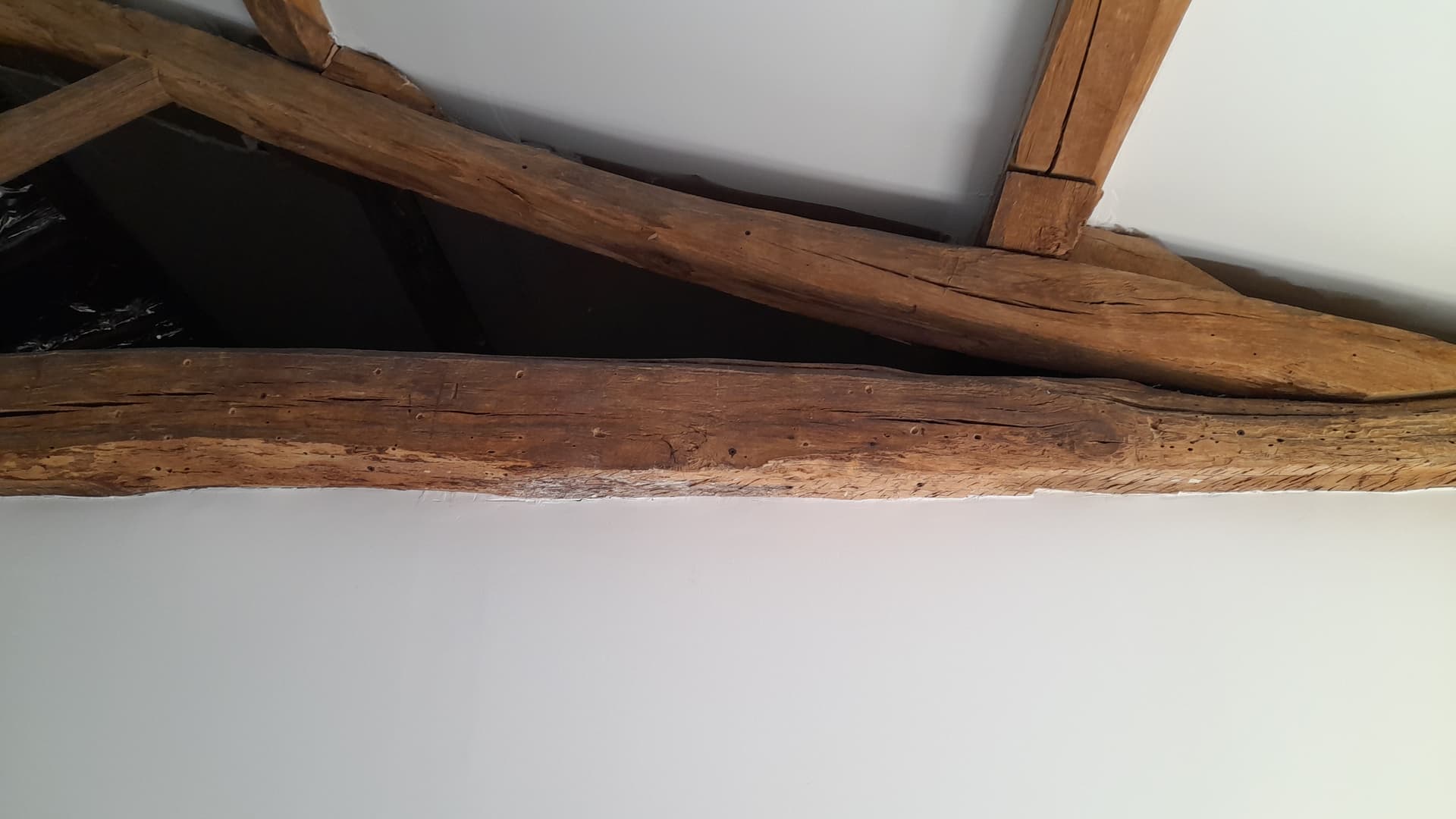
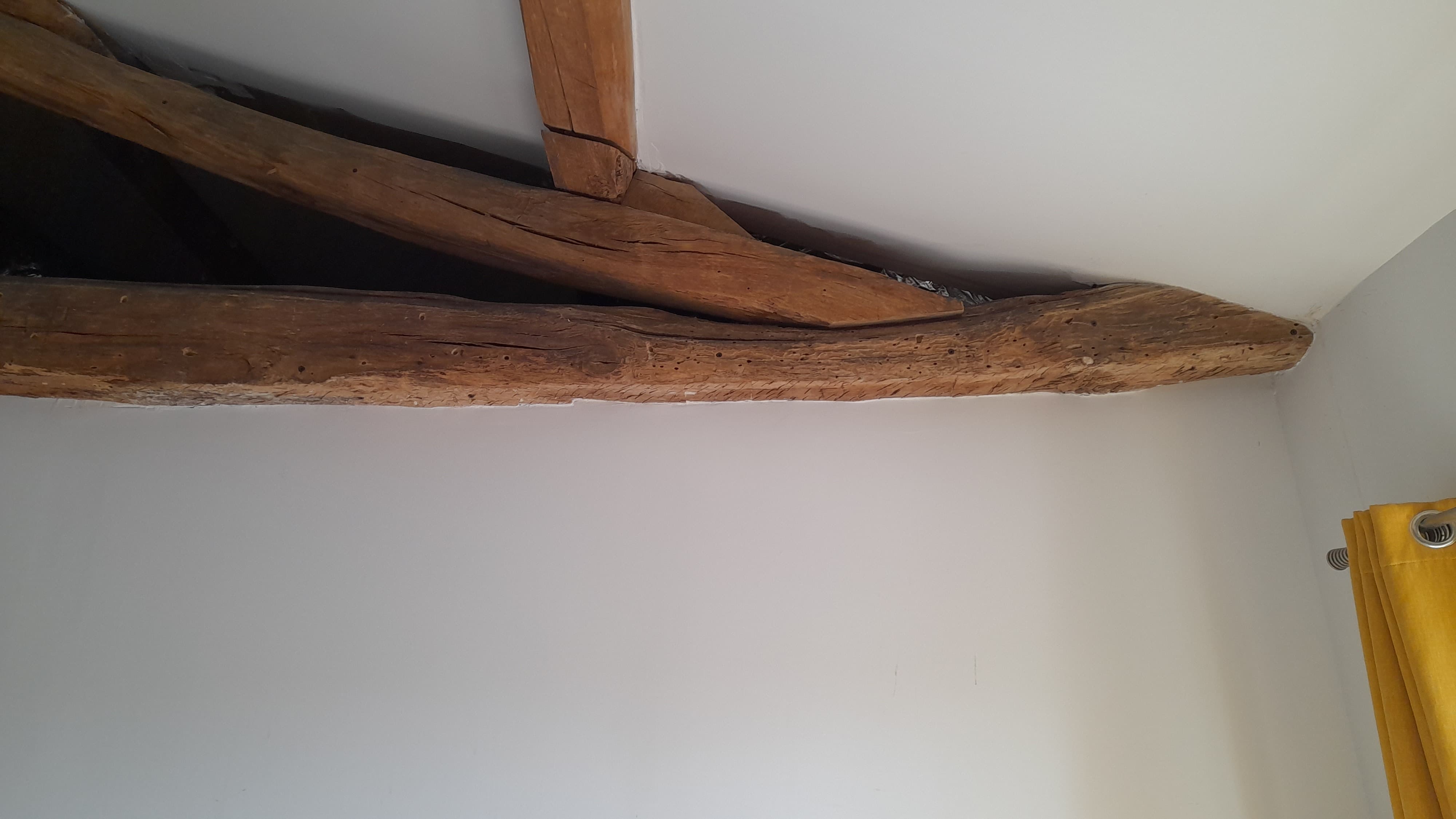
I bought a derelict farmhouse 5 years ago. I have been renovating and finally got to making my ‘dream’ bedroom in what was an old hay loft above a cattle stall. The bedroom is everything i dreamt it would be. However I share this space with capricorn bettle larvae who are eating my oak beams!
I cleaned and sprayed all the oak framework 3 times before starting the renovation of this space. However the capricorn are very much alive and are driving me mad with their munching. I am also worrying about what structural damage they are doing. The oak is very strong where I have drilled in the injection plugs but one area has visibly been badly eaten.
I have literally poured, brushed, sprayed and injected
over 100l of xylophene into and onto the affected areas and the muching continues… I have found 21 dead capricorn bettle in the bedroom a few months after I started the treatment some 12 months ago but none since.
Does anyone have any advice what i should do next please.
@KatrinaFrance
Hi Katrina,
Firstly, welcome to France. If you’ve come from a sound town building in England and move to a dream barn conversion in France, the house will ‘sing’ differently, they are there to intentionally drive you crazy!
Ok, you need to STOP. On the tin is says 2 coats by pulverisation (spray) or paint. If you put 10 coats on it means you have wasted 8 times more product than required, The wood is not 10 times better protected. You have already proved that the product is working as you are finding dead larvae.
The capricorne larvae can live up to 5 years in the wood. They will only succomb when they emerge (eat) through the outer layers of the wood.
I assume the building is several hundred years old, and that it was vacant for some time before you bought it. Therefore it has survived that long and is unlikely to fall down tomorrow, hopefully!
If you know where they are chewing, try and hack them out as you have already been doing. Usually the inner core of the wood will be fine. If the wood is compromised, it can be braced.
Where in France are you? Can you post/pm some photos of the wood.
Calling an expert in, they will recommend one of 2 treatments; surface spray, you have already done that, so no need, or injecting, which in my opinion is unsightly and costs a minimum of 100€ + VAT per linear metre. Another member of SFN was recently quoted 27€K to injection treat a chalet in Savoire. They had done exactly the same as you, coat after coat of Xylophene/Xilix. I convinced them to save their money.
If you need any more advice or help, feel free to contact me.
I had a reply from 1 peat control company today who do not have any operations in my area so that is a dead end. Still no contact from any others. Very much my experience here in France. I struggle to get any french tradesmen to provide a devis even when they have taken the time to look at my work.
My property is around 100 years old and was vacant for several years before I bought it. The area where the capricorn are is in an area which was never inhabited, not by humans anyway.
I bought a new wagner pump so will inject again when i can hear them. I’m worried to hack or drill them out for fear of causing more damage to the beam. They are in a huge oak beam so at least that is something. I can hear perhaps 4 of them .
@KatrinaFrance Please PM me your postcode. I have asked for my national fournisseur for some reputable wood treatment specialists in 71.
It seems that you have all the kit. All rotten/eaten materiel should be removed before treatment, so if you think you’re going too fr with the excavations, a structural engineer might be useful to to have a look at it.
Hi Rob, I hope your still fighting the fight, we just had an insane quote for capricorn beetles in our shed next to our house, we are in 32… can you advise… thank you
Been there and have the tee shirt . We bought a 1952 era house with A Frame Attic supporting the roof and the incessant sound of gnawing ..It would drive one around the twist . The creatures were operating in synch like a chorus …
Purchased a large container 25litres of the Xylo stuff and painted it on with a roller .. I think it was about 70 euro 23 years ago so not cheap. The solvent is like whiite spirit ..or like kerosine but it’s nearly colourless so drops on the floor don’t matter .. Smelly as well .. but whatever .. probably about 2 saturation coats were applied . The timber just soaked it up like water.
The Gnawing did continue for a few years ,but lessened with time and now it’s totally gone .. I was a bit concerned that they had damaged two of the legs on the A frame , by eating the surfaces so I purchased 2 long planks Beams each 5 or 6 metre and similar width and depth of the originals and attached then in parallel as splints .. Getting the planks into the attic of a 3 story building was a fun event .. Pulling them up the outside of the building and then trying to pull them into the attic by the window . All this family lore and happened 25 years ago.
But my point is that having treated the beams with the Xylo stuff there creatures eventually stopped and there are no telltale mounds of timber dust. And in time yours will also go.I would certainly recommend a face mask and as much ventilation as you can get during application.
We did the same, our beams in our room look like the ones in the photos above. We’d lie there listening to the munching, we’d treated with xylophene, even injected it in some spots. Rob explained at the time that they have to come out and that’s when they eat the treatment and that’s it for them! But yes you have to wait, I think it was 2 years until the last one died.
Maybe I am worrying you too much . we were typically in the house for maximum 6 weeks per year ,afterwards it would be all sealed up and so it never got the chance to heat up.or maybe dry out the timbers If you are in steady occupation it’s probably warmer and dryer
No need to worry, Insecticdes don’t kill eggs. When eggs hatch they chew the wood, so the new borns die. Capricorne’s larvae can live up to 5 years in the wood, so @Dan1 is correct, there could be activity for several years after treatment.
Treatment is about breaking the lifecycle. They won’t disappear overnight.


 so that is a dead end. Still no contact from any others. Very much my experience here in France. I struggle to get any french tradesmen to provide a devis even when they have taken the time to look at my work.