Electronic invoicing - are you ready?

My accountant held a presentation recently about the imminent introduction of electronic invoicing to French business life.

Why is this important ? VAT collection, or rather, the perceived lack of adequate VAT declarations by a vast majority of French businesses (whether deliberately or through genuine mistake).

When is it coming ? From September 1st, 2026, all French businesses must be capable of receiving electronic invoices per the established norms and format.

From 1st September 2027, all businesses that collect VAT on their invoices must be able to emit invoices according to the new electronic formatting norms.

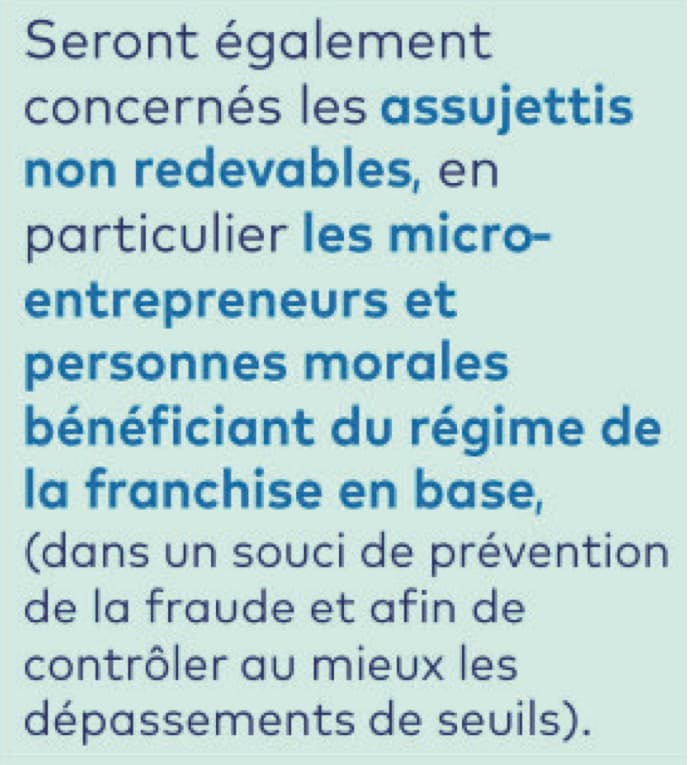
One thing to note is that even those businesses not normally subject to VAT collection, e.g. “microentrepreneur”, and “personnes morales bĂ©nĂ©ficiant du rĂ©gime de la franchise de base” will also have to sign up, or implement an electronic invoicing system capable of receiving and emitting electronic invoices, and generating an E-report, even if they don’t normally have to include any VAT in their invoicing. The stated aim for the fiscal administration is fraud prevention and being more quickly able to determine whether the turnover ceilings have been exceeded.
The determination as to the type of business entity (small, medium or large) is made from the standpoint at January 1st, 2025, on the basis of the previous year’s annual return, or from when the subsequent annual return is made after that date.

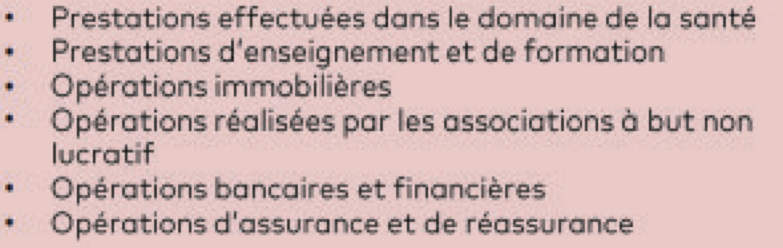
Activities that would normally fall under the application of VAT, but which are excluded under Art 261 CGI:
See also here.

Excel, Word, PDF, images, or handwritten invoices will no longer be acceptable, nor will they be able to be sent via email.

The accepted normalised formats are UBL, CII or Factur-X.

The fines for non-compliance are:

  • 15 Euros per invoice up to a maximum of 15K€ in any one year.
  • 256 Euros per invoice incorrectly transmitted up to a maximum of 15K€ in any one year.

The platform you use for transmission of the electronic invoice needs to be certified by the French fiscal administration.

E-reporting will be obligatory for invoices made out to businesses established outside of France, irrespective of where they are located. What this means is that even if the entirety of your activity is with non-French based entities, you will still be under an obligation to transmit the data in the normalized format via an accredited platform, for reporting purposes vis-Ă -vis the French tax administration.

With regard to the receipt of payments, E-reporting will also be obligatory for services billed and paid. A very small number of exceptions to this general rule will continue to exist, e.g. reverse charge operations in inter-EU member state commerce.

At a minimum, the majority of people running a business registered in France will be subject to the E-reporting obligations.

Deadlines for transmission of the invoicing/billing transactions.

  • for businesses with a 1 monthly VAT return:
    • operations between 1st and 10th of the month, by 30th of that same month;
    • operations between 11th and 20th of the month, transmission by 30th of that same month;
    • operations between 21st and 31st of the month, transmission by 10th of the following month.
  • for businesses with a 3 monthly return:
    • for any given month, transmission by 10th of following month.
  • for business using simplified return scheme:
    • for any given month, transmission between 25th and 30th of following month.
  • for businesses with a basic rate of VAT subject to annual turnover:
    • for a given 2 month period, transmission between 25th and 30th of following month.

Some of these transmission requirements may be subject to change by the administration in the future, e.g. the 10 day system.

Deadlines for reporting payment transactions:

  • businesses already subject to 1 monthly or 3 monthly reporting, transmission by 10th of the following month;
  • businesses already subject to monthly simplified VAT regime reporting, transmission between 25th and 30th of following month;
  • businesses already subject to VAT base rate based on annual turnover with bimonthly reporting, transmission between 25th and 30th of following month.
1 Like

Probably needed when you criminals like Christine lagard running the place.

1 Like

The document I received from my accountants is an 81-slide summary of a presentation they made to their clients in the run-up to Christmas. The detail involved in the processing of invoices received and emitted is quite simply mind boggling. Une vraie usine Ă  gaz!

The end result will be increased costs to French businesses. Payment tills alone will have to include an option to differentiate between a person-in-the-street customer (B2C) and a business customer (B2B), which means that they have to be able to enter the identification details of any business buying through the till before creating an e-invoice.

One of the examples given by the accountants relates to how restaurants should be managing tills and till receipts under the new regulations - currently only 700 of the approximately 4000 different tills authorised in France have been adapted to the new legislation.

Similarly, none of the parking payment units, or petrol stations, that issue paper receipts, have any sort of input as yet allowing to differentiate between B2C and B2B.

There’s also a whole minefield just waiting to happen with the upload of receipts and invoices made out in foreign languages. Whilst there is no obligation on the foreign suppliers to provide the invoice in one of the required formats, the information on these still needs to be uploaded and reported on. I don’t see anyone offering multilingual support for the processing of invoices made out in non-ascii characters, for example.

Sounds hugely complicated

French innit ? “Pourquoi faire simple quand on peut faire compliquĂ© ?”, as the saying goes.

1 Like

I’m glad to be out of all of that now, paying accountants was bad enough to do the wages, TVA and general accounting but no way would we have been able to cope with electronic stuff.

1 Like

Thanks very much for alerting us to this major change in invoicing. Compared to the burdens being imposed on businesses, the impact on consumers, B2C will of course seem minor. Do you believe that an artisan, say for example the young chap who comes and tunes my piano once a year, will in future need to obtain an invoicing portal, then send me a link to his portal, which I will need to register to access, so I can see his €60 invoice? This will be a pretty significant cultural change!

From the government’s own web site:

Les opĂ©rations qui devront donner lieu Ă  la transmission de donnĂ©es (e-reporting) concernent les entreprises soumises Ă  la TVA en France et qui commercent avec des particuliers et plus largement des non assujettis (commerce dit business to consumer ou BtoC), avec des entreprises non installĂ©es sur le territoire national (c’est-Ă -dire des assujettis qui n’ont pas d’établissement, de domicile ou de rĂ©sidence habituelle en France).

This is pretty much everyone running a business who already has some kind of reporting (irrespective of the periodicity) - there a few, limited exceptions, but artisan is not one of them. Whether they decide to implement e-invoicing for individual customers that only pay VAT and do not collect it, will be up to them, but the alternative will require manual data entry for all transactions, onto the accredited platform for transmission to the administration. For example, restaurants, will still be able to issue till receipts to individuals, provided that the till has a means of distinguishing between an individual and a business client. The same will go for any store - the client will have to identify themselves as an individual or a business at the moment they pay at the till, and the store will have to be able to take the businesses identification details in order to issue a receipt that conforms to the new requirements.

1 Like

I can see why its happening but its not good news.
The one saving grace (though it depends which website you consult) suggests companies below VAT threshold will not need to issue einvoices (E-invoicing : la facturation électronique | impots.gouv.fr). However, we will all have to be set up to be able to receive them. Suggests in due time everything will be pushed to electronic.

Indeed. The VAT exempt and below-threshold actors will still be able to invoice as they do now, but they will have to report the details of the invoicing and corresponding payments received electronically. What that means, for people who do remain on paper invoicing, or the current PDF generation, is manual entry or some other way of uploading the data, to an intermediary that will format that data into the agreed exchange format, and then send it on to tax administration’s servers. It will definitely increase the burden on those who remain paper based, no doubt to the extent that they too will eventually be driven to an e-invoicing platform. I’d agree with you that this is probably the government’s hope anyway. I would imagine that accountants will start to charge more for data entry from paper - mine is envisaging 3 different types of service model, each with a different cost (as yet unknown!!).

As I know that at least some of the members of this forum run gütes, or are involved in “location saisonniùre”, there is this to whet your appetite / raise your blood pressure / reach for the wine (apply as appropriate). Unfortunately, depending on the services you offer with the rental, you will not be exempt from the reporting requirements (but there is still time to get oraganised).

2 Likes

I really appreciate you sharing this and making us aware.

I struggle to understand the English, so it’s going to be fun! :grinning_face:

1 Like

France is such an unfriendly country alresdy to do business in. Patticularly smaller businessea seem to face huge administratve hurdles in comparison to their size. The same product is often priced higher in France thsn in comparable European countries

Clearly tbis is about making government’s life easier by standardising data entry. But it’s another layer of cost for smaller businesses.

So many businesses are in themselves viable but adfing administrative burdens and costs, in France aren’t worth running snd dying each year. When is the French government going to actually do something to make running a business in France easier snd expand the country’s productivity and tax base?

2 Likes

Although I am not directly affected, this does make me wonder how many of those small businesses upon which we all rely from time to time ( garageiste, electrician, plombier etc), will simply pack it all in and shut up shop — permanently.

2 Likes

This is why people take political slogans with a pinch of salt. The “choc de simplification”, one of Macron’s slogans during his first term, was supposed to make people’s lives simpler when dealing with the administration. In reality, it was a convenient excuse for the state to relieve itself of a number of civil servants, and replace them with electronic systems that do their work for them. The same can be said of the new invoicing and reporting system - the main benefit to the state is the ability to reduce the number of tax inspectors, and increase the recovery of tax at the same time. An AI is slated to analyse your financial transactions and decide whether it thinks you might be doing something dodgy requiring an investigation. I’m reminded of a Little Britain catchphrase “Computer says ‘No’”. That will be our fiscal future if things proceed as planned. My accountant isn’t particularly thrilled about it either, as they will have to accept that there will be a race to the bottom for basic accountancy services, seeing as how every Tom, Dick or Harriet will want to get in on the game of being a processor, and offering people the required service for a fraction of the cost.

1 Like