I don’t quite have that sort of reach 
Though it does explain why a couple of sites I needed this afternoon were unreachable. To be fair cloudfare did point the finger of blame at itself
I don’t quite have that sort of reach
Though it does explain why a couple of sites I needed this afternoon were unreachable. To be fair cloudfare did point the finger of blame at itself
Which *might* have been something to do with the fact that the RAM was running at 800MHz, not the 3200MHz that it is rated at.
Can’t seem to run it that high - but the Z370 chipset is only rated at 2666MHz which could be the reason.
Manually set it at 2400 and at least watching a YT video no longer pegs the CPU at 100%.
Well that’s sheep for you. Slow devils.
Certainly that RAM was not catching any sheep 
More like catching some sleep.
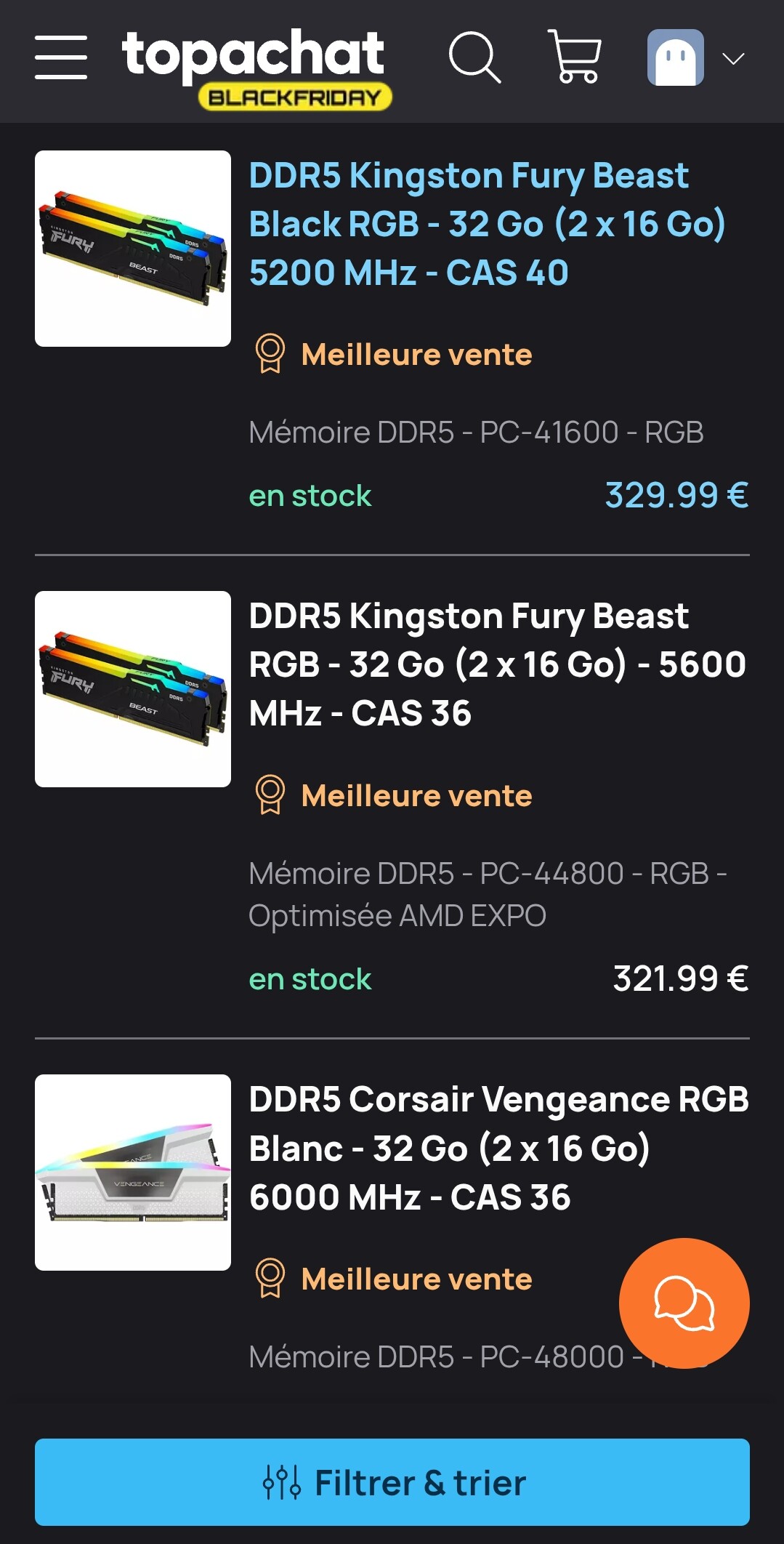
Gone stratospheric - apparently demand has been pushed up by all the AI farms requiring mega amouns of high speed/graphics RAM - consequently there is something of a shortage of regular desktop DDR around.
Though I’ve just looked - I paid £248 for a 96GB kit (2x48, 5600MHz) a smidge over a year ago and it’s £270 now so not that much more expensive.
That said the 64G kit is actually more expensive at £290 
Billy,
What are the advantages you find in having a home server rather than a secure cloud based one.
Asking as next year I maybe looking to set up a server.
Tricky.
Up to a point I might even say “none” - the fact that I run the server at home is somewhat historic, it actually dates from June 2003 (I have the original invoice on file for the ADSL connection and I built the email server about the same time) - prior to that I was running my employer’s email system.
So, at the time, “cloud” servers were not really a thing so the only option was to run it on a machine at home, and it has kind-of stayed that way by default.
I also have a couple of cloud servers (one I need to get rid of, and move everything to the newer and more powerful one) which I use for a web server. There isn’t much on it - I use it for image storage mainly if I need to supply a URL for an image which will be stored somewhere which doesn’t upload the image itself (some forums, for instance).
If I were to start afresh now I might well do it in the cloud - stuff like power & backup is taken care of, if the hardware breaks (as at present) I don’t have to find new bits to replace them and I had 1Gb/s symmetrical on the cloud server way before I had the possibility of fibre at home.
However I still quite like the fact that the data is on a machine which is physically under my control. It is possible to kit it out with much more disk than I would be prepared to pay for in the cloud (it has about 60TB raw storage) and functions such as the media server really need to be on the local network.
Obviously to run a home server you need to find an ISP which offers static IP addresses, business ISPs will but it’s harder for regular domestic users. Not sure if any French ISPs offer a fixed IP address and the French put the extra wrinkle that business based ISPs want a siret/n out of their customers before they will play ball - it’s much less formal in the UK. If you want a business account people don’t generally care if you are actually a business, just that you are happy to pay for the service.
I use AAISP as they are built around the expectation of a much more tech savvy customer than the average ISP. I also have a TalkTalk fibre conection. Two ISPs is also somewhat accidental - AAISP are not known for being cheap (though I think that they are worth the premium) so when I got the TT link I saved enough money by dropping the data allowance with AAISP that the whole thing was cost neutral. However AAISP have emailed to say that the VDSL line has to go as part of the move to remove copper from the local loop so I will seek to rationalise things a bit - that might mean accessing AAISP vial TalkTalk and the AAISP L2TP offering as it is the cheaper that way.
Thanks, Billy.
I’m now more than ever, erring on the side of caution & going in the direction of a secure cloud server.
That’s the thing - I don’t consider any hardware secure if I can’t control who gets to touch it.
It is much easier for someone with physical access to the hardware to compromise it. You can mitigate this somewhat with modern systems using encryption, signed executables and so on but the only way to be certain is to have whole disk encryption set up in a way that needs the key entering at boot - which is really inconvenient for a cloud based server (or any remote server for that matter even if it is in your living room, should you happen to be somewhere else).
You can put keys in a TPM and they are very hard for a malign agent to get out even *with* physical access but if they have the motherboard and the hard drive together they can boot a running system and then attack that.
Oh, that is annoying 
Looks like the mobo has taken out one of the 48GB sticks and, although I could have bought two at £270 yesterday - today they have sold out and the price has jumped to £347, delivery who knows when - quite often next year depending on which listing I look at.
On Crucial’s website a single stick is listing at £373
Of course being a hyper organised chap I can simply pull out the 2x32GB sticks that used to be in the mobo from storage an pop those in ... not 
Resurrecting this thread …
Because, like a prat I lost them.  They did turn up eventually.
The good news is that RAM prices have levelled off - maybe even some hints that a dip or even a more significant fall is just around the corner.
So if you were thinking of a new computer or upgrade it’s worth watching prices but I would not buy just now unless you really need to.
Finally took advantage of the Easter weekend to do the necessary network rejigging to make this work so I am now completely on optical fibre chex moi in the UK, sadly I’m still getting:
When I check my French address. Oh well,
Picking this thread up some more.
Prices have gone even more potty, of course. I just paid £185 for a 16GB DDR5 SODIMM - those 48GB sticks, even used are £500+ and could be as high as £850 each new.
As it happens it wasn’t the motherboard which died, that’s fine. As is the CPU - it was one of those über expensive sticks of memory - dead short across the power rails.
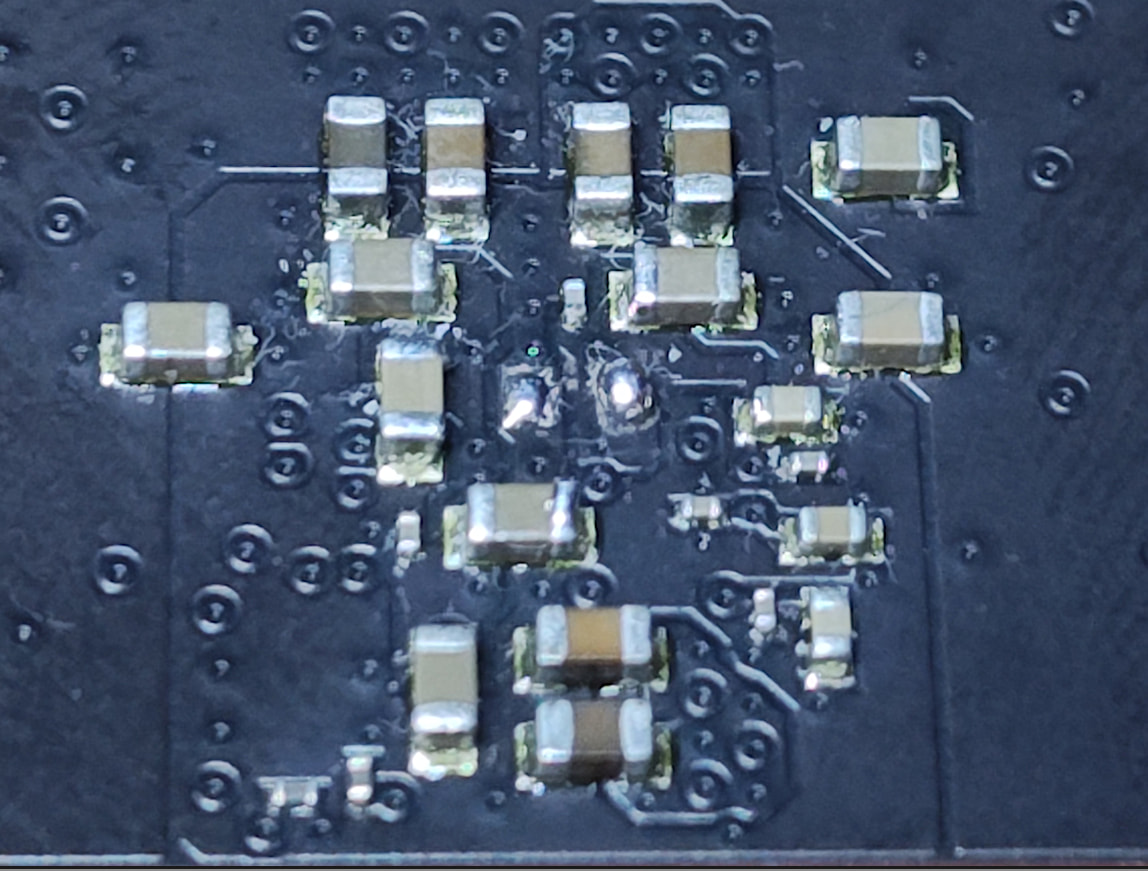
A bit of digging and it turns one of the tiny capacitors in the on-module power supply had died, which is quite a common fault with all sorts of electronics.
This is about the best picture that I can manage - the area in question is about half an inch (12mm) square - the little square blocks are the other capacitors, the two shiny blobs are where the errant little beastie used to live.
Having resurrected the stick I am feeling moderately pleased with myself - just deciding whether to try to solder a new capacitor in - the “big” components are actually 1.6mm by 0.8mm and I only have a magnifier, not the microscopes that you normally use for this sort of thing. The ones which look small in the photo really are - 0.6mm x 0.3mm (or even 0.4mm x 0.2mm but I think they are the slightly larger size).
It will work with one missing but could be slightly less stable so just leaving it off is definitely an option..
It’s all hot air and low melting point these days, although even with my digital microscope it’s ridiculously difficult nowadays.