Sorry yes, I should have use the words “cost effective” rather than efficient.
Even if you are freezing with all the windows open. 
We ditched the Dyson many years ago and bought a small cylinder type to replace it. But that has not been used (except to catch summer flies) since my wife died and the lovely Christelle (we never told her what her surname meant in English, it was way too rude  ) stopped doing the cleaning. Since then it has been just me and, being tiled throughout, I make do with the broom and dustpan. Probably why I spend so much on cough mixture. Mind you as most of it is dog fur it just makes Jules and I even closer.

1 Like
As Indeed did I, early models had plastic breaking and required ear defenders for the noise level. However they have improved greatly.
To be fair due to Dyson the majority of the industry has moved forward.
We certainly don’t heat our house to 23 degrees. One ground floor we retrofitted underfloor heating below pierre de bourgogne that resulted in a lovely radiant warmth. But with the amount of energy you use could perhaps be worthwhile to get a competent analysis of current heating and potential options?.
1 Like
I’d consider underfloor heating if we lived somewhere with consistent, predictable weather, but not anywhere it might change every day. My experience is heavily jaundiced after staying in a friend’s barn conversion that took 3 days before it started warming, and it’s obvious that it will take a long time and a lot of energy to heat a large mass of concrete, which will then cool gradually once the energy source is turned off.
1 Like
I’ve already mentioned this in another thread, but make sure they read this right away!
Except once at the desired temperature it seldom needs adjusting because it neither overheats you or underheats you. It’s not an off system, it’s a low and slow system.
1 Like
One winter the temperature went down to -18C and our underfloor heating in the cottage struggled. We had to supplement with calor gas heaters.
Yes there will always be these exceptions and that’s where system design comes in. Back in 1985 when I was working in Sweden that temperature was quite common and their systems dealt with it without issue, whereas many units designed for warmer climates would struggle. The tech is fine, if a little too expensive IMO and far too blooming complex for users and also some installers don’t understand the numerous codes and settings hence if they cannot program the unit the whole thing can be a failure. The controllers need to be much simpler, Vaillant seem to be trying to deal with this or maybe it’s because I watch a lot of videos on heat pumps.
1 Like
Hence my comment about somewhere with consistent weather, so that a 3-5 day time to change temperature is fine.
We have underfloor heating on the modern additions to the house but they run from the boiler.
I think the rest of house would need to be changed significantly though to make it more energy efficient, which would significantly diminish the character of the house and also never pay back.
I am possibly thinking of putting in some ground level solar in a field though, as our electric consumption is also high.
The temperature doesn’t change much, it’s set to produce a room at 21c or whatever and that’s where it stays 50 weeks a year. On the rare occasion the temperature drops to in this case minus 18c and the system wasn’t designed for that it will struggle, one reason for making sure the correct temperatures are noted all year round when designing. Heat pumps are not meant to be boilers. You went to a building that was not heated and the system took days to warm it. If it turns warm the system will know and reduce to maintain the the temperature but it won’t be overheated if it’s running properly, at an even temperature of 21-22c if it maintains 52 weeks a year whilst it’s 40c outside in summer and minus 15c it’s doing just fine. Not switching on an off like a boiler but just reducing or increasing rpm as required.
1 Like
Always a good move but not always allowing original features to stay. As glazing is one of the biggest areas of heat loss, that and draughts should be the first areas to receive treatment. When I renewed the roof it was the greatest increase in comfort with it properly insulated. I still have to tackle the single glazing so hopefully retaining the doors and windows but machining the rebates deeper to take new glazing units.
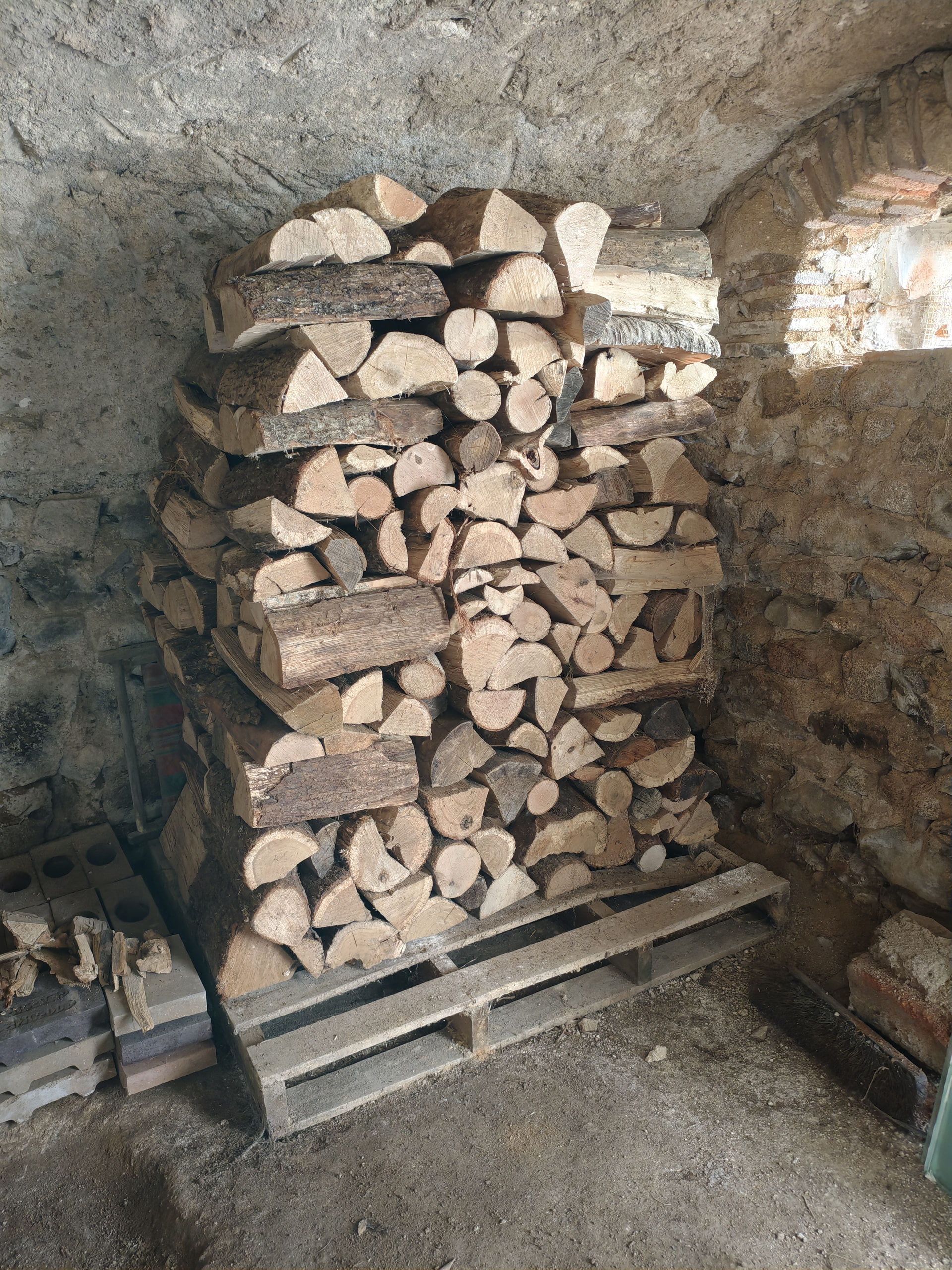
What nice dry looking sous-sol.
1 Like
They are a bit damp feeling, but no puddles in sight. Wood left there a long time goes rotten and steel rusts, but they are fundamentally dry.
So still quite humid moist air then?
Yes, the floor is just earth/masonry dust. AFAIK there’s no damp proofing in the walls, and upstairs is dry thanks to being 4-5 feet above ground level.
1 Like
We had a wonderful phenomenon during the canicule when our previously dry sous-sol had water emerging from the floor! Apparently it’s a thing in very hot weather that water is forced up out of the ground.
1 Like
Must confess I’m surprised that the fault has not been noted/rectified since the Council is the Landlord and should take all its responsibilities seriously… thus setting a good example.
Perhaps folk are too complacent in your neck of the woods and don’t bother to complain/mention.
How long has this been going on?
(mind you, it took our council 3 years to finally notice that the wrong/incorrect streetlights had been installed.. all present and correct now, thank heavens.)