From left to right:
Ordinary Bee, Bumble Bee, Wasp, European Frelon, Asiatic Frelon
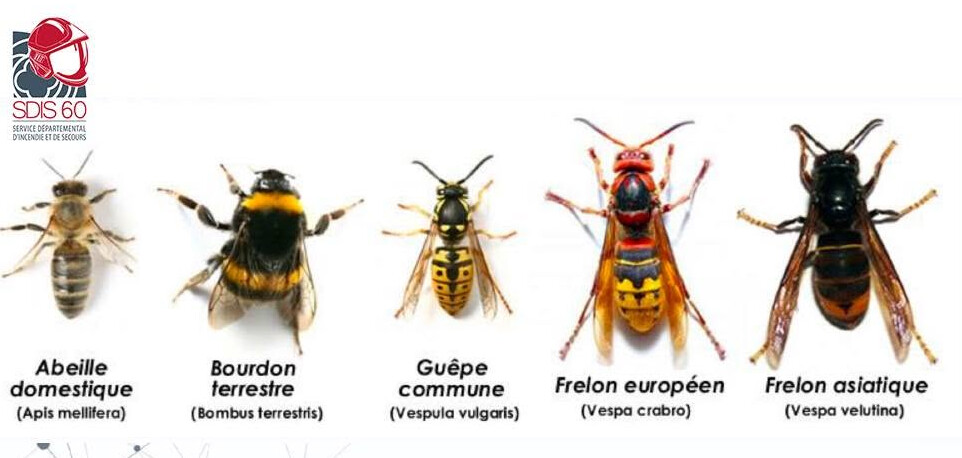
You will note that the Asiatic Frelon is mostly black and an orange band towards the tail-end… and yellow “feet”
From left to right:
Ordinary Bee, Bumble Bee, Wasp, European Frelon, Asiatic Frelon
You will note that the Asiatic Frelon is mostly black and an orange band towards the tail-end… and yellow “feet”
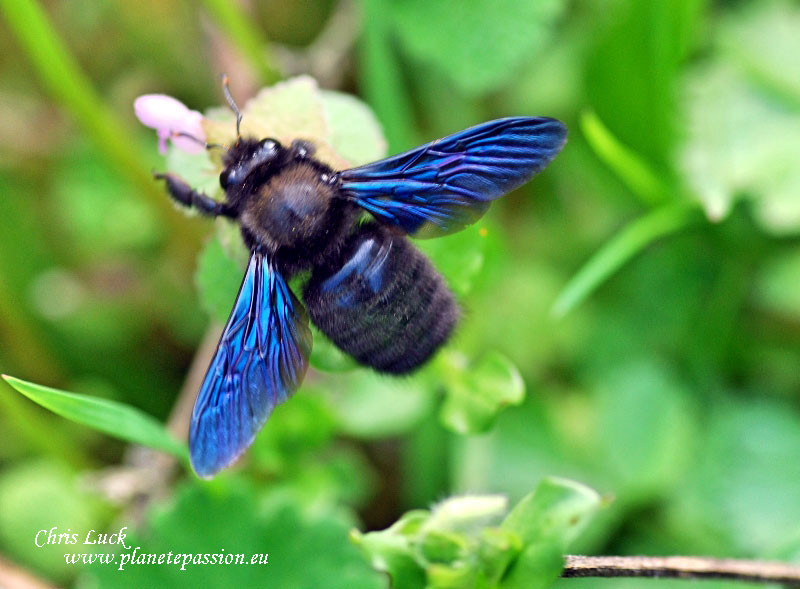
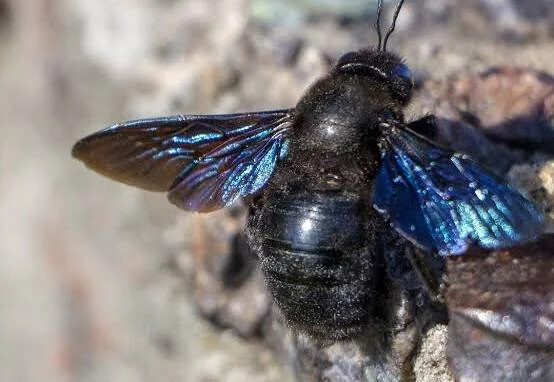
Also, the carpenter bee which is big and beautiful and we have loads here. Only the females can sting but they are normally very docile. I was recommended to leave a pile of wood at the bottom of the garden by a neighbour to attract them. Not to be kind to them but to stop them laying their grubs in our rafters.
and extremely noisy… can sound like a cross between an HGV and a helicopter 
Just for your edification, in the US, a wasp is a totally different creature and what you call a wasp ( in the middle) here would be a ‘yellow jacket’ in the US. My French hosts at dinner last week were amused by that moniker.
Or as I call them:


What is it? Picture please.
Look at the solitary wasps
Thank you! I love how pretty the sweat bee is. So actually wasps are wasps it’s just that they have more specialised names. I thought we were going to be in a robin situation 
Pretty sure Arnold would sort it out.
I stepped on a wasp barefoot last week, and somehow didn’t get stung… Happened once with a bee, and that hurt for a while - thankfully I didn’t kill it… I’m more worried about these giant dark horseflies that seem to be on the rise during this hot weather. I’ve never been bitten by one, but having had several close encounters, I think they scare me more than hornets.
Sent 6 of them to their promised land this evening as they began to get aggressive around the pool.

For those of us in France, perhaps best to forget any offered translations and stick with

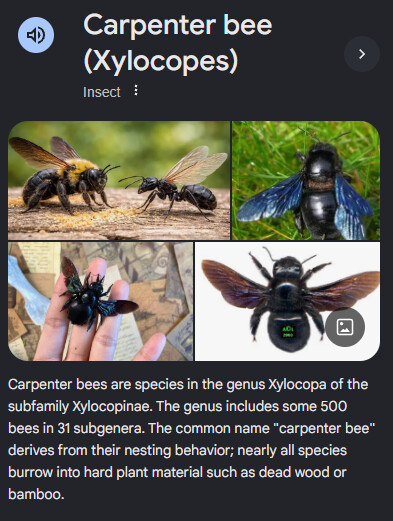
Strange, the picture for a carpenter bee is nothing like ours here in France - huge, totally blue/black, deep buzz - bees on steroids. And completely benign 
Seems there’s a whole range of 'em… named after how/where they nest (in old wood etc)
When we first came, we heard some Brits call the glorious black with blue wings “stone bees”.. no idea why, but in French it’s one of the family of Charpentière = Carpenter
There’s a very dark variety of bee that we know as the masonry bee, which tunnels into the mortar of old houses. They can do quite a bit of damage, and necessitate regular repointing.