Totally agree except I would write
×Because governments haven’t sorted it×
Unfortunately, Macron has done everything in his power to increase tax inequalities (and I bitterly regret voting for him).
2 Likes
There is but it is up to each individual to put it into practice
We do when we seek them out and volunteer to assist in making their lives a little better/hopeful
2 Likes
That’s a society rather than an approach to governing. I wouldn’t disagree that it would be better if each individual cared for others, but some aspects of the operation of a state require government level management.
3 Likes
Zorhan Mamdani the Mayor of NY seems to be doing a good job with democratic socialism.
Successful for the few elites?
Exactly.
1 Like
Hi Marko, I agree with your analysis - very similar to my own. When you consider the amount the very rich would lose, and the fact it just means they get roughly the same percentage return they would if their wealth was lower and taxed, it seems very fair to me although I agree the idea does need fleshing out to become viable. Looking forward to hearing more on this.
Gabriel Zucman’s book “We Need to Tax Billionnaires" is available on Amazon UK kindle today only at £0.99p.
B0GGZF2YVF will find it immediately.
Kate Bayliss’s “Privatising Humanity" about the privatisation of essential services like water, also looks interesting but costs a bit more B0H2744927.
3 Likes
Why is it always about more tax? Why is the solution never better efficiency?
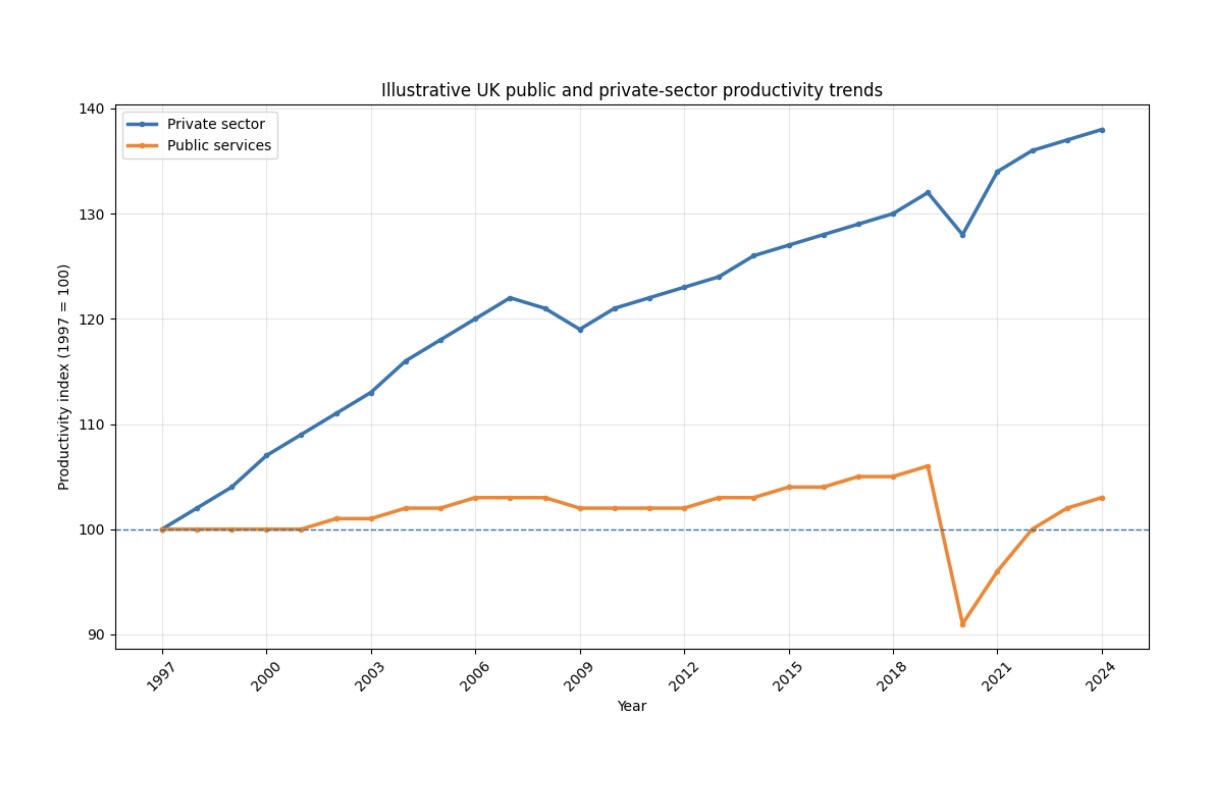
Total public spending in the UK is 1.3 trillion per year. Even a 1% saving from efficeny is 13 billion per year.
How many people have run private companies or have worked for very successful companies that have to find much bigger savings than this.
More money in won’t solve the issues, far from it, the public sector will just become more bloated and less efficient.
1 Like
I have a lot of sympathy with that MoulinSarlat but I also think some more money is needed. Perhaps stronger targets to ensure it is spent in a way where it will be well used and not sucked up in the maw of, say, the massive inefficiency and waste of some parts of the NHS.
Remembering that very tiny % on very large incomes adds up to a lot.
1 Like
But what happens when that money dries up or just isn’t enough any more, because the efficiency gets worse.
I would gladly pay an extra 1 or 2% on the top rate of income tax if that went directly into the NHS or defence, but most would get wasted.
The tax to GDP levels in the UK have never been higher and services have never been so bad.
The latter would also be wasted, you can trust me on that one.
Personal tax has been a lot higher than now especially on lower incomes. But the value for money seems poor. I think overall the distribution of wealth and where and by whom money is made, has changed vastly since many decades ago but tax taken has not caught up. It needs to follow the money so that public services can still be provided.
2 Likes
Zucman’s proposal is about those who own more than 100 million in capital, so not the average business owner. The idea is just to make sure they pay their fair share of tax, which they don’t.
Efficiency can be debated, but it’s not at all what taxing the super rich is about.
Comparing the productivity of public and private sectors makes no sense, especially when the diagram indicates no source, and doesn’t state what exactly was measured (net /gross productivity? Which fields? Based on which indicators? Are we talking about long term or short term effects?) .
You can’t compare public research and private research, the goals are different, and productivity is not necessarily essential. Same for education. Private schools produce better results at exams, but their added value is lesser.
What makes a great country is the quality of public services.
1 Like
What I do like abiut Zucman’s thinking is that his suggestion operates like a final rule, a kind of net to catch stragglers or something. That is, after all other calculations have been made (and loopholes and efficiencies utilised) his proposal acts like a final revision. If the tax calculated to be paid doesn’t get to the 2% of worth measure (or whatever) then it is rounded up to that figure. I like that.
It kinda says that whatever tax is calculated, by whatever method, we don’t care. He doesn’t get into the arguments of whether those efficiencies are legal/moral etc (that’s for another day perhaps) but operates as a check-out.
2 Likes
France allocates about 100 billion euros tax breaks a year to private companies in the context of Macron’s “supply-side policy”.
As a result, companies like Michelin bought several millions worth of machinery for a factory in Auvergne, only to close it down a few months later, sending all the publicly funded machines to a new plant in Poland.
Most multinational companies that benefited from public funding have either suppressed jobs, increased dividends to shareholders , and placed their assets in tax havens (LVMH, Total).
So-called productivity is often boosted with public money and, as usual, workers pay the price.
1 Like
I think a similar thing happened locally. La Poste built a new sorting office, with the help of local/regional grants. Big fanfare about local job creation and energising the local community etc. La Poste closed it 3 years later. Now, their plans could have changed, restructuring could have taken place, whatever. However La Poste did get state aid, presumably said thank you, for a very short term local benefit.
2 Likes
That’s exactly it. There needs to be a final fail-safe % value on profit and (and I’m negotiable on this) capital gains flows.
Set at a very, very low level so as to be fair to those who made the money. 2% would be my ceiling.
I think current thinking is the need to catch the flows before they disappear abroad or otherwise non-taxably. And it looks like transaction taxes, ie VAT or similar; is the way to go. Might recover some of the free services the likes of Google Meta etc enjoy when they sell in UK/Europe environment.
….added to your list…
And loaded themselves with debt particularly if owned by so-called “private equity’.
Vodafone is also an egregious case in point - I knew people there who were “moved” to Luxembourg “from" the UK and it was a pure tax dodge. Their working HQ is still in the building in Paddington Basin so far as I know.
1 Like
No argument there.
My question is why we need more and more tax as a percentage of GDP to pay for them…
You can’t just keep throwing more and more money at them, when does it stop.