Water shortages. Time to act

Regardless of where we live, and regardless of the cause, I think we can all agree that the climate IS changing before our very eyes.
Whether it be simple hosepipe bans, or France’s more stringent usage restrictions, we are all being impacted by shortage of water, and that impact is only going to become more severe as the climate continues to change.

Therefore, and in view of the fact that governments and water companies don’t seem to be exactly in a hurry to effectively address the issue, I suggest that it is time that we as individuals take some action.
My suggestion is that we should all do whatever we can to store rainwater during the winter months for use during summer shortages.
So how about if we take a look at our rainwater downpipes and ask ourselves if we could connect them to a storage tank.

Those of us with gardens and allotments probably already appreciate the benefits of storing rainwater but even the non gardeners and growers may find that as the cost of mains water increases, using a bucket of rainwater to flush the loo may have increasing attraction.

There is no doubt in my mind that the cost of mains water will have to rise substantially to pay for the additional reservoirs, and / or desalination plants that are going to be needed as the population increases and the summers become hotter and dryer. We are all going to be paying more for water, so perhaps we should all be investing now in being able to collect as much free rainwater as possible.

Whether it be an old fashioned rainwater butt on a downpipe, or something on a larger scale, I’m sure that we can all do something to help ourselves.
These days the collection receptacles come in all sorts of shapes and sizes from Romanesque columns to 10,000 litre tanks buried in the ground.

Here in France the rather utilitarian looking 1000 litre cube in a metal cage seems an affordable option and they can always be hidden from view with some planting or a fence panel.
I reckon that some ‘outside the box’ thinking may help, especially in the increasing number of areas where there is likelihood of the mains water supply totally failing, as is currently the case for over 40,000 people in the southern part of France.

Perhaps you have an under used barn or outbuilding where some plastic water tanks could be installed inside the building where they would be protected from damaging UV rays. The tanks can be interlinked, so it’s possible to start with just the one, and then add others as finances permit.
If needs be, a small pump could be added to provide a pressurised flow to wherever the water is actually needed.

Additionally, there is a possible communal benefit available. Say that the storage tanks become full by sometime in November / December, then why not slowly release some of the water into the ground on a dry day to help out the level of the underground acquifiers. Most likely there will be further rain during the winter to re-fill the tanks.
In this way our storage tanks could be used as buffers to reduce flooding from torrential rains and help to allow the water to slowly permeate the ground.

Yes, there will be a financial outlay, but also many benefits. There will be water for the garden, washing the car, flushing the toilet, boiling the vegetables, and with the aid of some sterilisation tablets from the local camping shop you could even drink it if needs be.
Long term, there will even be a benefit of reducing your water bill.

We have all become used to plentiful relatively cheap water from the mains, but it isn’t going to last. The cost will only go up and up, and even then there will be no guarantee that turning the tap on will actually provide any water, and most certainly there will be ever increasing restrictions upon the use of said water for ever lengthening periods of time.

Water is essential to all of us, so let us all do whatever we can to store it for our own benefit. Waiting for the ‘powers that be’ to do something effective will take too long, so we all need to act and invest in our own future, and we need to do it now.
8 Likes

All well and good if you get rain. We hardly get any right down here and the bit that has fallen does not even wet the ground. Last summer it was a good three years since any significant rainfall locally and again this year, hardly any at all. They are building a pipeline from the Rhône delta to here near the border with Spain but will take a few years to complete and the snow from the Pyrénées has been diverted in a lot of cases down the Spanish side and not here into the barrage at Vinça. Personally speaking I do not have guttering along with most of my neighbours and any stored waters has to be covered because of the mosquitoes we get here. Increasing bills of all the utilities is inevitable but as you say if you can save water and money, all to the good.

The cost of road tolls hasn’t increased by very much to pay for all the new roads and bridges and tunnels etc. If only France was as quick building new reservoirs as they are new roads, bridges etc.

Leaving out any comment on the UK where privatised water sold off reservoirs rather than spending money building anything.

1 Like

You seem to be assuming that we don’t do these things already?

And step 1 is always to reduce consumption first. Which includes designing gardens and veg plots for less demand for water.

We don’t have a veg garden here yet, but in our previous garden the pumpkins, for example, got watered on planting and never again.

2 Likes

Before my water supply was connected I was having to go to the family and fill 1.5L water bottles almost daily. A full flush of the WC took just over two bottles to fill the cisterns again so only the half flush was used and then for every second pee. Dishwasher is actually more water saving than washing up in the sink too especially on eco programme, same with washing machine and tumble dryer is banned in this house, dry naturally outside and wash when weather is fine and you have a full load only. I like a bath so have reduced that to once per week and using the shower for all the other times. Yes there are lots of ways of cutting consumption and with the electric too.

I think it already has changed.

1 Like

A great idea in principle - some will be able to implement water storage, some won’t.

In Turks & Caicos my brother and I lived next door to each other and the rainwater from both houses’ roofs went into a 40,000 gallon tank that had been built under his house.

We were not connected to a mains water supply, so if we hadn’t had this setup we would have had to buy water by the tanker-load, which as you can imagine would have been expensive.

Fortunately the islands got enough rain to make this system viable.

Wait for next year, another new record coming. Could be highest since 1877 when we were all polluting much more.

We nearly bought a house with a 15,000 litre tank under its lawn.

If new houses - in hot countries - could be built that way, or with even bigger reservoirs, it would be good.

3 Likes

Nah, they would just tax you more.

Particulate and sulphur dioxide to partly mitigate the greenhouse gases ?

One of the things I’m aware of is how quickly a single water butt fills when there is a good downpour and how much water is wasted as it then just goes straight down the drainpipe. On the drainpipes of the big roof of the house I have four water butts and one of those butts is linked to a second one. I open up that second one’s tap, which is connected to a hose pipe that goes down to the underground water tank we had installed when we restored our cottage. So that second butt keeps emptying and all the water from that part of the roof is saved in the underground tank.

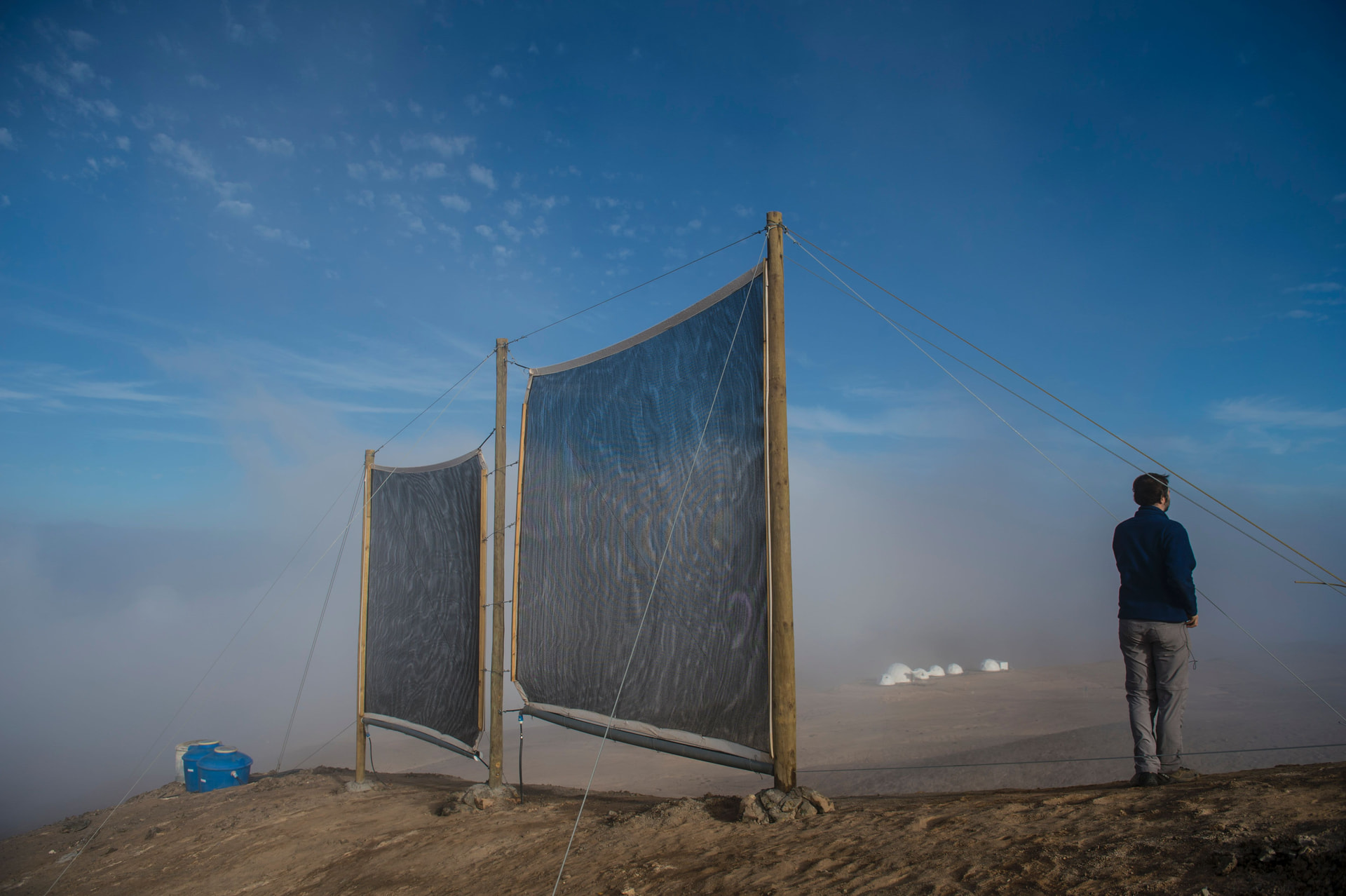
For those of you who don’t ever get much rain, think about installing “mist catchers” or “fog harvesters” that will pick up dew first thing in the morning or fine drizzle.

https://www.weforum.org/videos/fog-catchers-desert/

Round here (Lot et Garonne) it’s the farmers themselves who dig out the reservoirs and water management is very good. They have yet to learn NOT to plant crops that need water (eg maize) and they’re careless about when they water - eg during the heat of the noonday sun. But otherwise I think they are well ahead of what happens in the UK.

2 Likes

Not at all.
There are those of us who already store the winter rains, but perhaps we can do more. I’m in the process of installing another 1000 litre tank.
There are those who could store water, but at present do not do so, and my aim is to encourage them to make some provision for water storage.
Additionally, there are those who because of the type of dwelling they occupy are unable to make rainwater storage provision.

I agree with you entirely about reducing consumption and I hope that when you develop your veg plot you may consider a perforated hose watering system.
Veg plots may well soon become a valuable asset. Here is an assessment of the current veg situation in France by John Lichfield of The Local.
“French vegetable production has collapsed: 25 percent down for courgettes, 35 percent for lettuces, 40 percent for peas, 60 percent for broccoli and 50 percent to 100 percent for artichokes.”

We live in increasingly difficult times, so let us all do what we can to try and help the situation.

1 Like

The water pressure is quite high even after the pressure reducer that often leads to extra water being used for showers. The flow restricting washers that can be fitted to shower handle connections can easily half the water used without noticeable drop in shower quality. We fitted them after one family of guests, doctors used the equal to

the swimming pool in two weeks more than double any other family ever out ours.

2 Likes

Unlikely as we prefer to do away with watering completely by using deep beds and very thick mulch. The only thing we are likely ro water would be greenhouse tomatoes using water from our shower buckets.

1 Like

Many folk around here are doing their best to conserve water/reduce usage.

A neighbour told me that since they had begun covering their swimming-pool from around 9am to 5pm, the water lost to evaporation was “rien”.
Thus they have wonderful splashing times from late afternoon onwards.

This year is the first year they’ve tried this and they reckon they’ll do likewise next year and thereafter.. :+1: :crossed_fingers:

1 Like

On warm evenings water still evaporates so keeping the cover on when not using the pool is best, reduces chemical use as well so its a win win :blush:

2 Likes

My neighbour just tops his up and empties it completely after the winter. Makes me cross because he hardly uses it, has state of the art pumps that work automatically but no cover. At least the water company will see the amount used and query it. They have been away for over two months in Morocco and the level has dropped considerably so I expect he will open the tap on his return while the rest of us try and conserve, some people think they are above everything and everyone else I am afraid. It’s quite a deep pool so not just a few litres either

Yes, I think that’s what they’re doing… once the last one is out of the pool… someone presses the button…
EDIT: but I’ll check with 'em just in case…

We are very fortunate to have ‘inherited’ circa 40 cu m of water storage. 28 cu m under the office in a purpose build reservoir complete with pump (installed by Katie Melua when she was staying here) and this is fed from a couple of our roofs. The rest are up on a mid terrace in those 1 cu m tanks, in a row and all connected. These I fill from other tanks (also fed by rain water) of the same style with a big pump.

There was enough to irrigate some terraces this summer and also some you’d fruit orchards.

The underground tank was the only source of water we had before we paid for mains water.

Oh…we are lucky also to have a very modest source and this gives about 200 litres a day even in the summer and this we use for a remote terrace

All the irrigation is controlled with timers.

We got rid of the swimming pool and use the hot tub instead. The water from that is used also for irrigation.

Lucky we have the space though for all of these tanks and whatnot and appreciate that it’s not always possible. When we didn’t have mains water, we did what hotels had to do in Cape Town…place a bucket in the shower to collect and recycle the 20 or so litres of water used before the hot water kicks in. All adds up.