
Richard Jones, inventor of the spell checker died in 2013. May he rust in piss.


Hands up everyone who had the calendar 
Me as well 
I never did, though not sure if that’s good or bad.
No, isn’t that weird 
Me neither. 
Nor me. But I was only 1 year old in '76.

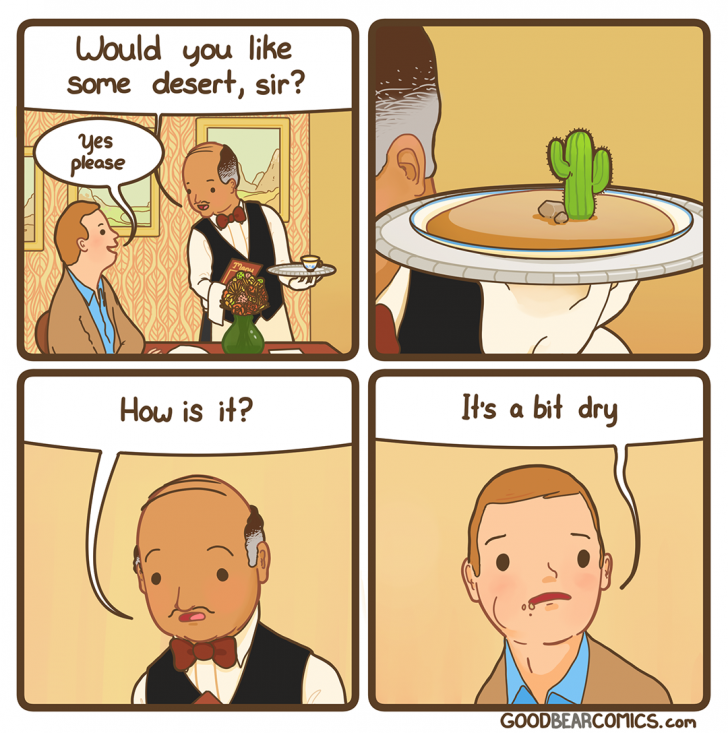
That’s a bit of a thorny question
At Central London county court, the judge, Alan Saggerson, said of the painting: “It would seem to have the appearance of a burnt digestive biscuit. This is of value to some in some quarters of the world.”
Continuing to contribute art, humour and food for the pleasure of SF members 
This might find a home here…
Don, 85, married Jenny, a lovely 25 year old . . … Since her new husband is so old, Jenny decides that after their wedding she and Don should have separate bedrooms, because she is concerned that her new but aged husband may over-exert himself if they spend the entire night together.
After the wedding festivities Jenny prepares herself for bed and the expected knock on the door. Sure enough the knock comes, the door opens and there is Don, her 85 year old groom, ready for action. They unite as one. All goes well, Don takes leave of his bride, and she prepares to go to sleep.
After a few minutes, Jenny hears another knock on her bedroom door, and it’s Don Again he is ready for more ‘action’. Somewhat surprised, Jenny consents for more coupling. When the newlyweds are done, Don kisses his bride, bids her a fond good night and leaves.
She is set to go to sleep again, but, aha, you guessed it Don is back again, rapping on the door and is as fresh as a 25 - year - old, ready for more ‘action’. And, once more they enjoy each other.
But as Don gets set to leave again, his young bride says to him, ‘I am thoroughly impressed that at your age you can perform so well and so often. I have been with guys less than a third of your age who were only good once. You are truly a great lover, Don .’
Don, somewhat embarrassed, turns to Jenny and says ‘You mean I was here already???’

I heard someone in the chemist’s today demanding tablets for his hypochondria.
That’s the problem with the world: everyone wants something for nothing.
Homoeopathy
Inspired by the vinyl thread …

Developmental Milestones for Doing the Dishes
By Kerry Elson and Kate Herzlin
July 17, 2023

Photograph from Getty
Age One
- No dishwashing ability whatsoever.
- Is a baby.
- If baby is washing dishes all on its own, contact a scientist.
Age Four
- Child may initiate social behavior of play-washing dishes with a friend, e.g., Jeanine Tessitura, the neighbor’s daughter.
- Might attempt to eat dish-soap bubbles; behavior should be discouraged.
- May be convinced that dishes being washed are “taking a bath.” (If child associates bath time with a loss of autonomy, will throw tantrum out of empathy with dishes.)
Age Nine
- Demonstrates growth in dishwashing capabilities, though significant gunk may remain.
- Child may exhibit obsession with fairness, such that each household member must wash an equal number of dishes.
Age Ten
- Child likely to complete a school project with Jeanine on women being disproportionately featured in dish-soap commercials. Subsequently will protest all dishwashing, on the ground of societal injustice.
Age Thirteen
- Hates dishes, parents, friends, everything.
- Purposely leaves dirty dishes out as act of defiance.
- May utter phrases such as “O.K., I washed a dish, now can I go to Jeanine’s party?” (If it is pointed out that said dish is not actually clean, response will be “You never said it had to be clean, you just said that I had to wash it—you can’t change the rules, that’s not fair!”)
Age Fifteen
- Purports to be “too cool to do dishes.”
- Exhibits peer-dependent behavior (e.g., if Jeanine doesn’t do dishes, child will not do dishes).
- Alternatively, may express desire to do dishes if only they had less homework. (Will demonstrate weight of backpack as evidence.)
Age Eighteen
- May actually want to do dishes “now that they’re an adult.”
- Alternatively, may show zero interest in anything to do with dishes as they incorrectly believe that dishes will never need to be done outside “this boring house.”
Age Nineteen
- In college dorm, may leave several plastic bowls in sink for five to seven days, leading “cheese”-sauce residue to harden into impermeable crust.
- Relents to cleaning dishes with washcloth in shower when roommate points out that sink has become home to cockroach family.
Age Twenty-three
- May attempt to wash ikea wine glass by running it under lukewarm water without soap, while thinking, This is fine, right? Because no visible traces of wine remain?
- Will visit parents and offer to wash dishes, but may become overwhelmed by quantity of cooking vessels and determine that best outcome is to leave pots to soak indefinitely.
Age Twenty-six
- May finally live in an apartment with a dishwasher, which develops a faint funky smell.
- Will discover that dish soap, dishwasher detergent, and hand soap are not interchangeable.
- When visiting parents, may performatively offer to empty dishwasher in helpful, grownup-offspring role, despite lack of dishwasher competency (see above).
Age Thirty
- During visits home, may observe that parents now wish to join in washing dishes as collaborative family activity in which all parties seek to exert control.
- Likely to hear mother’s suggestion to wear rubber gloves as criticism of child’s dishwashing, skin-care routine, and life choices. (Mom will remark that she ran into Jeanine Tessitura recently; observe how supple Jeanine’s hand skin was.)
Age Thirty-two
- May purchase a big wooden salad bowl, use it, wash it, and somehow have it not be a whole fraught thing.
- May visit parents’ home for a summer barbecue, prepare big salad in wooden bowl, and expect parents to be impressed by how well child cleans it. (Parents prefer to stick wooden bowl in dishwasher, against manufacturer guidance and child’s stern warning.)
Age Thirty-five
- Moves into studio apartment with no dishwasher, leading to a regression to nineteen-year-old behavior of leaving stacks of plastic and now also wooden bowls in sink for five to seven days.
Age Thirty-seven
- On visit home to parents, may attempt to load dishwasher, leading Dad to interrupt with urgency, saying, “That’s my job.”
- May realize that parents now prefer dishwashing without child’s help, and in fact are employing new, personalized methods evolved in child’s absence.
- Child might tiptoe out of kitchen, not wishing to disturb parental homeostasis, thinking, How the dishwashing tables have turned.
Age Forty
- Finally demonstrates basic competency in all core areas of dishwashing (e.g., crust removal, soap-to-water ratio, dishwasher odor).
- Occasionally still pretends that dishes are taking a bath.
- Rewards successful dishwashing efforts by taking an actual bath.
