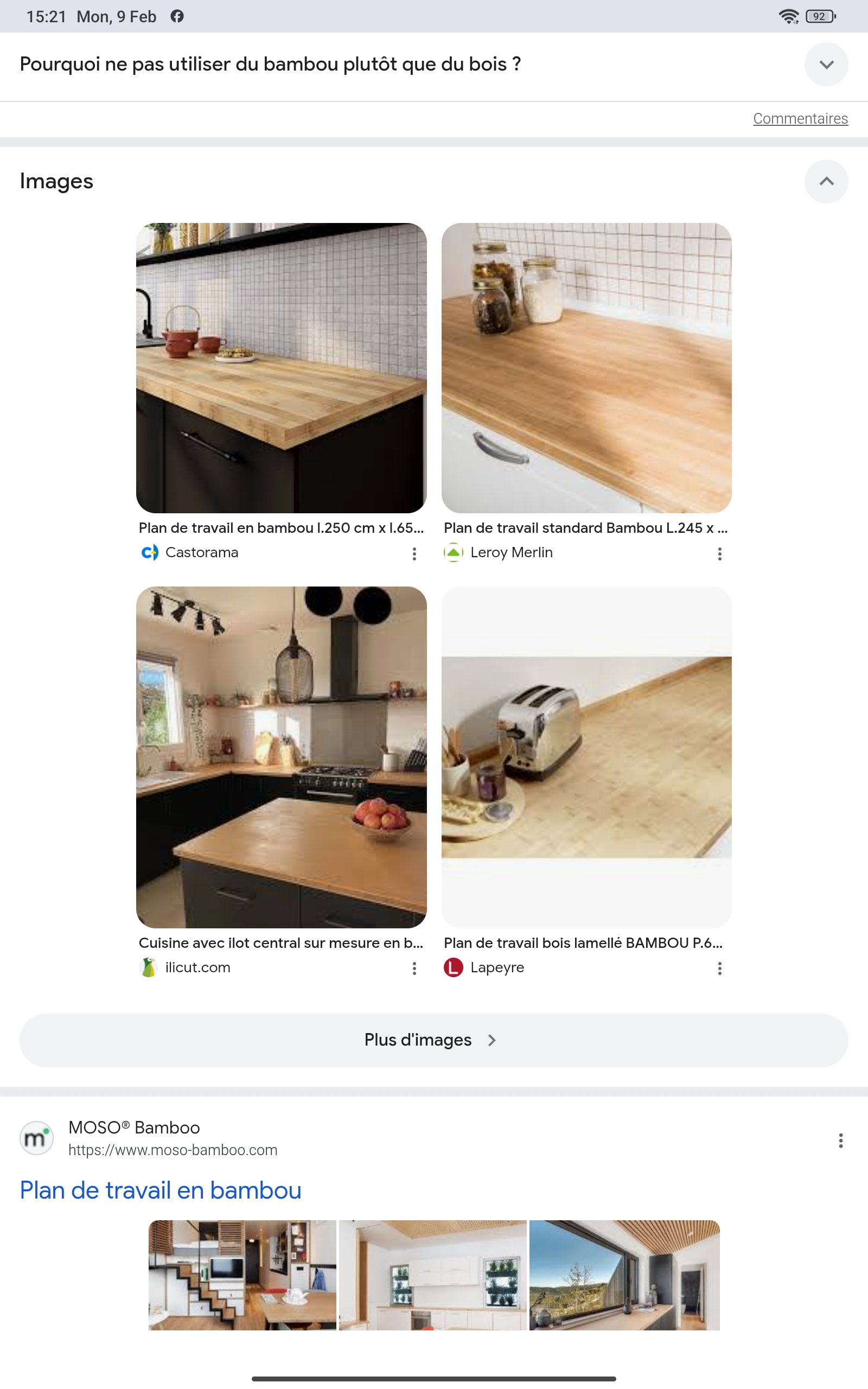
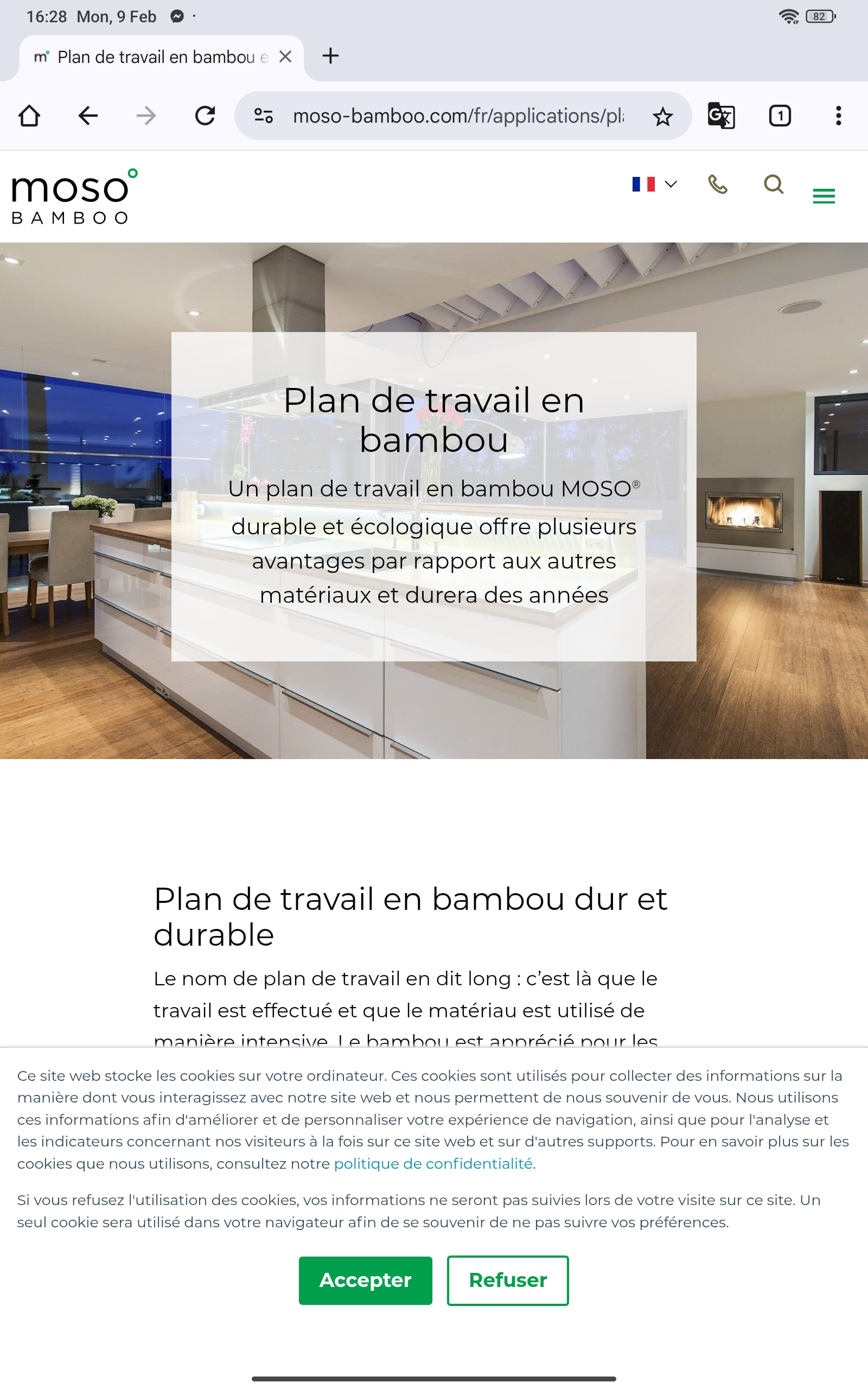
I use bamboo chopping boards. They mark a bit, though some might find that characterful.
But finding a decent plan de travail is difficult. We didn’t want granite or anything like that; at the moment we have (small) tiles, and the grouting discolours; we weren’t keen on fake marble but may end up getting that; stainless steel is too industrial …
@Porridge have a look at your local pompes funebres suppliers, I got granite from my local funeral people for my plans de travail in France - it’s fantastic and I love it and after 25 years it looks brand new, so good for pastry and putting hot pans etc. (But it’s no good for chopping so I also have bamboo chopping boards because they are marvellous). I’m looking at a mix of materials for my kitchen in Germany.
Thanks MikeyPotts, I’ll check out Castorama. But I was kind of hoping for leads to companies that focus on sustainable materials rather than having bamboo as a side option next to laminate options and what-have-you…?
If you use the epoxy grout it does usually but it’s a bit of a bugger to use so have to be accurate at the application. Has to be used in commercial kitchens for reasons as you state, staining means porous means bacteria hiding place
I reckon if you drill down into the specs, you should see the country of origin and then find out if the production is ethical. Bamboo being a grass could be, or reported as sustainable but I would say any mom tropical hard wood is by nature sustainable if you can find out where the material comes from.
(I go for industrial grade stainless steel made to measure and then at least it can be melted down by future generations but it all comes down to what you want in the end)
Good luck with the search though and may also look at Gedibois because their inventory is of much higher quality than the sometimes sketchy Brico stuff.
Our current house has locally sourced pierre de bourgogne worktop, which we love. And use cutting boards that are wood. My current is a huge far too heavy wood board from the Abbatial in Tournus.
I’ve never had much luck with wood worksurfaces, and the bamboo chopping boards we got for the gîte never lasted more than a year.
So to me local stone, or reconstituted stone is the most sustainable. Huge choice in colour, thickness etc if go straight to a fournisseur with your measurements and doesn’t have to be granite. (But not marble, ok for pastry but not general use).
I have been very happy with Dekton , a Spanish product and combination of stone, ceramics and glass from memory. Put it in about ten years ago and it looks brand new still. I still like its light colour which is practical.
If one (not aimed directly at you @JaneJones!) has access to a circular saw, it’s easy to make a traditional English, custom-sized butcher’s block out of end-grain beech, or whatever is locally available, that is held together with side panels of the same wood and a couple of counter-sunk lengths of threaded steel bar.
Sorry, hadn’t got you down as a circular saw person . Whereas for me, anything to do with firewood has to be an axe - it’s probably a male point of honour…
Trying to cut bamboo with a circular saw requires a very good tungsten carbide blade and they don’t last long staying sharp. The carpenters on one hotel flooring job were swearing a lot and the site smoke detection system had to be turned off, a very tough material
Unless a foolhardy cheapskate diy’er, as you say epoxy grout is a must for kitchen tiled work surfaces.
Best way to apply it is to use a wide masking tape leaving only the jionts to be grouted exposed. The timing for finally dressing the joints is crucial using plenty of hot water, a purose shaped jointer and a sponge.
The grout is not emune from discolouration as it has a rougher surface finish than powdered general tile grout but an occasional clean using a bleach based kitchen spray brings epoxy grout back to its original colour proving that the grout isn’t porous but simply has surface grime.
As the grout is at a slightly lower level than the tiled surface it is inevitable that each time the surface is wiped a small residue of moisture will rest on the grout.
For the best hygiene tiled work surfaces should be avoided.
A good tip Vero. We also have marble, white, bought years ago on a bit of a whim from a kitchen showroom. Great for dough and pastry and it looks good except for a few lemon juice spots. I also have two bamboo boards for chopping and find them handy for sliding home-made pizzas into a hot oven and getting the pizzas out again safely.