A thread popped up this morning asking about the best chopping board to use - then it seems to have disappeared so I am resurrecting something here.
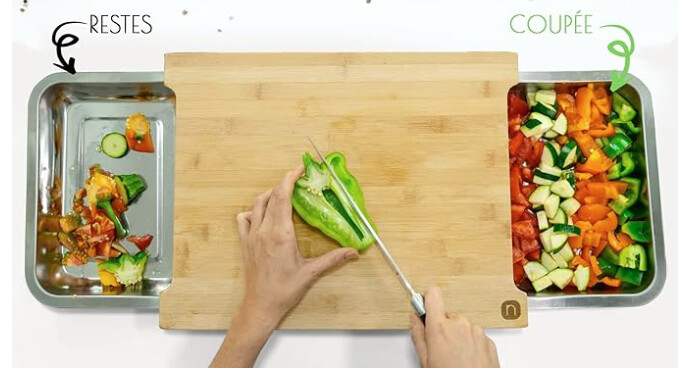
I recently bought a bamboo chopping board that came with two trays that slot out from underneath. It needs to be well oiled before use. The two trays seemed like a bit of a gimmick at first but after a few months use I have found them invaluable. When prepping food, peelings, pips crumbs etc get swiped to the left hand tray while the prepped food gets swiped to the right hand tray.
I have 2 wooden boards and 2 man-made boards (some stuff which is supposed to be knife-friendly and anti-germs)
I use the manmade for meat/fish/mucky stuff and the wooden boards for bread and dryish stuff (herbs etc)
We use nylon/PE boards. Wood is OK for bread, but not anything wet and especially not meat - sure it will work and you can scrub it, but not ideal. Glass, as pointed out, isn’t blade-friendly.
There was an interesting article on how wooden boards can self sterilise due to the various tanic acids where plastic cannot and relies on scrupulous cleaning. That said no commercial kitchen uses wooden boards.
Not the exact study but it explains some of the details.
Interesting subject as all our (4) chopping boards are wooden. Solid wood, maybe oak. We have one that we use only for meat and I scrub it to the point of removing a layer of wood after each use.
Wood is not ideal. Neither, in my opinion, is glass. We used to have plastic/polypropylene chopping boards but the cuts in the surfaces of these boards, made by sharp knives, were impossible to clean properly.
So, until I find a better material, I have resigned myself to using the wooden chopping boards.
Wooden boards, which we wash, and very occasionally oil. But then it’s rare there’s any raw meat but we wash more carefully if used for meat.
Professional kitchens put everything in washing machines, so wood is impossible. What would be interesting is to know what chefs use at home.
According to Wozza’s link, oiling makes little difference. You should use a mineral oil not olive oil. Personally I have been using wooden boards for as long as I can remember with no ill effects to date.
Me too, Unfortunately difficult and very expensive to find a decent sized one. When I taught in Fine Art depts I used to make hem like traditional butchers’ blocks that used end grain beech held in place with a beechwood frame and lengths of threaded bar.
The point that I was trying to make before we drifted into oil changes for wooden boards is that I find the addition of two trays, as shown in the OP, incredibly useful.
I can better this - I have been using one board for everything the same amount of time. Nothing notable used for cleaning except the many times the dogs have managed to lick it clean… and yes, still here fighting fit