The repair vs replace issue is not a new one. Forty years ago my Golf GTI had an intermittent electrical fault. Eventually after several visits the VW dealer traced it to a relay (one of several) in the fuse board. One of the pins in the board was bent and the diagnosis was to replace the board, with significant associated labour. I told them to straighten the pin and I never had another problem with it. @Corona ’s right, engineers and mechanics are all gone, it’s fitters following a flowchart in a manual these days, which always ends in… replace.
1 Like
There have been many times when products fall short of the warranty, at €$£ 21,000 its see you in court terrortory. The balance of probability is not likely to ever be on Tesla’s side no matter how fancy the defence. Not privy to the waranty but unless they state cant be driven in the rain, wet or through fords etc then it sounds more like a Friday afternoon built car as we know there have been quality control issues with some Teslas.
Any chance of Tesla defending themselves in court would be almost futile when the CEO makes statement like.
1 Like
I understood that just about every Tesla fits that description. I’m sure it’s improved but the build quality used to be horrendous.
1 Like
Broadly I share your views. Culturally we have moved away from repair as the norm or frequently even as an option. There are many reasons for this but it is unsurprising given the corporate need to extract as much revenue by selling us shiny new toys which, by preference, we never truly own or control and from which they ideally would like to extract an on-going revenue stream.
But there is also an economic argument - component level repair of complex electronics is expensive because it is labour intensive and requires high skill levels.
Even large main brand franchised service centres cannot afford to employ people with the necessary skills and even if they did there is the not insignificant problem of re-certifying the item for use in a safety-critical deployment.
So, however much you, or I, might despair at the throw away, buy new, repair nothing culture it is likely that it is going to be the norm in automotive electronic/electrical repair.
That said I believe there is a cottage industy growing up around repairing failed EV battery packs so I guess there might be *some* hope after all.
Therein lays the discussion. By using zero hours contracts or just throwing stuff away rather than using skilled labour the bean counters have worked out they increase profit margins and the shareholders like this too, it impresses the market who capitalise everything, usually at the expense of the environment and ordinary peoples wallets. Downside obviously is the term engineer is even more out of any limelight so we lose more skills.
2 Likes
Not totally sure that is pertinent to this conversation
Yes, I hate it as much as you do.
To a point - as I said it’s actually very expensive to do component level repair. It also needs available replacement components which might exist for a very high volume item like a phone but is unlikely to be readily available for automotive electronics.
The relay example was a bit silly though. It should certainly be possible to replace a single relay without having to replace a whole fuse panel.
Mind you - did we ever have “engineers” working in car repair - we had “mechanics”, who might have been able to fix a car but not design a new one.
Or even repurposing (what a word  ) as home power banks.
After all the speculation about the Luton car park fire, it seems a man has been arrested for damage. What that means is anyone’s guess but possibly the fire was deliberate and not down to fuel/batteries. Be interesting to see what comes forth.
Bit of an understatement 
Was on the running headlines on Sky news at lunchtime.
I saw only one today during my 8 hours on the motorway in my boring old lady car, the one I saw was crawling along so I didn’t get a good idea of what it can do. Teslas are the ones with a stylised uterus as their logo aren’t they.
4 Likes
Only you can get away with that comment 
Not sure which thread but we were discussing JLR quality recently. I spotted this Range Rover something (I’ve no idea of their models) yesterday. Look at the panel alignment  If I’d ordered one and they tried to palm that off on me I’d have walked, literally

1 Like
Only this afternoon I learned, that like Tesla’s, human uteri come in several different styles (Bohannon, Cat, Eve, 2023, 98).
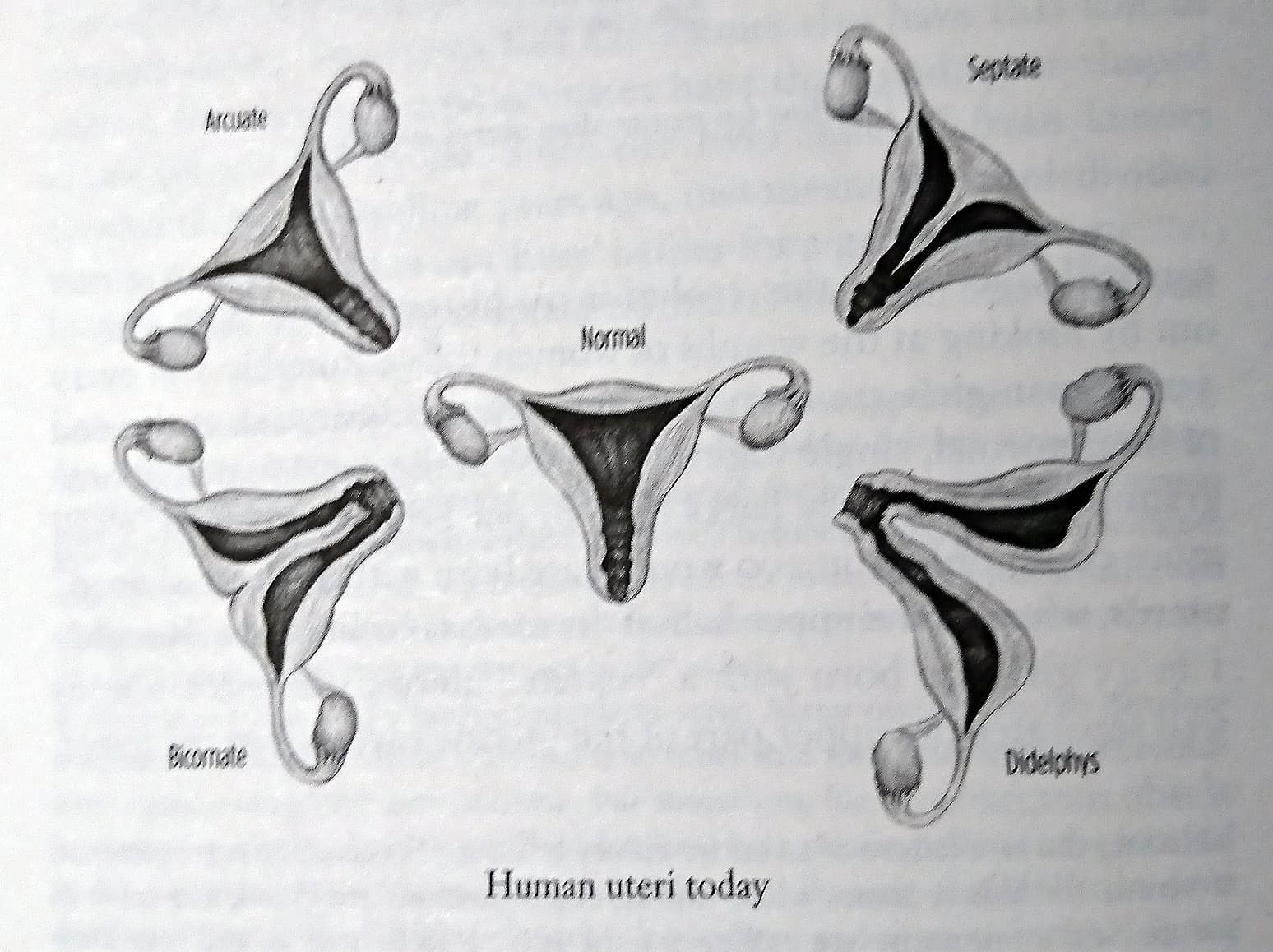
Intelligent writing - unfortunately got charged import duty.
A lot of the problematic uterine development is down to in utero exposure to DES.
1 Like
Bohannon uses examples from evolutionary biology to suggest that these variations are actually genetically relayed ‘throwbacks’ to, or continuations of, earlier pre-human ‘variations’ but that most endure because they are are insufficiently unsuitable as to prevent 'genetic relay to the next generation.
1 Like
As late as the 1950s carrozerie designed Italian sportscars, such as Ferrari and Maserati had far narrower shut lines than mass-produced cars of that era. The irony was that these ‘advanced’ designs were realised in small age-old, family-run workshops whose panel-beating techniques had changed comparatively little since they were making armour during the Renaissance
1 Like
Especially now.
3 Likes
So you’re arguing that it’s a fairly recent man(!)-made problem rather than a genetically relayed one . Seems as tho’ it’s one of those quandaries that can only be resolved by evidence and I bet there’s insufficient historical data to settle that argument one way or the other.
Nono I’m sure there was a lot of it about just as you say no evidence, there is however a solid body of evidence showing that administering DES almost routinely to women between the 1940s and 1970s as a way of preventing miscarriages led to an awful lot of uterine malformations in the girls who were the foetuses being saved. No idea if there’s a higher rate of hypospadias etc in boys as a result though (and if DES is even a problem for male foetuses).
Loads of creatures have a weirdly shaped uterus as the norm so it isn’t surprising we have a lot of variants.
And I expect many women have had normal full term pregnancies and produced healthy infants in spite of an unusual uterus they probably weren’t even aware of.