This is always the case with these posts, people pull out the most extreme use cases and then pretend that they drive nonstop for 10 hours. My car is far from the best EV and I can drive from Portsmouth to Glasgow and it’s and an hour longer than it used to take me in my petrol car. Normally this journey happens twice a year so the fact is that, for the vast majority of my time, it suits my needs perfectly and is much cheaper to run.
4 Likes
I am not denying that the climate appears to be changing. And I am not saying that man’s activities are not contributing. What I am saying is I don’t think they are the major contributor. Despite anything that happens on Earth, the overwhelmingly biggest influence is from the Sun:
NASA scientists say our Sun’s activity is on an escalating trajectory, outside the boundaries of the 11-year solar cycle. A new analysis suggests that the activity of the Sun has been gradually rising since 2008, for reasons we don’t yet understand.
Aurorae much more extreme last few years?
……. but there is more money in getting people to buy electric cars ….
and anyway, the ICE car likely traded in for an EV is still emitting …
And I too am a scientist - physics with maths …, qualified 1966.
That is only a tiny part of the whole equation. Thousands of people are dying from vehicle emissions and many more are having their health destroyed. That costs health services €millions to cope with. Who pays for that? It’s probably not helping the climate crisis much either.
But on top of that is the huge health and environmental cost of getting fuel to your fuel tank BEFORE you set fire to it. Oil exploration to replace exhausted fields, rig construction to get the stuff out of the ground, accidents when actually extracting it, refining it, transporting it around the world, then storing and selling it at retail outlets, are all very hazardous and polluting exercises. Who picks up the tab for that?
1 Like
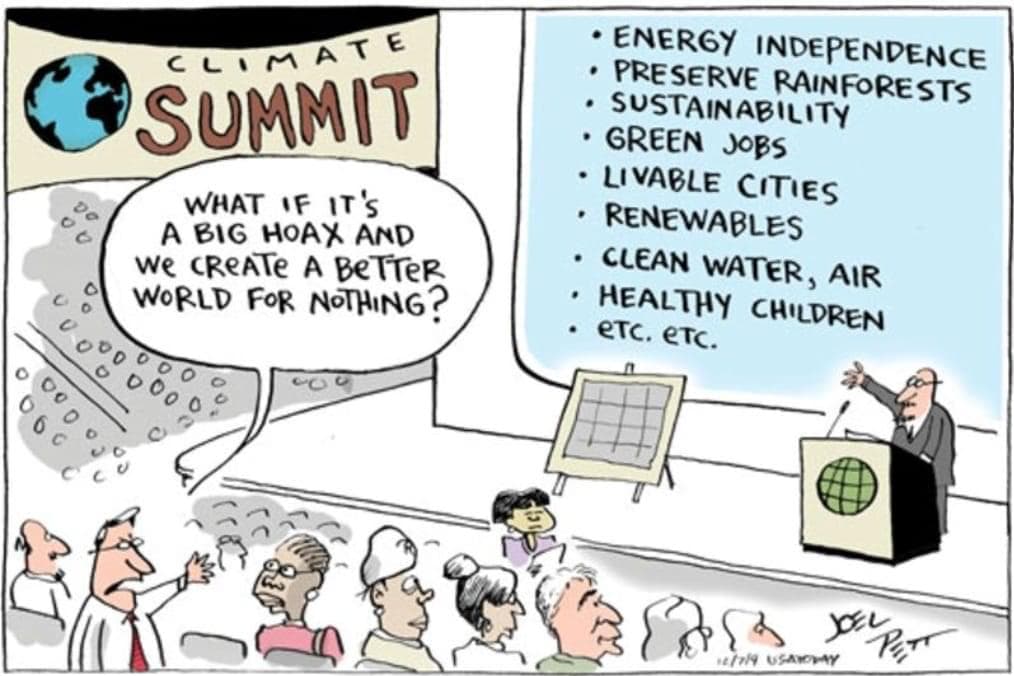
Fossil fuel will not last forever, even if we have been able to improve extraction methods and beat (to a degree) estimates of “peak oil” in the early 2000’s
But it will run out, and I would argue it would be preferable to have moved fully over to alternatives well before that happens.
2 Likes
If that is the case then we have even more reason to try to minimise the heating effect, rather than fanning the flames by ignoring our own emissions.
1 Like
Maybe so, but scrappage schemes exist too.
That’s just an excerpt from the full article, just cherry picking the one point. Here’s the full article.
The article also says :-
Since the 1980s, the amount of solar activity had been steadily decreasing all the way up to 2008, when solar activity was the weakest on record. At that point, scientists expected the Sun to be entering a period of historically low activity.
So, the ‘escalating trajectory’ is just the sun gradually catching up on what it was 45 years ago. If you read the article linked in the report, you’ll also find that the 2025 values for average surface temperature and energy flux, although rising, are still way below the 1974-1994 average. In other words, it’s just starting to recover from a historic low and has a long way to go before it’s even average.
1 Like
Surely everyone knows that climate change is the result of a bombardment of voracious millipedes from Arcturus, who eat all the good photons? 
(and quite a lot of noxious chemicals spread about by a certain ape-descended life form…)
The simplest way to understand the difference between natural climate change and man-made, is the timescale.
Natural climate variation happens on a timescale of millennia. The current steady, carefully measured and correlated (and dramatic) rise in average global temperature, and the effects that result from it, has happened over the last 150 years.
2 Likes
XKCD has, as always, a neat visual depiction of the issue.
1 Like
Well it was actually, I seem to remember a cartoon of an airship descending in flames, but in any case I didn’t say it was you who had done it. I also said I am not an expert and merely pointed out observations I have made locally. 
I rarely enter this debate, but just wish to point out that your question has been posed endlessly on this forum over the past few years. No one’s forgotten to ask it, you just appear to have assumed no other SFer has thought of it.
5 Likes
That is incredibly interesting @lebeuil1 . I had begun to think something like that myself. As the change in climate here seems to have speeded up massively in the past four years or so.
Doesn’t mean we should stop trying to do the best we can though, on pollution and natural resources usage. Hence EV’s for most. It’s just comforting to know the rapidity of climate change may not all be human fault.
I’m sorry @BrianPaul I just can’t think.hydrogen will ever be safe other than for huge highly protected engines. I still remember the”hydrogen experiment” in Chemistry Laboratory at school aged 13. We made the tiniest amount of hydrogen in a test tube and it made a squeak that would have been a huge bang if there’d been much more of it.
It’s not, unfortunately. The fluctuations in the Sun’s activity, while real, are not enough to explain the rise in global average temperatures - which as noted earlier has been going on for 150 years, not just the past four.
Of course the climate fluctuates naturally, but it bears repeating that it’s not on the short timescale currently being observed. Only human action correlates to the timescale and the degree of change observed.
The fossil fuel lobby loves to try and debunk the man-made origin of climate change by pointing to “natural fluctuations”, but the evidence found by many different studies over the last 80 years is overwhelmingly in favour of humans being the cause.
3 Likes
See my answer above. It’s not incredibly interesting, it’s incredibly misleading.
Hydrogen storage for vehicles have come a long way by using COPV pressure vessels which are very strong and can survive high speed impacts. The trouble with them is that they don’t last long and need checking every year and then replacing every five usually.
2 Likes
It’s interesting to compare the two NASA articles. The first, misleading one, published only a month or so ago and the second, very straightforward one, posted in 2014.
I don’t think it’s a coincidence that NASA now has an uber Trump supporter as it’s leader and suddenly they’re posting an article that seems to attempt to muddy the waters on climate change.
3 Likes
Incredibly, one of the earliest and in hindsight the most accurate research into global warming was done by scientists at the American petroleum giant Exxon in the 1970’s. The report was suppressed and Exxon continued to deny man made global warming. The report only came to light a few years ago and was, if I remember correctly, released by accident to a researcher.
1 Like
Which, I understand, is longer than the replacement time for EV batteries, so long as the batteries survive the inevitable fire. 
1 Like
Indeed, that’s one of the faux arguments used against EVs
In reality, EV batteries will last much longer than five years in a car, typically somewhere between 10 and 20 years depending upon various factors. Also when their range drops too much, they can be repurposed for other uses and/or recycled. COPV pressure vessels can’t be repurposed and are very difficult if not impossible to recycle.
2 Likes
We are full of renewable this that and the other. And lest we forget.
Ask chatgpt to show you a breakdown of costs per 480w 48v solar panel. Then ask what the components are. Continue on by asking how they are produced? Usually mined from the earth. Finally, ask what fuel is used by the vehicle that’s doing the mining.
As humans we are raping and pillaging Mother earth all in the name of renewable energy. I suggest we still need to be looking at alternatives that are yet to be discovered.
And finally of courser. Society. Driving along French roads how ofter do you find a pocket rocket on the rear bumper that can’t wait to pass because they don’t have the time to meander along. Time is a critical equation. So how many French drivers actually are prepared to sit around whilst their cars re-charge from the diesel generator hidden behind the bushes?
What is the average time for a medium size saloon to recharge from say 5% back to 100%. It’s probably a far more complex question that’s going to depend on battery capacity but! It is still going to take time and time is the worlds most precious attribute.
I come back to saying about an emergency trip to a family member who may be on the throws of expiring and you need to get back fast. Because of timing, the car is the only option. And you’re driving an electric car that you know is going to need a 5 hour stop to recharge, or you have a diesel /petrol car that will do the job and get you there sooner. Now which do you choose?
O Mighty Brian, I’d love to know how you suggest we make any kind of energy-generating machinery without using metals, plastics or other earth-derived materials. 
The point about using renewable energy as opposed to fossil fuels is that it’s - gasp - renewable.
Yes the machinery used to capture renewable energy it still requires “raping Mother Earth” as you put it, but at lest the end product does not involve any pillaging.
And short of reverting to a Mesolithic hunter-gatherer lifestyle for all humanity, using mined and processed materials is pretty much a given.
While there will no doubt be better methods in the future, I don’t think we can afford to wait for “alternatives yet to be discovered”, unfortunately. The climate emergency is here and now.
Meanwhile your preferred diesel car is chuffing along merrily chucking out noxious fumes.
4 Likes