My new toy - Astronomy telescope

Rather than hijack @cat’s “what are you up to this week?” thread, since @hairbear asked me about my new toy I thought I would post about it here so we can discuss geeky stuff without upsetting the natives. :slight_smile:

So:

initially I bought a SkyWatcher Star Adventurer GTI telescope mount, with the idea of using it with my Fuji cameras and lenses to take photos of the night sky.

The SA GTI is a motorised mount that has a tracking system built in (in conjunction with a phone app) so that in theory you can get it to find objects in the night sky for you.
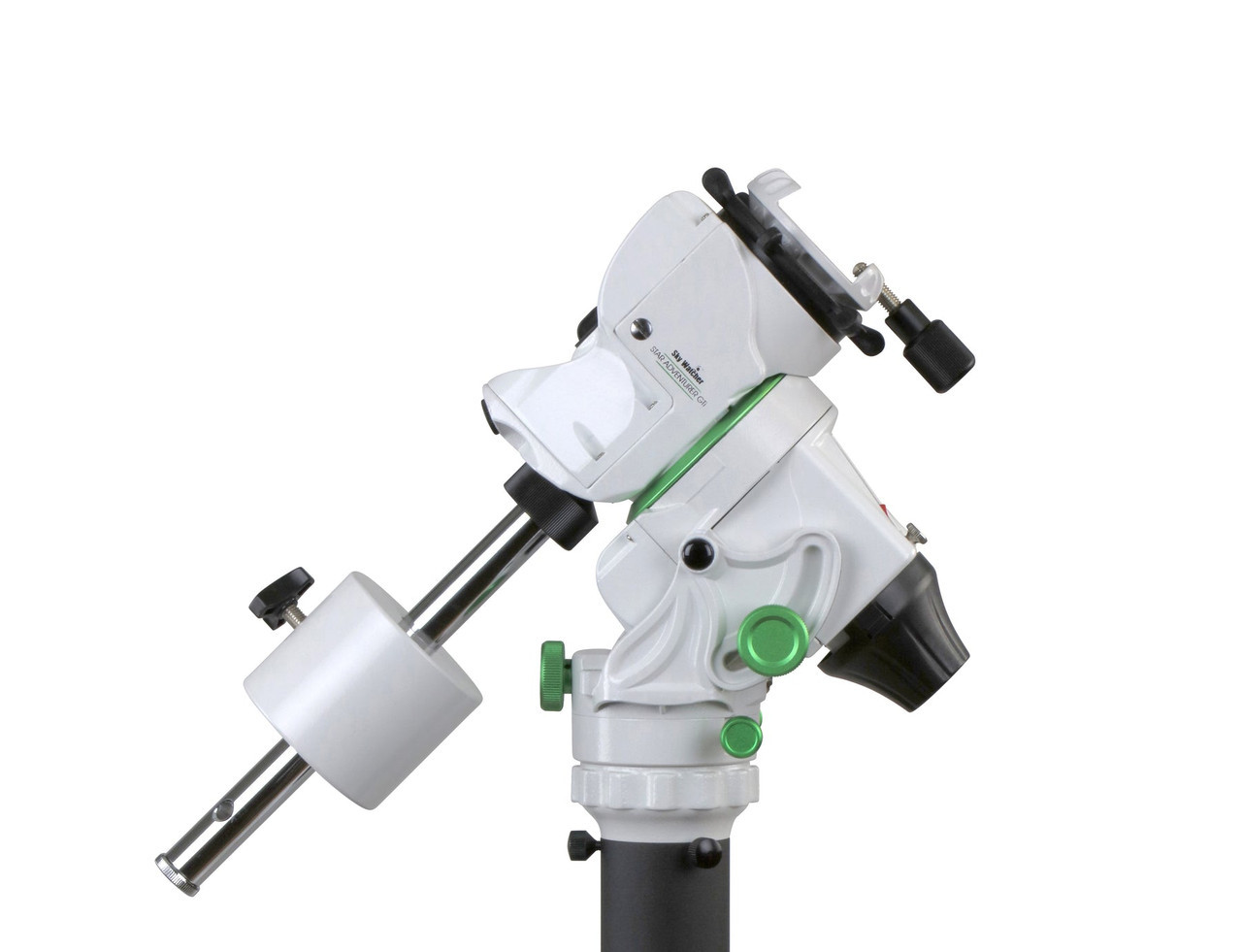
I say in theory because I have found it a bit of a challenge to get set up as it has to be aligned with the Pole in order to track correctly, and that’s the bit I have found tricky. Entirely down to unfamiliarity and user error I am sure.

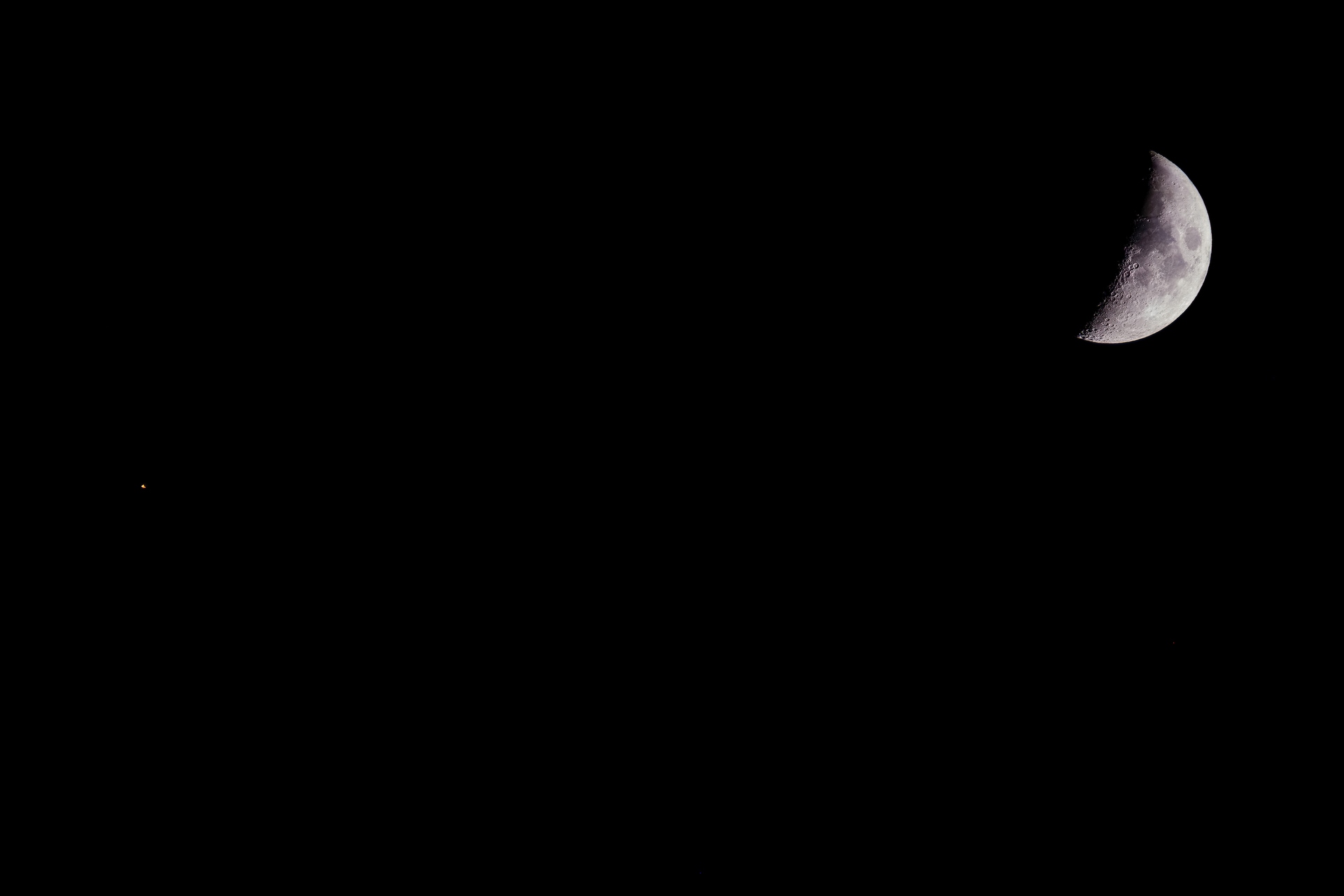
Anyway having had a few goes with the camera and a long lens and teleconverter,
I got a passable image of the crescent Moon with Mars nearby (the tiny orange dot lower left!):
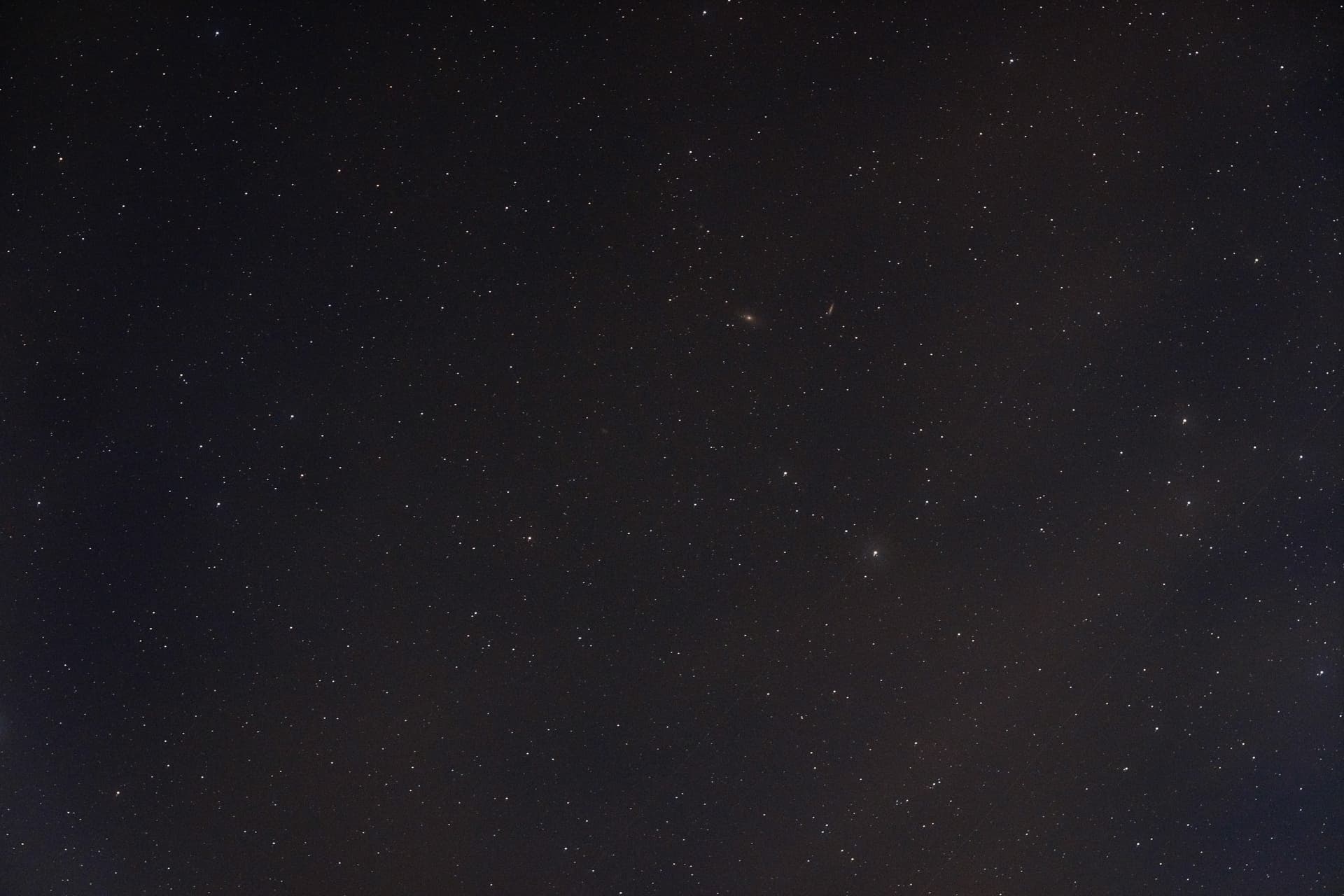
Clearly however my camera lenses aren’t long enough to get closeups of the Moon and deep sky objects. This is a single frame that I managed to get with my 135mm lens of M81 Bode’s Galaxy and the Cigar Galaxy (my camera started misbehaving so that’s all I got in that session) - if you click to enlarge the photo you can just make out the galaxies top centre in the image!
So I decided to go all-in and buy a telescope, in order to have better optical quality (adding a teleconverter to a camera lens reduces the sharpness, and the lenses are not designed for astrophotography anyway)!

I bought an Askar 71F, which wasn’t particular cheap but is designed for astrophotography and I reckoned it was better to get something decent than buy a cheap one and end up having to upgrade it later:
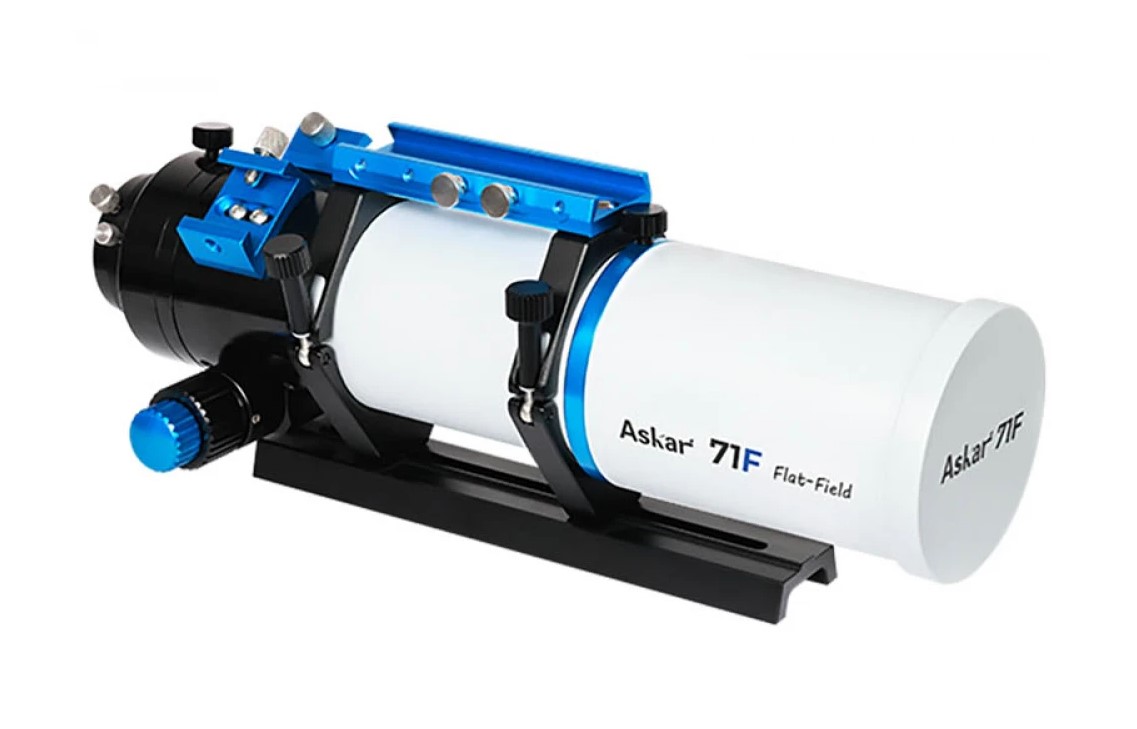
Its selling point is that it has a “field flattener” built in, which means that the stars are sharp all the way to the edges of the frame, which they aren’t with camera lenses or telescopes designed purely for visual observing.

Anyway I welcome all advice on how to get this array of kit up and running - trying to sort it all out in the pitch dark is proving a challenge! Early days!

4 Likes

@hairbear re your point about using a computer to get polar alignment - yes I’ve seen that’s possible, but I wanted to keep things as simple as possible to being with, with the minimum of cables to trip over in the dark!

The Askar 71F is a very good choice if you want to do some astrophotography. The Star Adventurer GTI mount is a little lightweight, depending upon what you add to the scope. It has a max 5Kg payload and for astrophotography you shouldn’t really go above 4Kg. The scope is 3Kg all in, but you could remove the two mini dovetails and possibly the larger one if you don’t use a guide scope (more of that later!) to lighten the load. So, you only really have 1-1.5Kg to play with when adding bits.
As for the mounts built in auto guiding, it’s accuracy will be directly related to how accurately you align the mount and how well it is balanced. There are three main components to alignment (there are more but they are complicated). The first is how level the mount is, the second is how accurately it points North and the third is how accurately the elevation is set. The first needs to be done first and the other two will be adjusted when you do the polar alignment. If you can get the mount aligned accurately then you can do shortish (60s or less) exposures without a dedicated guide scope. Balancing is also important, but very easy to do once you’ve done it a couple of times.
There is a plethora of software you can use to help with stacking multiple frames and post processing images. Some you pay for and they’re quite expensive, and some are free. I would recommend something simpler to start stacking such as ‘DeepSkyStacker’ and more complicated but better is ‘Siril’. Both are free. As you’re a photographer you’ll know better than me about post processing images and if you already use Photoshop, then it is very good for this and you can get loads of dedicated astrophotography plugins.
If you need any help just send me a post on here.
BTW, I’m glad you went for an Equatorial mount and not an Alt-Az mount. The latter is no good for astrophotography :open_mouth:

1 Like

Get a good head torch ! One that does red as well as white.

Yes got one of those! The red beam is a bit dim but I also have a red hand torch.

Thank you for all the other advice!

I understand about the weight limit of the mount - I consulted one of the telescope shops about that and they reckoned the Askar would be OK on the GTI. My Fuji camera is only 660g.

Balancing I’m OK with - years ago I trained as a Steadicam operator and those were far harder to balance! :slight_smile:

The bit I haven’t cracked yet is the polar alignment - I have used an app called PS Align Pro on my phone (sitting in a bracket in the dovetail slot of the GTI) to get basic alignment, which seems to work well, but where I have struggled from there is getting Polaris visible in the polar scope on the mount. One basic error I made last time was forgetting to turn the RA axis 90 degrees to get the hole in the mount opened up so I could actually see through it!! :smiley:

But also where I am currently in Surrey has quite a lot of light pollution to the north (Guildford) so Polaris is not so easy to see with the naked eye. Anyway I shall persevere. I’m going to leave the telescope for a bit later and next time out use a moderate telephoto lens on my camera on the GTI so I can have a sporting chance of seeing Arcturus or whatever when getting the mount to align on guide stars!

Once I get to the stage of having some deep sky images to work with I will check out the software. I’ve watched a YouTube tutorial on Siril and it doesn’t seem too difficult.

Anyway step one is getting the bloody thing pointed properly and we’ll go from there!!! :smiley:

I appreciate your help.

1 Like

That is, actually, one of the most common issues people have when they first polar align :grin:

Yes, that will just make things even harder. Does the polar alignment eyepiece have an illuminated reticule ? If so, it’s usually set too bright and it will help if you can turn this down or off.
I have to admit that I did also try doing a manual polar alignment and after a few unsuccessful tries, used a computer driven alignment method. I did have a setup with camera and mount connected to a raspberry Pi though, which made it easy to do.
Your mount has WiFi built in, which I would think would allow you to connect a computer to it to control it remotely.

If you use the built in scripts that automate stacking then it is quite easy to use. If you want to play around with more complicated settings then it can be a bit confusing. I use Siril myself.

1 Like

BTW, who did you buy the scope and mount from ? I would always recommend First Light Optics. They are the best in the business.

Yes it does - the brightness can be controlled from the app. I will play with that once I get the thing open so I can see through it! :smiley:

I’m sure a computer can be connected, but as I use Apple Macs there may not be as much software choice as there is for Microdaft Weirdows.

Further down the line I had thought of maybe adding an ASiair and a guide scope, but right now I’ve spent enough money, and I haven’t checked if it will work with Fuji cameras. :slight_smile:

I got the mount from Harrison Telescopes in Bonnie Scotland, and the scope from the Widescreen Centre in Ely.

First Light Optics didn’t have the Askar in stock, nor did Rother Valley Optics (who were very helpful on the phone though), so hence I got it from the Widescreen mob.

I also got pre-purchase advice from a business networking friend of mine who used to be a telescope retailer and designs observatories (for the government as well as for home users).

I use Kstars on a Raspberry Pi with Linux on it to control everything. It’s free and runs on Linux/Windows/MacOS

I then use VNC from my PC over WiFi or Ethernet to control it all.

I initially used an Asiair, which internally is just a raspberry Pi with power controller but wasn’t happy with the software so switched to Kstars.

1 Like

Yes they are all removable. The big plate on top is more of a handle although you can mount things on it.

Being aluminium I’m not sure if removing them would save a huge amount of weight though.

OK I will look at that, I could stick it on my MacBook Air.

I’ve just looked and your mount is supported via USB or WiFi in Kstars so that is good. Don’t know what camera you are using but most are supported. The fiddly bit is setting it up as the equipment selection and setup process isn’t necessarily intuitive :stuck_out_tongue_winking_eye:

:rofl: :rofl: :rofl:

Cables are the bane of any astrophotographer. They are such a pain I spent lots of thought and time (and some money) to get my cabling down to an absolute minimum.

Fujifilm X-H2 (40 megapixels) or X-H1 (24MP).

Currently I just have one cable - a 12V power cord running from my EcoFlow River 3 powerbank to the GTI mount.

The mount can run off AA batteries but the battery compartment is fiddly and I like the reassurance of a solid power supply.

Once I get into doing multiple longer exposures I will most likely add a USB cable from the powerbank to the camera.

After that, we’ll see! Rigs like this are somewhat terrifying! :smiley:

2 Likes

It’s seeing pictures like that that made me want to minimise cabling. I have just three cables, two power and ethernet.

1 Like

Did you try Edwin Hubble? :joy:

He’s a bit deceased. :slight_smile:

Super nice. Have a lovely time playing with it (I’m envying like mad!!!).

2 Likes