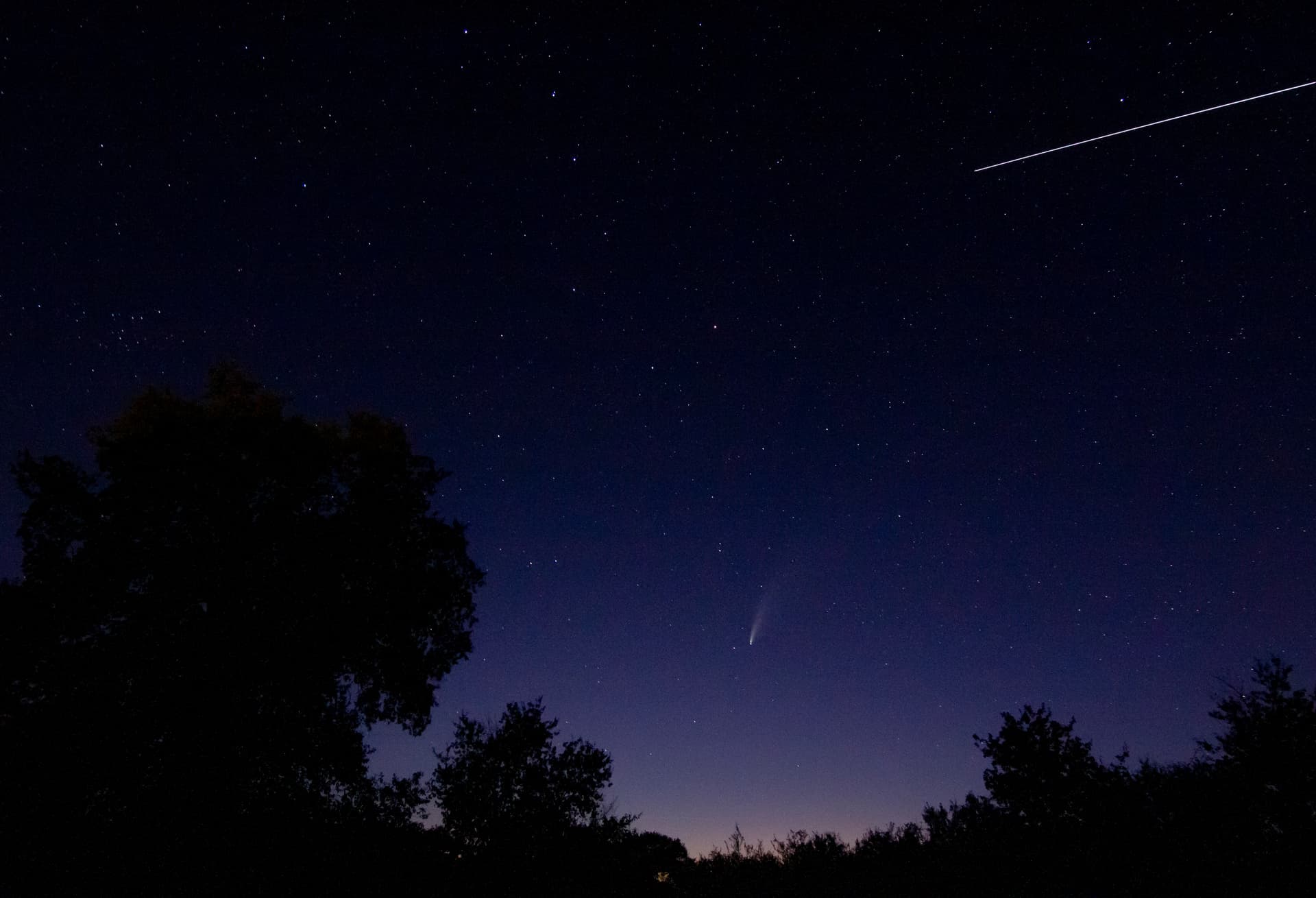
I intend to bring the kit to France when I come over in June - I’m staying in a gite near Sommières-du-Clain in Vienne, which should be a fair bit better than UK in terms of light pollution.
The best piece of writing on digital astrophotography that I’ve come across is a chapter in James Elkins, Six Stories from the End of Representation, which unfortunately I can’t find available to read online. Basically Elkins (who is a very bright art historian at the Chicago Art Institute) argues two points :-
Firstly, that colour enhanced astrophotography, though not seeking to be aesthetically pleasing, often takes its cues and visual values from SF illustration.
Secondly, he considers the problems and implications for understanding given the enormous degree of magnitude that can exist between one pixel and the next when viewing a remote galaxy.
Essential reading for anyone interested in high end digital scientific /technical photography and questions such as what are we actually ‘seeing’ when we look at such images?
Yes most astro photographs are not realistic in the sense that they match what the naked eye would see - the objects concerned are just too faint and need to be imaged using stacks of separate exposures and then “stretched” and enhanced to create a pleasing and visually legible result.
I don’t think that matters, personally - amateur astro images are not being made for strict scientific purposes but as a representation of what’s out there that is not normally visible.
And false colour does get used a lot in scientific images as well to bring out detail.
What Elkins is writing about is the amount of theoretical extrapolation that accrues from the difference between one digitally enhanced pixel and its neighbour. I found his essay revelatory not least because although I’ve been working with digital imagery since the late 1980’s, I’ve always thought of pixels as minute dpi points rather than whole galaxies.
One of Elkins’ arguments is that this has been used extensively by NASA to raise public perceptions of astronomy. He’s not necessarily criticising that, but of course the implication is that it creates an overly romanticised view of the actual appearance of the heavens
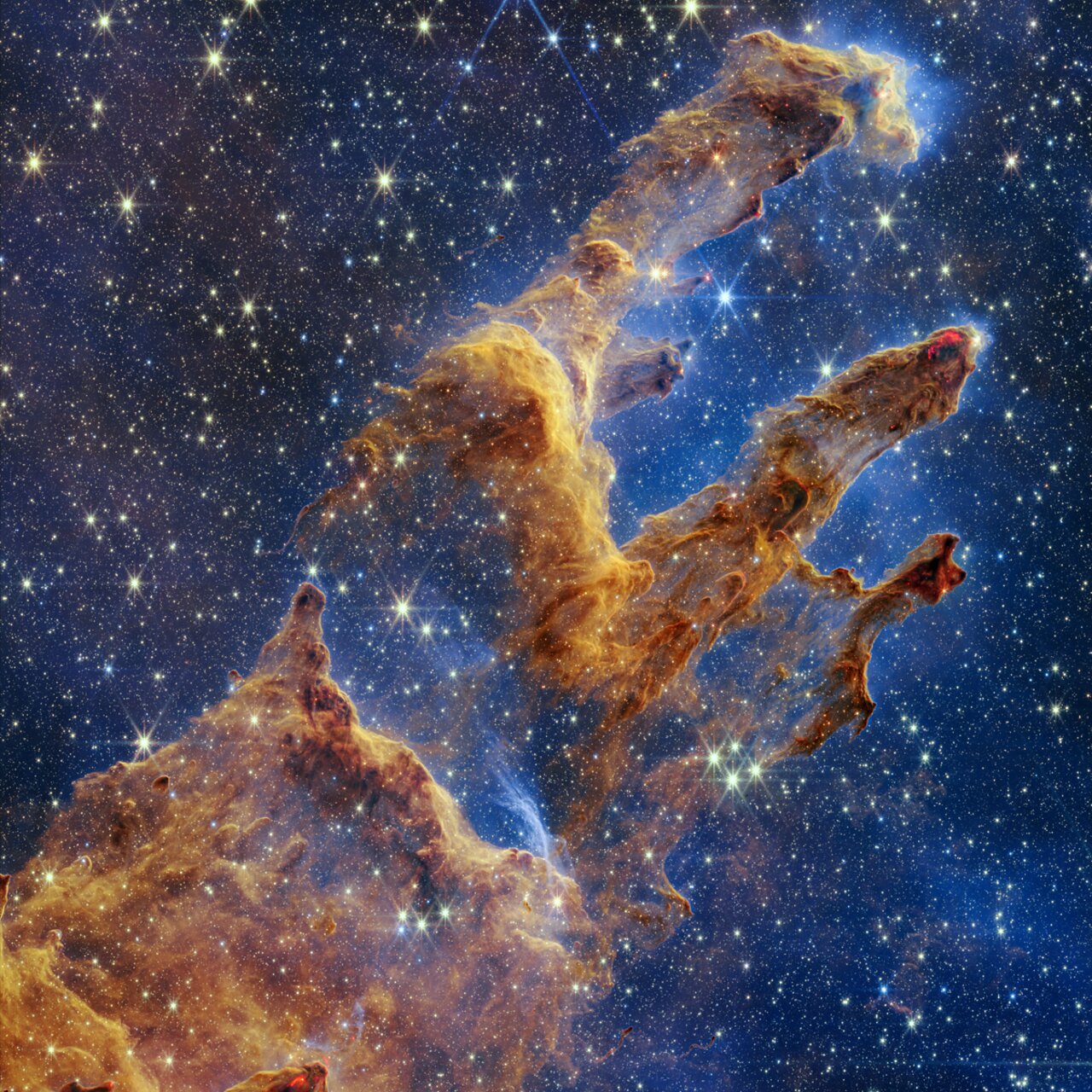
Perhaps - but amazing sights like the Pillars of Creation in the Eagle Nebula are otherwise utterly inaccessible to the average person - and it takes a really special instrument like the James Webb Space Telescope to do them justice (click to enlarge):
And showing something of what’s out there and how vast and amazing the universe is cannot be a bad thing.
Now I won’t be able to get anywhere near that with my humble set-up, but there are many deep sky objects that should be in reach, and I am looking forward to trying!
The point I was making was that they don’t really look like that and although the colour changes are to create depth, ultimately they’re visually illusional. Science usually claims to be about truth, but these images are not ‘truthful’.
In the 1920’s Charles Pierce, the founder of semiotics (very erroneously) declared that a photograph was proof that an event had occurred because it was a an authentic visual record and even though this wasn’t necessarily the case, analogue photographs were generally regarded as ‘truthful’ whereas with the advent of digital photography and for example, the subsequent development of all sorts of selfie enhancement filters, this is no longer the case.
So perhaps the question I’m labouring towards is, how much difference is there in depicting a photogrphic ‘reality’ between a colour enhanced astronomical scientific photo and the product of a selfie enhancement filter?
Not arguing against them being pretty, or if you prefer aesthetically pleasing, merely probing the space(!) between scientific illustration/depiction and optical reality
I was referring to photographs being generally perceived as an indexical representation of our perceptual reality, whereas colour enhanced astronomical photos are generally perceived to be something that they depict faithfully .
TBH the above doesn’t interest me too much because it’s an understandable misperception, but OTOH, the potential cosmic difference/distance between one pixel and and its neighbour is fascinating…