Is this a high speed charger? We had a 7kWh one installed for under €1000 and got €300 back in tax credits. I think tax credits only go to end of this year.
It would depend if you were comparing like with like e.g. how far the charger will be from your tableau and how complicated the cable run is. From what I’ve been reading about UK installations, £1k sounds about right for very straightforward installations.
Who has quoted you? The big chains are likely to be more expensive than a local installer.
EdF does fit charging points, their IZI people organised it for us. It came to over 1500 euros before tax relief but it’s a good one. Opel told me not to buy their own charger because they don’t think it’s very good quality.
They were good to deal with and the charging point was fitted pretty quickly. They gave me the number to ring to ask for the capacity of our Linky to be increased and this was done remotely within 24 hours.
Retired electrician here, worked in France for 15 years & have done an IRVE training course
A quote of 2,5k€ is very expensive, unless, as others have said, there’s some big reason such as a long cable run (10-15m is not long IMO). Also any devis should be itemised to show at least hardware & materials as separate items.
Did he show you his ‘mention EV’ which enables him to legally fit IRVE infrastructure? Since 2017 any charger that can deliver above 3,7kW can only be installed by a suitably qualified person.
Are you saying you have two separate meters & pay for two accounts?
Would you have need of three phase charging (some vehicles can’t use that anyway), or would single phase be OK? A triphasé charger will be more costly than monophasé.
You may find that you don’t need to install a Level 2 AC charger at all & you might get away with using a standard domestic outlet that would allow you to slow charge (although I’d strongly recommend fitting a dedicated outlet for this purpose, but that’s cheap compared to proper Level 2). 10 hours overnight will give you around 23kWh even on a ‘granny’ charger.
I don’t know about a UK number but you could ask. Here’s their page that lets you get a quote.
I think it could be fairly long-winded if you’re not here all the time. At the beginning they gave us a list of photos that they needed, things like the wall where the borne de recharge was to go, I think the Linky and maybe our fuse box. There could have been others, OH dealt with that part and I did the phone calls.
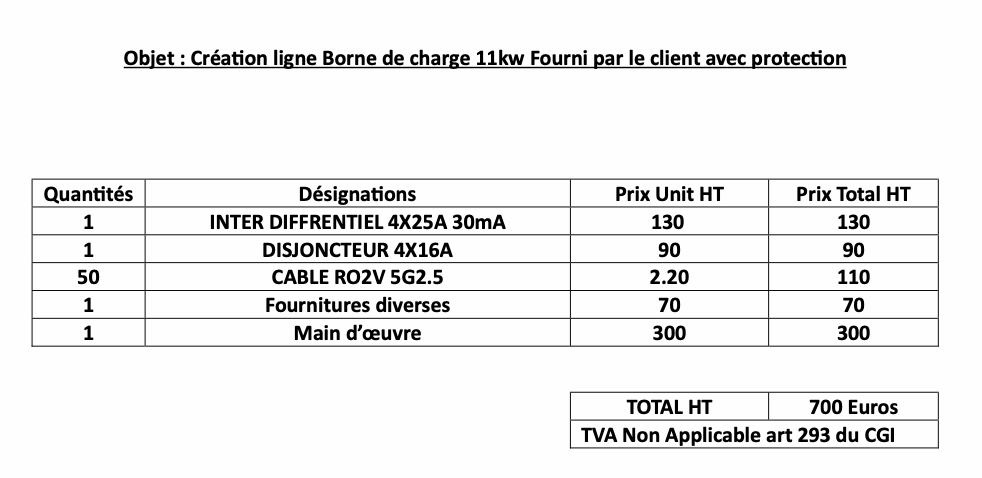
I bought the charger for 500 € and paid 650 € for the installation work (25 m of cable). Had two other offers for the work, 950 € and 1500 €.
The charger itself can be monophasé only (7 kW) or triphasé. 7 kW is enough for us.
875 €uro for fitting is ridiculous even if it takes the chap all day. Also that figure is HT (before tax) so another 5.5% has to be added to get the real price payable which makes 923 €uro. Good grief, my local garagiste only charges 60 €uro per hour tax included.
We decided to get an EV back early in 2022 so I started researching chargers. I’ll detail the journey below, but my quick experience based synopsis is that the starting point is what milage you do a day.
Having started with an ICE mindset I didn’t realise that. Check out what km per kW your car is rated at, then halve it (because the claimed range for all EVs is recognised as exaggerated, just consistently so between marques, so handy for comparisons). Then work out what’s the maximum km you do everyday and that’ll give you the kWh you need to replenish the car overnight. It’s generally a lot less than one would think.
As I started out thinking like a petrol pump user, I’d need to be able to top up from, like 20%, to 80% in the shortest time possible and as we have three phase I researched 22kWh chargers and selected a good one. A Wallbox. Subsequently I haven’t come across any EV that recharges at more then 11kWh. The Wallbox was overkill, it even has accounting software It’s more suited to a commercial or coproprietaire setting. But I guess I’m future proofed and it’s nice and discreet
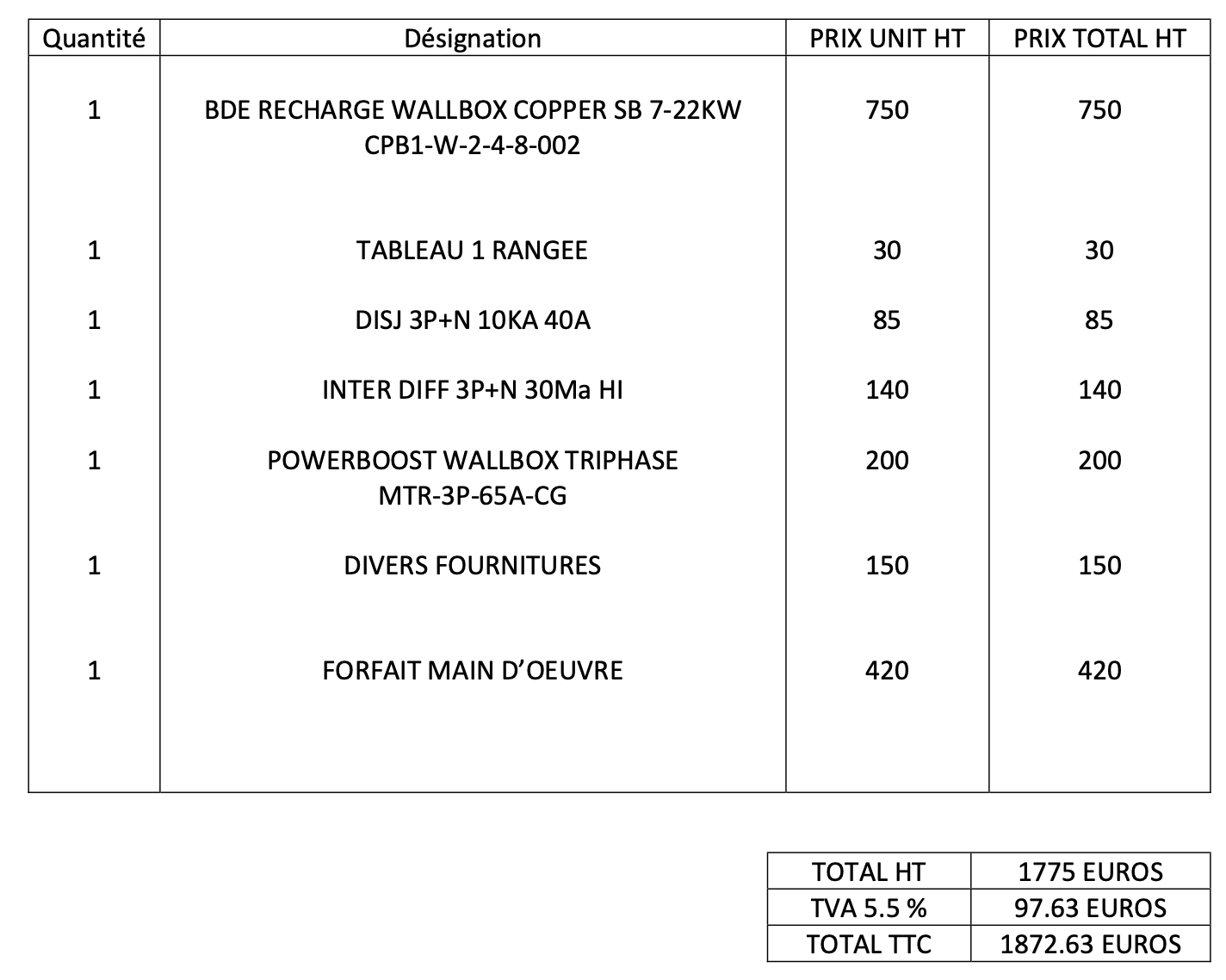
It’s on the garage outside wall and probably less than seven metres from the power board. So not a lot of cable. Here’s what I paid for supply and install. I thought it was fair and my electrician is a star, a really nice and honest man. I could probably have shopped around but I trust him, so we’re both happy.
You’ll see there’s more stuff than just the charger and cable. For example there’s a load balancing device so that if the house is running hot then (as I understand it) the car is throttled back to avoid tripping my (18kW) supply. I’m a software person so I don’t understand any of this H/W stuff but I’m sure @Badger knows chapter and verse. Note the price for the installation of all this gear was only €420, plus a coffee. I also got the tax rebate, on the labour I think.
We started using the Wallbox with a hybrid we had, but it stopped working pretty quickly. The service and support from the Company, Wallbox was dreadful (they’re from Barcelona ). It took weeks to get them to send their regional support guy to replace the box. He, on the other hand, was excellent. We’ve had no problems since and we have his number
We then bought the EV in 2022, but due to the worldwide chip shortage she wasn’t delivered until July 2023. Since then everything has gone swimmingly and, after owning many cars, it’s one of my favourites.
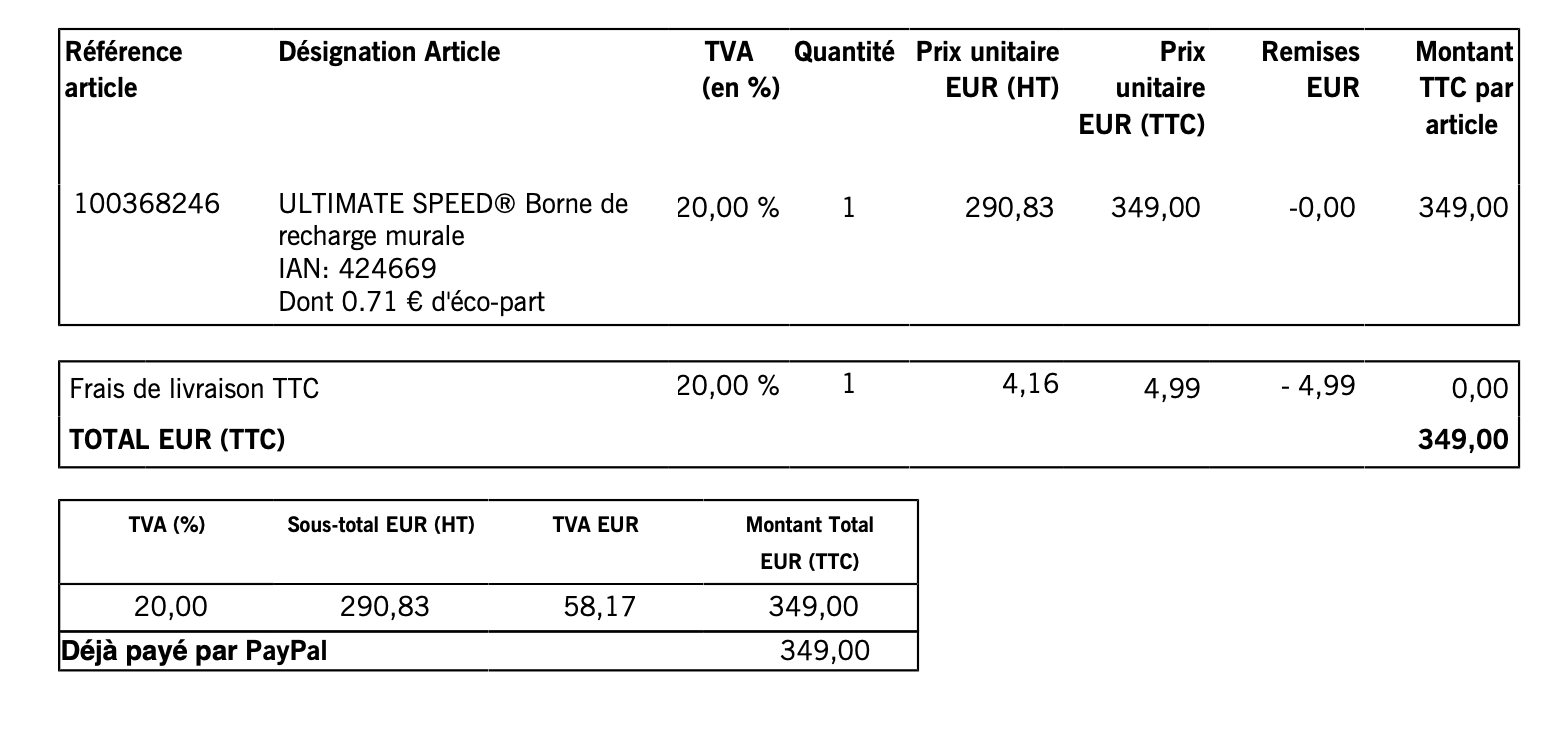
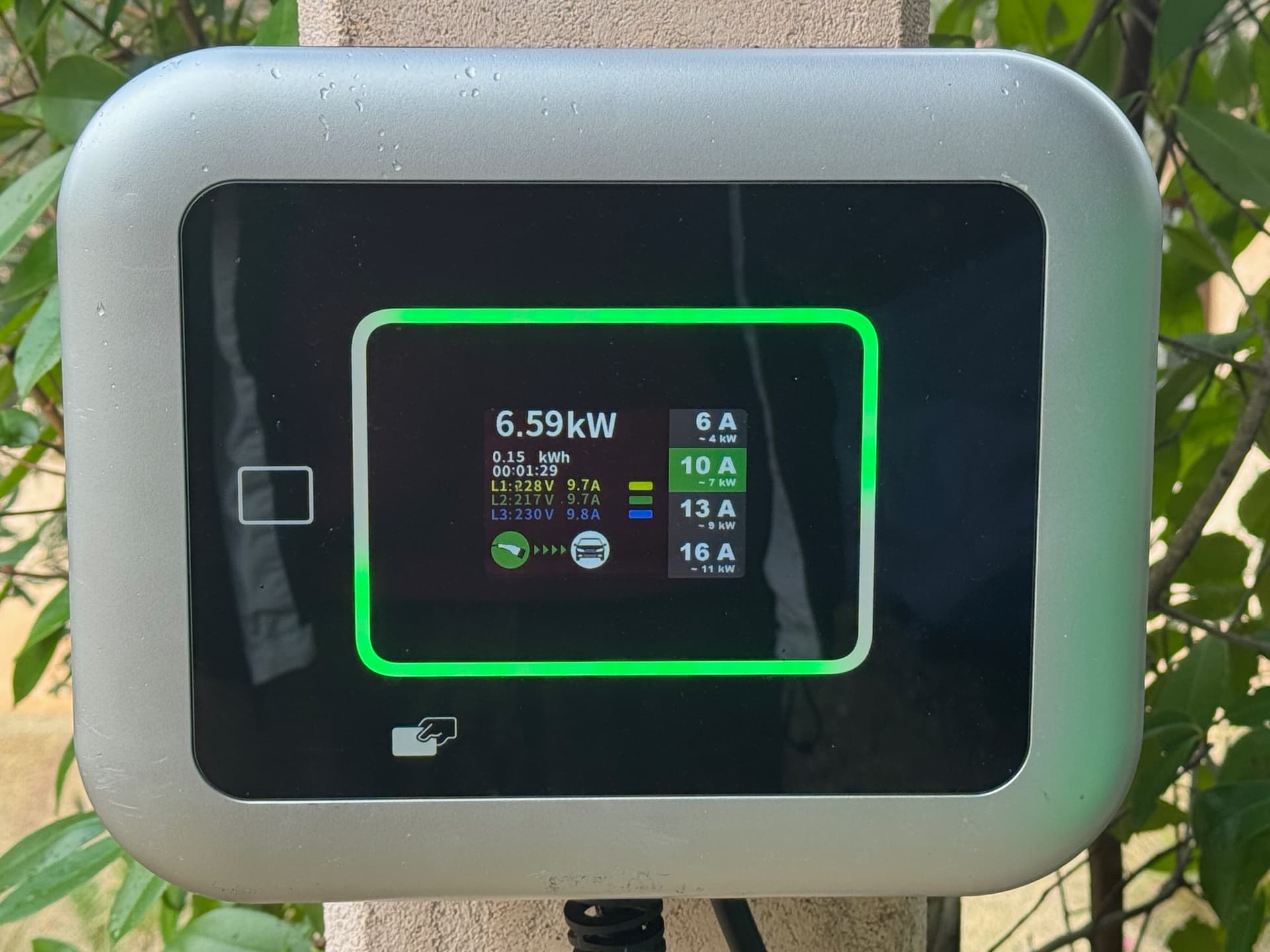
Subsequently I was browsing the Lidl catalog, as one does, and spotted that they were selling chargers. Having experienced the Wallbox support and, now having an EV we didn’t want any another potential weeks long outage, so I bought a 11kWh model which was on “special;” with 50 quid off. Lidl don’t seem to be selling them anymore. Though I’ve seen the 22kWh listed on their site for €499 but “epuisé en line”.
It sat on a shelf waiting for me to do something about it until last December when we acquired a small second EV for local use. Our first one had been bought knowing we would quite frequently do 1,000km plus trips, so it has a 82kWh battery vs the 50kWh of the new one. Though I did “courageously” (in the Yes, Minister sense) do a long trip in it in winter, which is a whole other story. So we installed the Lidl charger about fifty metres from the first one, in the car abri.
I find the reluctance to use a Granny lead connected to a domestic outlet hard to understand now.
When I first bought an EV, I started using a granny lead until I could work out what I really needed. Nearly two years later I have found no reason to change to something quicker.
I think the charge rate is 2.3 Kw/hour. According to my guessometer, I have averaged over that time 7 Km per Kw.
Say I plug in at 6 p.m and leave at 7 a.m. (13 hours), that gives me a daily range of 2.6 X 7 X 13 = 209 km. So it would need a serious daily commute to require more than that.
In practise. My charging time is optimised to make full use of off peak-power which seems to be around 20c per Kw. So it cost me €1 to do 35 Km. Also, I very rarely do 200 km journeys so hardly ever need 13 hours charging. As a back stop, I am only 10 mins from a superfast charger in case of emergency. I have never had to use it.
My maths and physics may be a bit wobbly but practical experience is more useful to me than hypothetical situations.
Well in my case Mik it’s because I love a good project While practical, and possibly sufficient for most (as I admit), where’s the hours of fun in just slinging a cable across the drive?
Now, Have I told you about my Alexa connected kettle

 The Wallbox was overkill, it even has accounting software

 ). It took weeks to get them to send their regional support guy to replace the box. He, on the other hand, was excellent. We’ve had no problems since and we have his number