If like me, you are sick and tired of the winter going on and on and on… it’s time to start thinking positively and pretending that spring is just around the corner!
And with that in mind I’ve been planting my saved fruit seeds (fingers crossed that they take!) and bulbs.
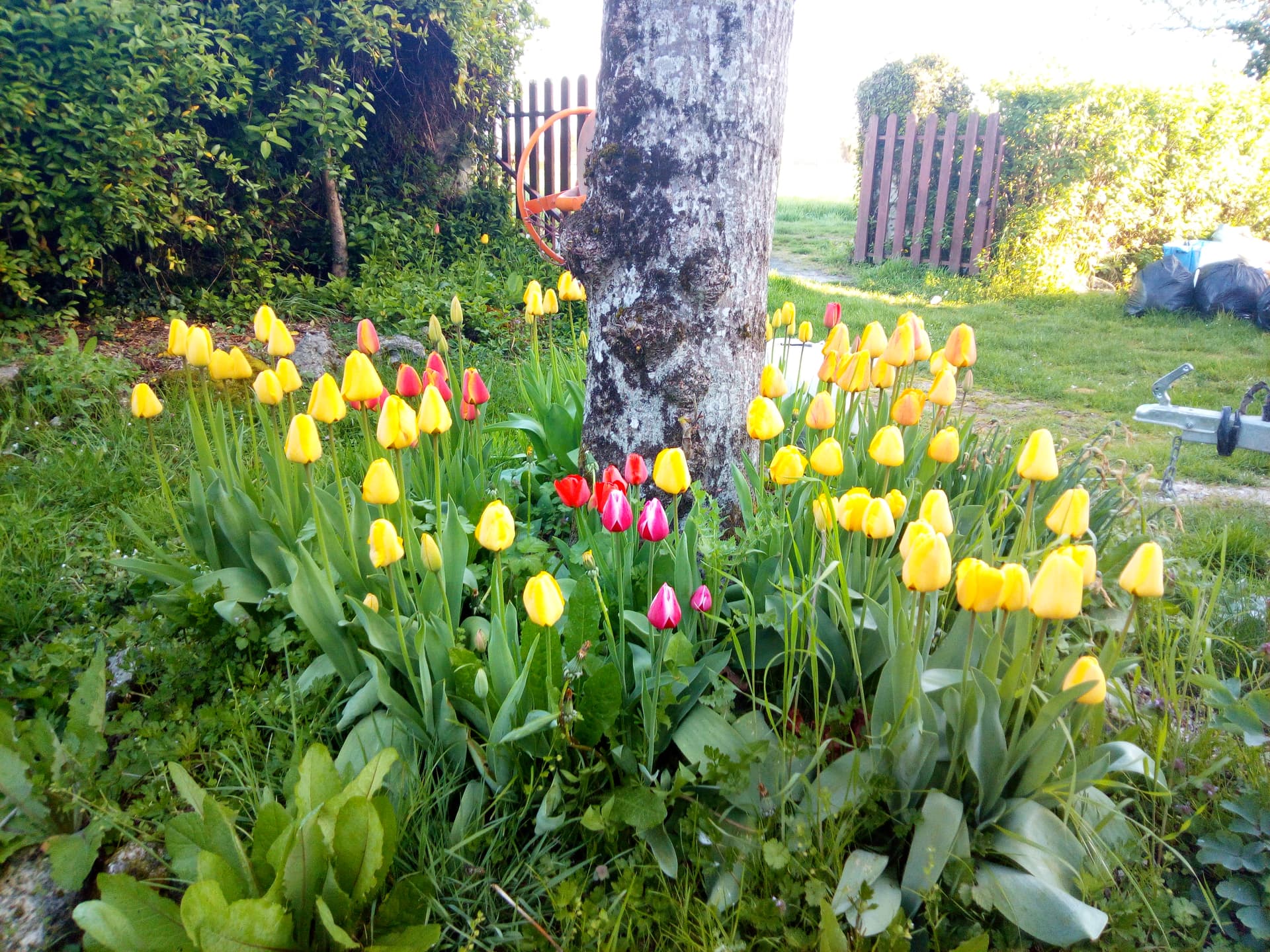
Monsieur likes a tulip so I have stuffed all the pots around the front door with these
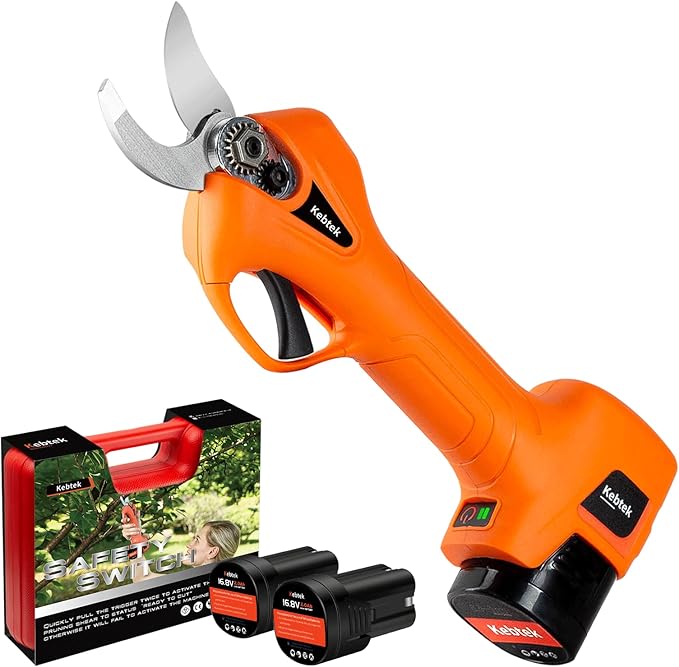
And having bought a pair of these for the teenager who has gone to agricultural college to learn how to be a ‘paysagiste’ (and promptly ‘borrowed’ them back!), I can report that these are SUPERB.
There you have it - my Friday cheer yourself up shopping treat recommendations! And don’t forget that by using our links, you help support Survive France and keep this site free to use for everyone!
I get stems that are too thick for ordinary secateurs, so these do just fine. Amazingly powerful, and from experience since summer 2024 the batteries last long.
Bought OH one of these last year as she has arthritis in her hands. It looks pretty much identical to yours but is green. I’ve used it as well to chop back a hawthorn and it goes through quite meaty 2 cm branches with ease. Just don’t squeeze the trigger with a finger near the blades as it would very easily sever a finger
Here on my hectare in Picardie ( je veux dire, Hauts de France), there is no gardening season. I just never stop. Part pleasure, part necessity, part ambition, I am developing huge permaculture potager beds (the ones from recovered beams will be lifted to add fine mesh underneath to impede the voles who tunnelled up and ate a LOT of roots).
I am also planting a food forest so, fruit trees, nut trees and bushes of every description (including hickory, butternut and bladdernut), Berry bushes.
In addition to all that, I am taking active steps to rewild over half our land; adding bushes and trees with food for wildlife, various shelters for hedgehogs etc. And I just started digging a 4m by 4m extension of our wild pond, to add an undulating bottom for a mix of shallower pools, as recommended in Isabella Tree and Charlie Burrell’s ‘Book of Wilding’ ( a marvellous guide for anyone wanting to increase biodiversity).
I only stop if it is lashing or below zero.
Other than our Polar Bear swim which went ahead Jan 1, after cutting a hole in the ice under flurries!
Any Rewilding enthusiasts out there?
Very much so - partly for wildlife but also to save us work. We’re not doing anything other than let nature take over. So our field now just has paths cut through it so we can reach the far side and go for walks up into the woodland on the other side of the valley. It’s interesting to see how new wild flowers begin to populate the uncut grasses. The long grass is ideal for deer and hares to hide in.
We have huge bramble patches - one over a rabbit warren. A great place for blackbirds to nest.
We bought the field about 17 years ago from a farmer who used chemicals. Nothing has been put on it since. Over the years we’ve added more and more trees and it’s interesting to see. as we dig down, how worms have returned. When we first started sticking a spade in the ground, there were none. Now they are thriving (much to the delight of our moles, voles and hedgehogs).
We have never really consciously bought trees and bushes as “wildlife friendly” - often just choosing the cheapest. There are a couple of fig trees and walnut trees that were here when we arrived. We planted a couple of cherry trees, we have a row of hazelnuts to screen the cottage from the house. In all cases, we rarely get much for ourselves! Most of the fruit and nuts are taken by the birds and the rats and mice.
We have masses of thistles and other seed headed plants whose name I can’t remember that the goldfinches love. And various bushes with berries. We don’t have bird feeders as we have a huge population of raptors (buzzards, kites, falcons, kestrels and the like) and so we don’t want “hot spots” for the small birds - better that they are spread throughout our land.
Electric pruners are the way forward for sure - got a pair for Xmas and they have worked wonders so far. Coupled up with my garden waste shredder (which had sat idle last year as it was too much hassle to chop everything to a suitable size) the number of trips to the dechetterie with the prunings is dropping massively.
Please don’t stop putting seed out now, in the middle of winter.
The birds that are coming to your feeders right now will have nowhere else to go and will have to use precious energy flying around seeking out another food source.
I have quite a few raptors around but I have never seen them take advantage of the numerous small birds that come to feed in my garden.
In fact the only real problem I have is with jays seeking out nestlings during the nesting season.
That all sounds wonderful. Many people seem to get a wide open field; I have some dense woods and all boggy downhill. Great for some wildlife (sanglier mud wallows!) but limiting for planting a wide variety of trees that don’t want their feet wet.
I have several feeders including some in the open behind the house. Despite kestrels, buses and tawny owls around, I have never seen any sign of predation. But predation is part of the natural order; if the birds weren’t at my feeders, they would be taken from a field where they are gleaning (non organic) weed seeds.
One solution is to hang a feeder under a widely branched tree (I use a very large boxwood 6 metres wide). Birds munching up under that are well protected.
I also have a lot of tall grass and ‘weeds’ with seeds for birds to scavenge all winter. Many species, like goldfinches, love teasel (cardère sauvage); I am replanting small new plants all over the place before the new season. They get to over a meter tall and quite wide; the little rainwater pools at joints of the vertical stem catch and drown insects which are then absorbed by the plant, hence they are ‘sort of’ carnivorous. And pollinators also love the many heads.
Many of the neighbours and passersby don’t appreciate the ‘messiness’ but it’s called ‘nature’.
For those interested in this, Wilding by Isabella Tree, about eh Knepp Estate, is very accessible.
And the LPO here in France has a program to register as a ‘refuge’, which includes a sign to help spread the word on what we as property owners can do to help wildlife and biodiversity.
Although my plot is only a modest 1,000 square meters, I let the grass grow wild, where I draw paths with a rotary mower. In my previous house, I was passionate about English gardens, but here there is more life.
Yep, same here. I convinced OH years ago to just mow a path through the fields rather than the whole fields and so now there are wildflowers and brambles and bushes. I’m planting trees too.
I wonder if some folks whom I have overheard saying they’re moving away because they can no longer keep up with the mowing, could perhaps reconsider and stay on, letting their lawns go wild and just mow a path through?? It’s a different mindset.
Like not going for the bargain at Shein or Tamu, or wherever. It’s a mindset for the future.
That’s exactly as we had our last house. When we put it up for sale most of the people that viewed thought it was rather odd. I’m sure that some of them thought they should call the men in white coats immediately. Anyway, I shall be doing the same in our new garden!
Winterwatch - Chris Packhan, right now, on BBC starting discussion about the negative implications of bird feeders. Plant a bush appropriate for feeding birds, rather than buy a bag of peanuts.
I’ve also noiced the raptors and bigger birds let smaller birds have the wax balls and seed and the leftovers I put out in my garden for them.
Farmers’ activities here in France are destroying more and more of birds’ opportunitiea for food and I’ve noticed each year I’ve had more birds that clearly need what,I put out.
Definitely don’t stop putting out food for the birds as they really need it especially now and they seem to have highly developed social systems ie “pecking orders” as to who gets what and most of the time it works really well
I’m proud to support many familiea of birda through this eapecially now as ir’s the hardest part of the year for them.